

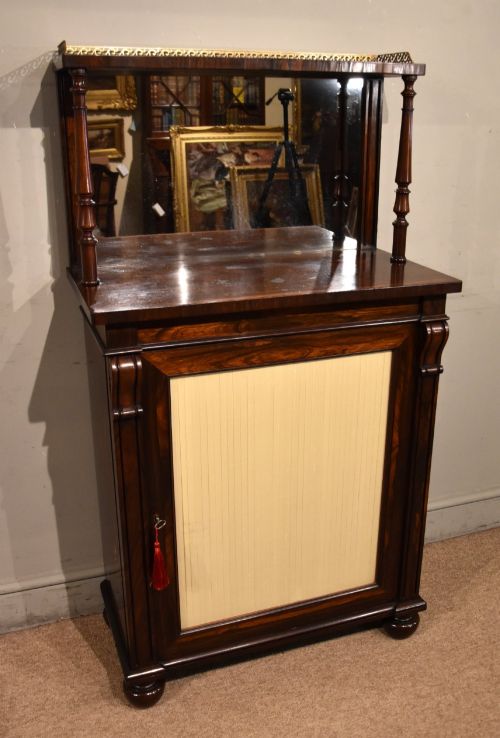
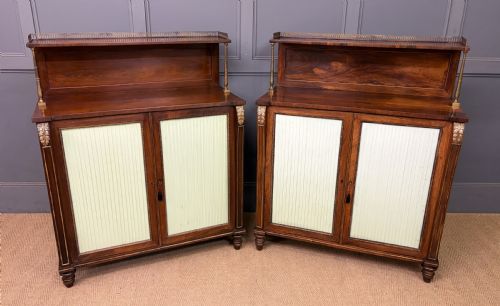
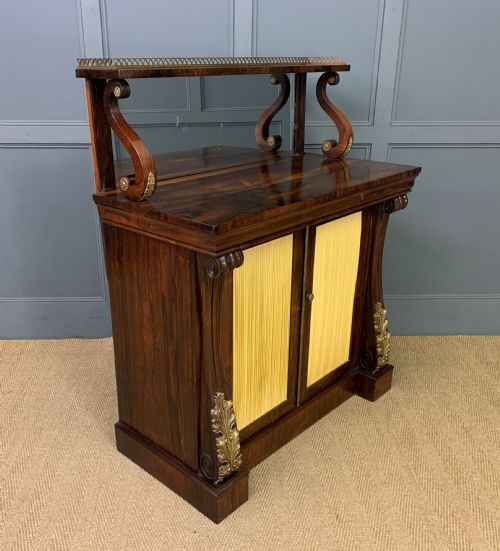


Regency Brass Gallery Chiffonier
A regency brass gallery chiffonier brings refined storage and display to a room, prized for its distinctive metalwork and rich timbers.
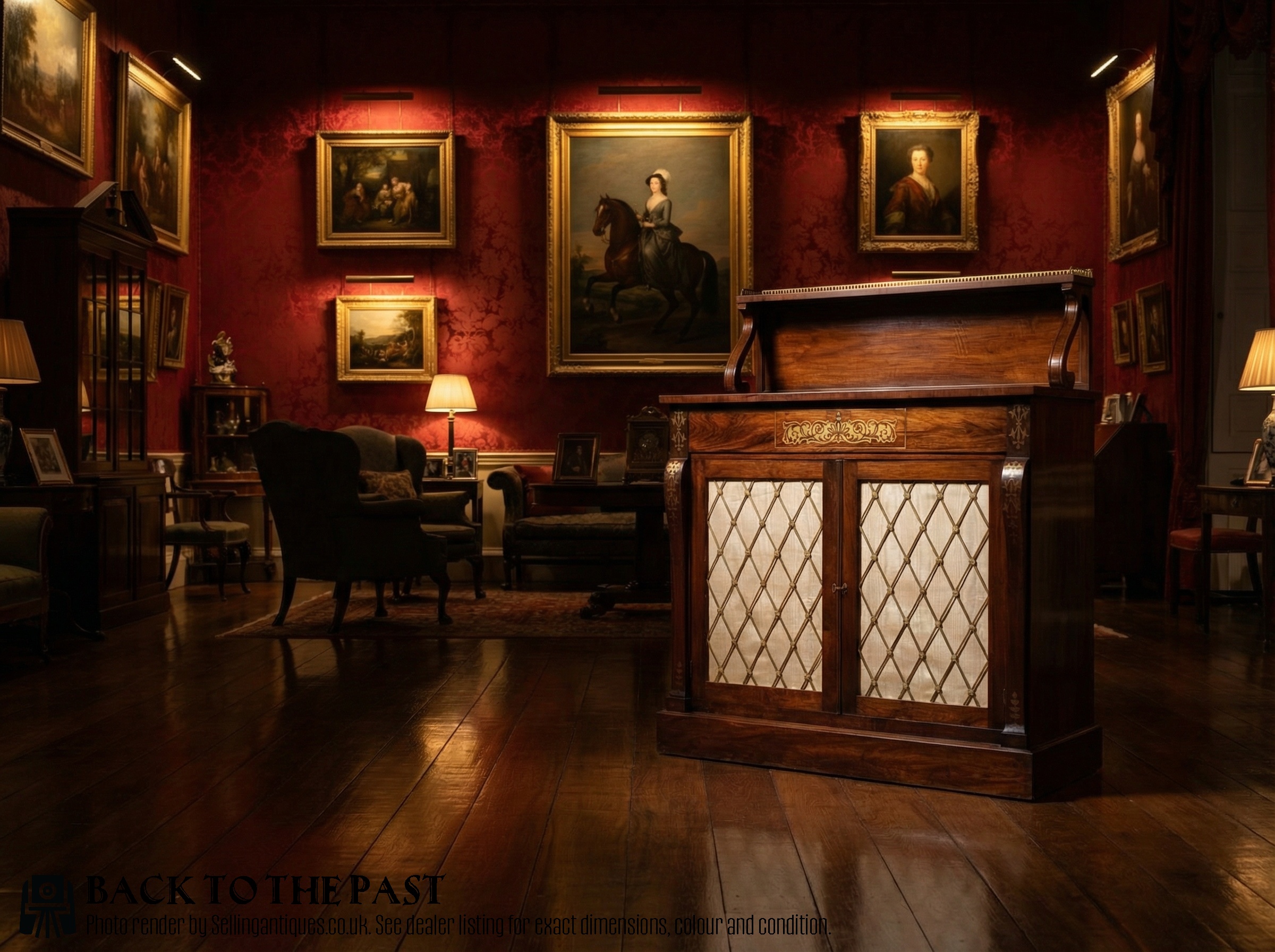
Regency Brass Gallery Chiffonier
A regency brass gallery chiffonier is a compact low cabinet designed for domestic storage, frequently featuring a raised shelf superstructure edged with fine metal wirework or spindles. The examples seen here belong primarily to the Regency and George IV periods, spanning into the early Victorian and William IV eras.
Most pieces met on this page are constructed from rich timbers such as rosewood and mahogany, often enhanced by flame veneers or boxwood inlay. Formats range from two-door side cabinets and open bookcases to secretaire desks with fitted writing drawers and marble tops.
These items function as versatile sideboards and low storage cabinets, combining enclosed lower cupboards with open upper tiers. The addition of a brass gallery serves both a practical containment role and a decorative linear accent along the top surface.
Evaluating Quality and Detail
The distinction between standard examples and the finest pieces rests in the selection of timber veneers and the crispness of the brass mounts. Book-matched flame mahogany or richly figured rosewood demonstrate superior material choice by the original maker.
Structural refinement shows in the joinery of the tiered shelves, the precision of boxwood inlay, and the integration of functional writing drawers or secretaire compartments. Cabinets attributed to documented workshops exhibit particularly high standards of internal construction and finishing.
Regency Brass Gallery Chiffonier Retail Price Guide 2026
Typical asking prices for regency brass gallery chiffonier among the pieces listed under this phrase on Sellingantiques today, from the lower quarter to the upper quarter. They describe what is for sale here now, not the wider market.
The furniture spans the Regency, George IV, William IV, and Victorian periods, encompassing both simple side cabinets and complex secretaire forms.
Gillow·John McClean
The Regency Brass Gallery Chiffonier Glossary
- Chiffonier
- A low sideboard or cabinet developed in the early nineteenth century, featuring enclosed lower storage and frequently a shelved superstructure. It provided compact utility in dining and drawing rooms.
- Flame Mahogany Veneer
- A decorative wood slicing displaying a distinctive, flame-like grain pattern derived from the branch junctions of the mahogany tree. It was carefully applied to prominent surfaces for visual impact.
- Secretaire
- A cabinet incorporating a pull-down writing drawer fitted with small pigeonholes and inner drawers. This combined writing surface allowed the piece to serve dual functions in a domestic interior.
- Amboyna
- An exotic hardwood prized for its dense, mottled burl figure and warm golden-brown tones. It was utilised sparingly for high-status furniture panels and crossbanding.
Regency Brass Gallery Chiffonier: Frequently Asked Questions
What is a regency brass gallery chiffonier used for?
These cabinets served primarily for the storage of dining silver, linens, or books while providing upper surfaces for decorative display. The enclosed lower cupboards kept items tidy, while the upper shelves held porcelain or glassware.
In modern rooms, they function effectively as sideboards in dining spaces or as low media and display units in living areas. The narrow proportions allow them to fit into spaces where standard sideboards prove too bulky.
How do I identify a genuine Regency period piece?
Authentic Regency furniture dates from the early nineteenth century, characterised by classical restraint, architectural proportions, and high-grade timber selection. Examination of the interior secondary woods and backboards often reveals period construction methods.
Stylistic markers include specific brass gallery designs, turned feet, and restrained inlay patterns. Comparing the timber grain and patination helps distinguish genuine nineteenth-century surfaces from later reproductions.
What woods were commonly used for these cabinets?
Rosewood and mahogany dominate the construction of these cabinets, frequently highlighted with fine boxwood stringing or brass mounts. Exotic timbers such as gonçalo-alvez and amboyna appear on selected high-status examples.
Cabinet makers selected these dense tropical hardwoods for their rich natural colours and capacity to take a high polish. Veneers were cut thick and laid over stable secondary woods to prevent warping.
How should I care for a rosewood chiffonier?
Protect antique timber surfaces by keeping cabinets away from direct sunlight and maintaining stable room humidity. Regular dusting with a soft, dry cloth preserves the polished finish without chemical buildup.
Avoid placing damp items or unsealed vessels directly onto the wood or marble tops. Periodic application of traditional beeswax feeds the timber and maintains its deep lustre.