

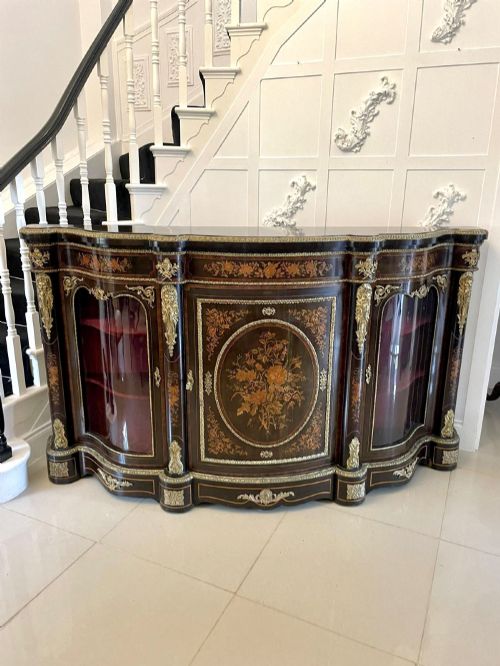
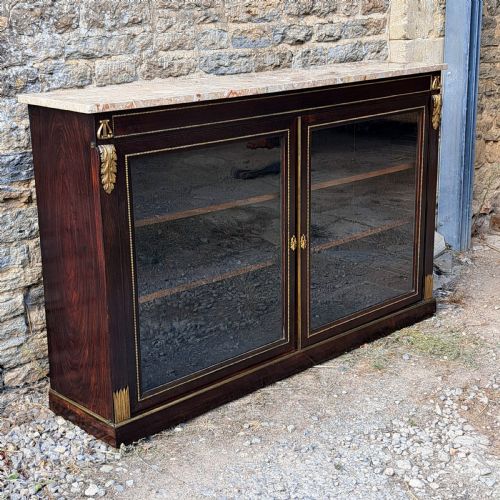


Brass Inlaid Rosewood Sideboard
A brass inlaid rosewood sideboard is a striking piece of period furniture, combining rich tropical timber with gleaming metal work to anchor a dining room or drawing room.
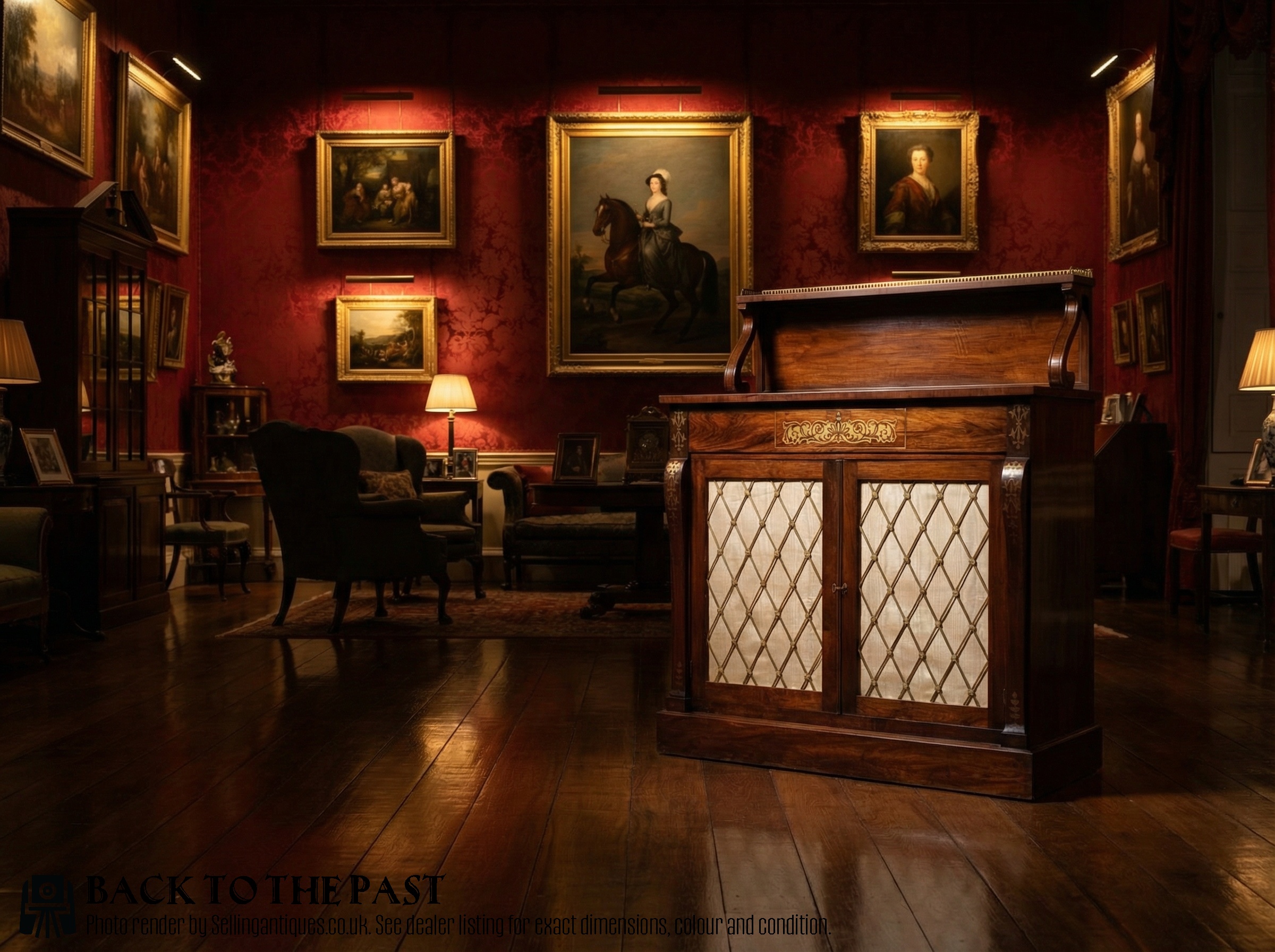
Brass Inlaid Rosewood Sideboard
When you search for a brass inlaid rosewood sideboard, you encounter formal low storage furniture designed for the dining room or drawing room, encompassing related forms such as chiffoniers, side cabinets, bookcases, and credenzas.
The pieces on this page are dominated by the Regency and nineteenth century periods, featuring clean architectural lines alongside exuberant Victorian marquetry and Napoleon III styling.
You will most frequently meet the Regency chiffonier or side cabinet version, characterised by lower shelving and delicate brass work set directly into the dark timber surface.
How they were made
Cabinet makers constructed the carcases from dense rosewood, sometimes utilising simulated rosewood or palisander, and occasionally mounting the timber with ormolu or incorporating mirror glass.
Brass wire and sheet metal were carefully hand-cut and pressed into precise channels carved into the wood grain to form geometric patterns, floral motifs, and classical lines.
Internal elements frequently included fabric, silk, or marble tops, demonstrating a diverse range of high-end materials combined within a single piece of furniture.
Brass Inlaid Rosewood Sideboard Retail Price Guide 2026
Typical asking prices for brass inlaid rosewood sideboard among the pieces listed under this phrase on Sellingantiques today, from the lower quarter to the upper quarter. They describe what is for sale here now, not the wider market.
The listings on this page span the Regency period through the mid-nineteenth century, incorporating rosewood, glass, silk, ormolu, and marble.
What varies in quality
The precision and complexity of the metal inlay separate standard items from superior pieces, particularly where the brass remains entirely flush with the surrounding timber surface.
The choice of rosewood grain and the inclusion of supplementary materials such as ormolu mounts, boxwood stringing, or marble tops indicate the original commission tier of the cabinet.
Proportion and structural integrity define the overall standing of the piece, with well-balanced breakfront designs and well-preserved secretaire drawers commanding attention.
JOHN McCLEAN·JOHN McLean
The Brass Inlaid Rosewood Sideboard Glossary
- Chiffonier
- A low cabinet with shelves or drawers, frequently topped with a mirrored superstructure or a raised back. This form is one of the most common variations found among rosewood storage furniture.
- Ormolu
- Gilded bronze used for decorative mounts and feet. It provides a bright metallic contrast to the dark grain of rosewood.
- Marquetry
- Elaborate veneer patterns arranged to form pictures or decorative designs. Victorian pieces often use this technique alongside brass inlay.
- Palisander
- A dense, dark timber often grouped with rosewood varieties. It forms the primary structural and visual base for several nineteenth-century cabinets.
- Secretaire
- A writing drawer or compartment built into the main body of the cabinet, dropping down to reveal small internal drawers and pigeonholes.
Brass Inlaid Rosewood Sideboard: Frequently Asked Questions
What is a brass inlaid rosewood sideboard?
A brass inlaid rosewood sideboard is a piece of nineteenth-century dining room or drawing room furniture built from dark tropical hardwood and decorated with fine metal lines.
These cabinets often include shelves, enclosed cupboards, or secretaire drawers behind doors fitted with glass or fabric panels.
How do I date a rosewood sideboard?
Dating relies on identifying stylistic markers such as Regency architectural restraint versus Victorian marquetry and curved serpentine shapes.
Looking at the construction of internal drawers and the specific patterns of the brass inlay also helps narrow down whether a piece originates from the early nineteenth century or the 1850s and 1860s.
Where should I place a chiffonier?
A chiffonier works well against a principal wall in a dining room, hallway, or drawing room where its surface can hold decorative objects.
Because many examples feature mirrors or open shelving on top, they benefit from placement where natural light catches the polished wood and brass details.
How do I clean brass inlaid rosewood?
Maintenance requires dusting with a soft, dry cloth and occasionally applying a suitable furniture wax formulated for dark woods.
Care must be taken around the brass inlay to avoid catching cleaning cloths on edges or driving polish into the surrounding wood grain.