


Regency Box Toilet Mirror
Regency box toilet mirror pieces are classic swivel dressing glasses that sit on tables to reflect the user during grooming.
Regency Box Toilet Mirror
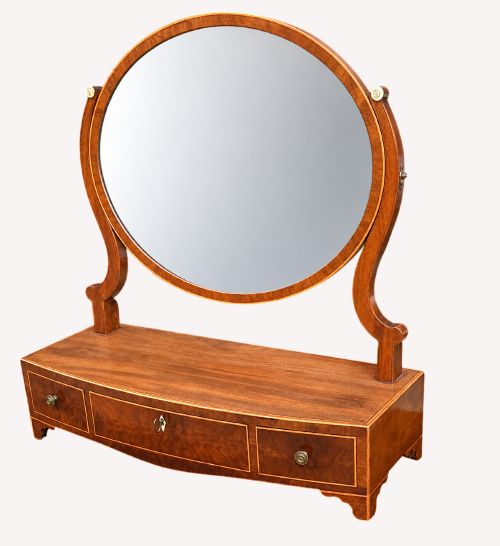
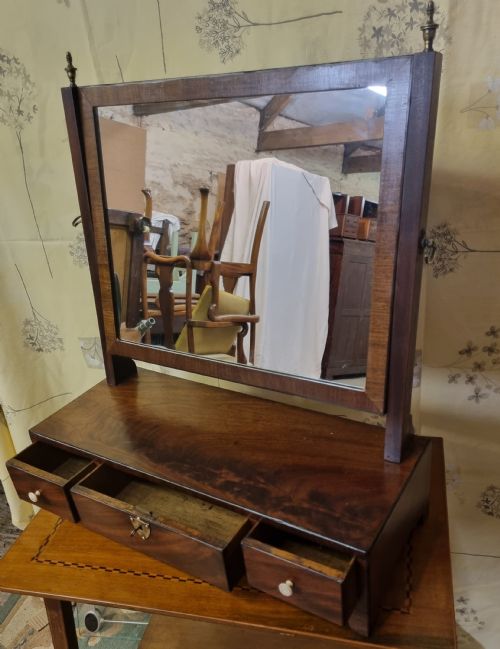
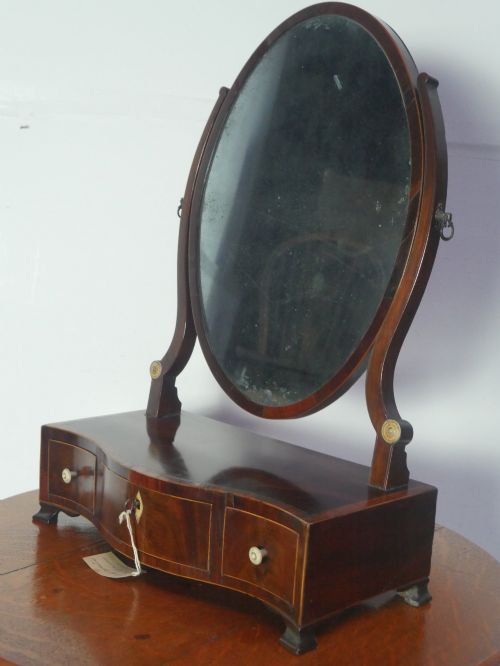
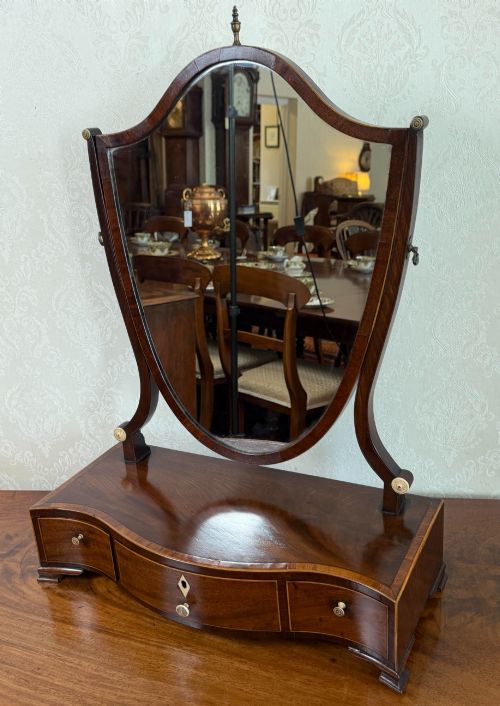
A regency box toilet mirror sits upon a table or chest, combining a swivelling glass plate with a small box base that typically contains drawers. These pieces served a daily grooming function in bedrooms and dressing rooms across the Georgian, Regency, and early Victorian eras.
The versions most frequently met on this page belong to the nineteenth century and the Regency period, constructed primarily from mahogany. They range from simple rectangular frames on upright supports to more refined box bases fitted with small storage compartments.
How they were made
Cabinetmakers constructed the frames and box bases using solid mahogany, often enhancing the surfaces with contrasting boxwood inlay or boxwood stringing. Glass plates were fitted within pivoting wooden frames supported by upright arms attached to the base.
Internal components such as drawer linings utilised secondary timbers like oak, while small details like bone knobs or brass fittings completed the construction.
Current listings demonstrate that mahogany remains the dominant timber across these nineteenth-century tabletop mirrors, frequently accompanied by boxwood inlay and glass.
What varies in quality
Quality rests upon the selection of timber and the finesse of the joinery rather than mere age. Pieces featuring figured mahogany veneers and neat boxwood stringing represent a higher standard of craftsmanship than plain, utilitarian examples.
Proportion and the integration of the drawer box with the upright supports dictate the visual balance of the mirror. Finer examples display careful attention to detail in the turning of the support arms and the dovetailing of the internal drawers.
The Regency Box Toilet Mirror Glossary
- Regency
- A stylistic period spanning the early nineteenth century defined by classical restraint and elegance. Furniture from this era often incorporates clean lines and dark timbers.
- Boxwood stringing
- A narrow inlay of pale boxwood set flush into the darker mahogany surface. This technique creates a delicate contrasting border around drawer fronts or edges.
- Swivel mirror
- A glass plate hung on horizontal pivots between two upright posts. This allows the user to tilt the angle of reflection as needed.
- Dressing mirror
- A small tabletop glass designed specifically for grooming and personal care. These objects typically sit atop a chest of drawers or a dedicated dressing table.
Regency Box Toilet Mirror: Frequently Asked Questions
Where did people put these mirrors?
These mirrors were designed to sit on top of dressing tables, chests of drawers, or side tables in bedrooms. They provided a movable reflective surface at a convenient height for daily grooming.
Because they were portable rather than fixed to a wall or a large piece of furniture, owners could reposition them around the room to catch the best light.
How do I tell a Georgian mirror from a Regency one?
Georgian mirrors often lean towards heavier proportions and simpler architectural lines, sometimes featuring solid mahogany frames without excessive decoration. Regency examples tend to embrace sharper classical details and crisper lines.
Inlaid elements such as boxwood stringing also became more pronounced during the Regency period, adding geometric contrast to the dark wood surfaces.
What is the box base used for?
The box beneath the mirror frame serves as a small set of drawers for storing small personal items, jewellery, or grooming accessories. It anchors the pivoting mirror securely while adding practical storage to the tabletop.
These small compartments often feature oak linings and tiny wooden or bone knobs.
Are the glass plates original?
Mirror glass from the eighteenth and nineteenth centuries frequently required replacement due to foxing, silver degradation, or breakage over generations of use. Finding a piece retaining its original mercury glass plate is less common than finding one with a later replacement.
When evaluating a mirror, the condition and age of the glass plate provide clues to its history of care and restoration.