



Regency Bookcase with Drawers
A regency bookcase with drawers combines architectural library storage with functional writing space, built to anchor a period room.
Regency Bookcase with Drawers
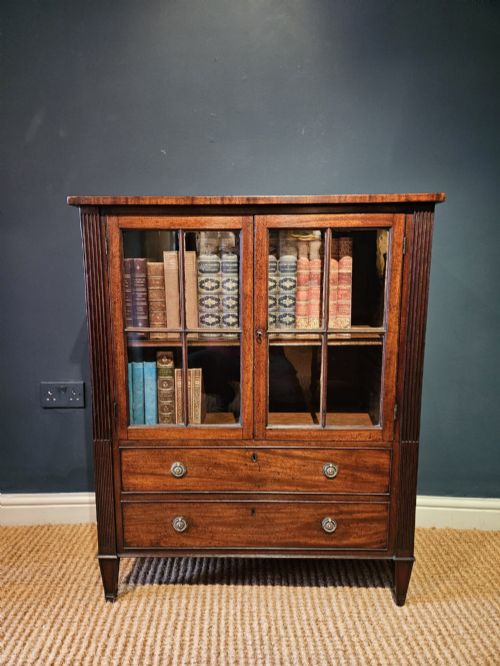
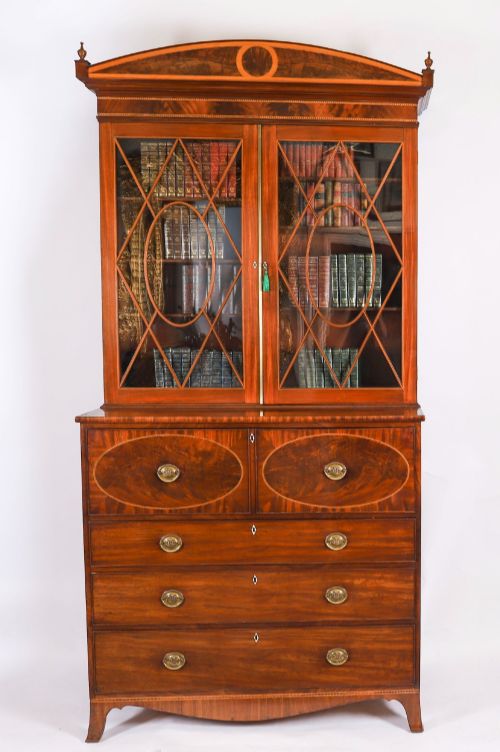
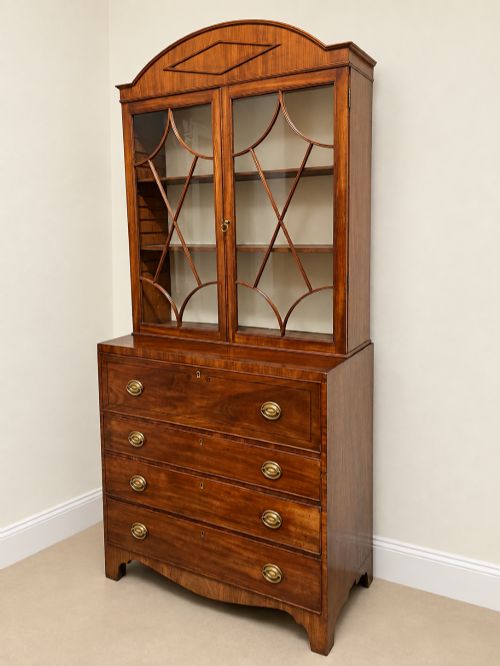
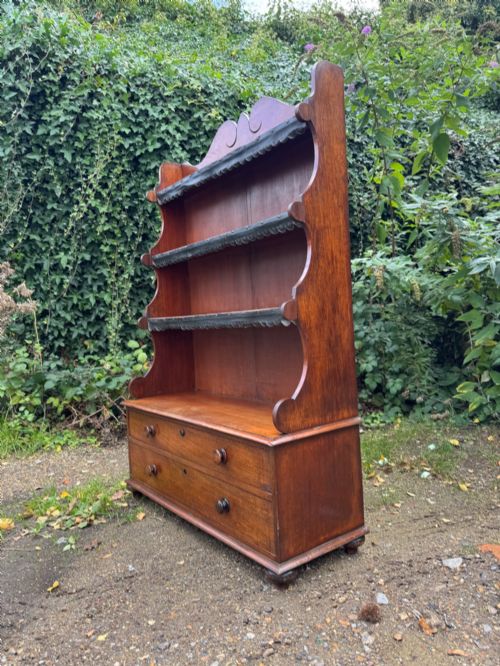
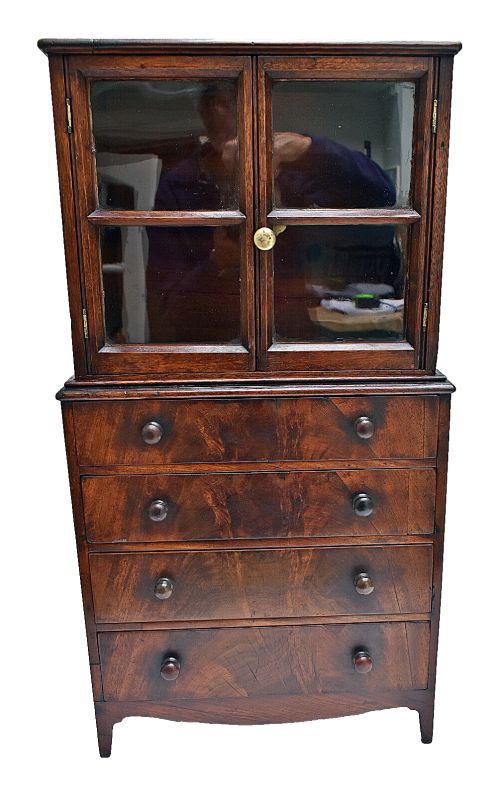
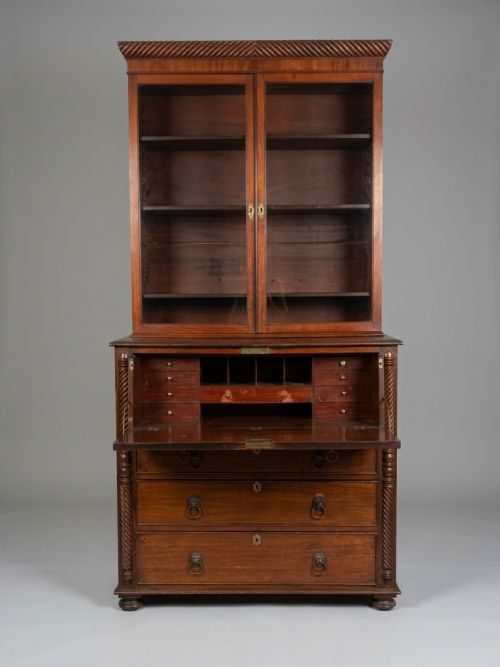
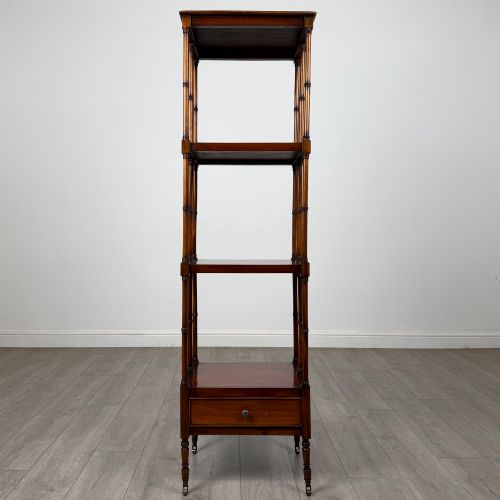
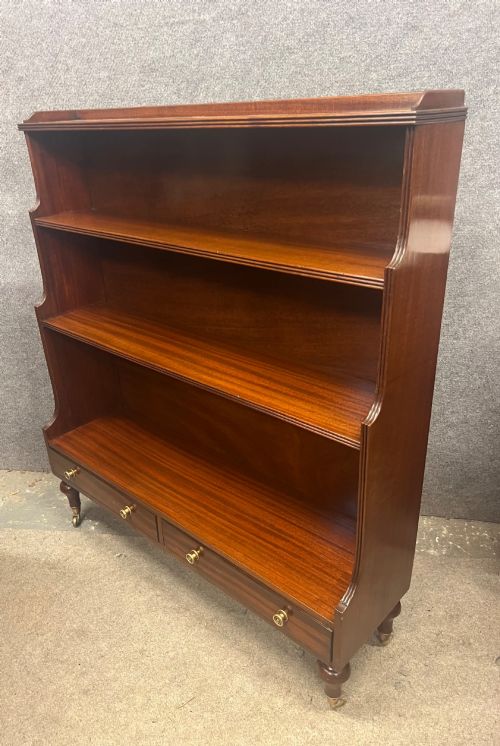
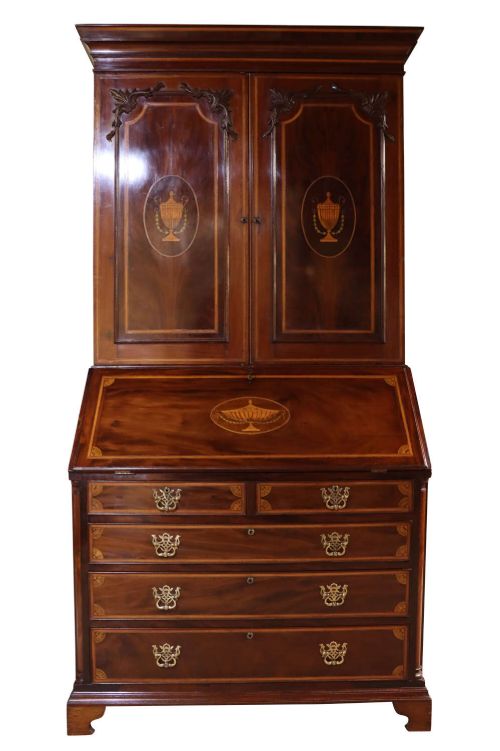
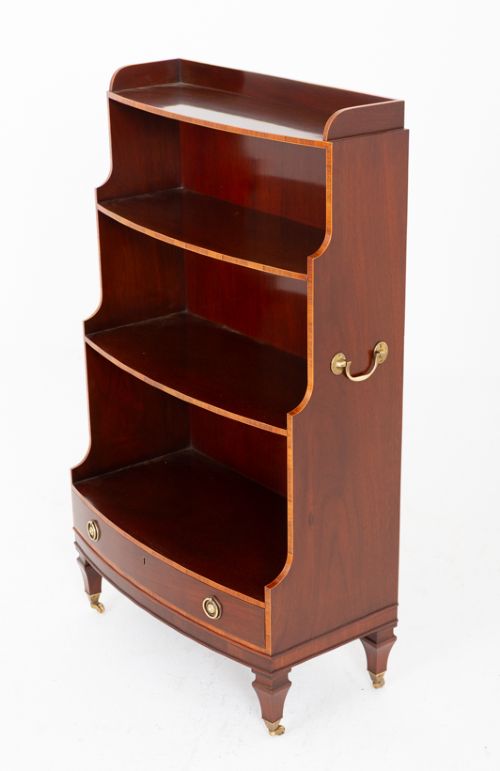
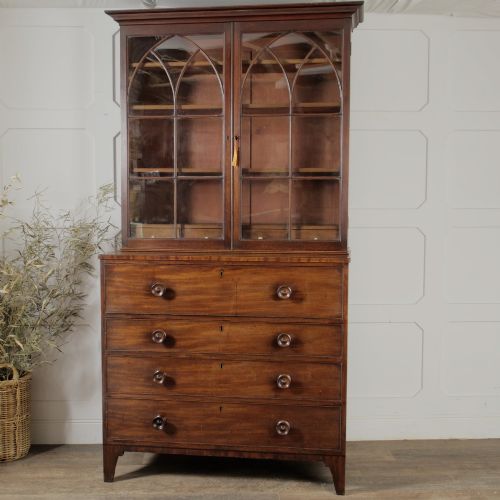
A regency bookcase with drawers unites open or glazed shelving above with lower drawers, secretaire compartments, or small chests. The pieces appearing here range from tall breakfront library bookcases to waterfall open bookshelves and compact bureau variants.
The prevailing examples belong to the nineteenth century, including Georgian, Regency, William IV, and George IV periods alongside later revivals. Makers of the time constructed them in forms such as secretaire bookcases, etageres, and miniature furniture.
Most items rely on mahogany as the primary timber, often enhanced by flame figures, marquetry, or wood inlay. Brass hardware and glass doors complete the dominant construction vocabulary across these listings.
How they were made
Cabinetmakers utilised solid mahogany and rich wood veneers, applying flame mahogany figures to primary surfaces for visual depth. Wood inlay and marquetry trim borders and panels.
Glass panels are fitted into wooden doors to protect libraries, while brass handles, hinges, and slender pillars provide structural and decorative accents. Leather surfaces line internal writing flaps in secretaire models.
Regency Bookcase with Drawers Retail Price Guide 2026
Typical asking prices for regency bookcase with drawers among the pieces listed under this phrase on Sellingantiques today, from the lower quarter to the upper quarter. They describe what is for sale here now, not the wider market.
Listings span the nineteenth century, including Regency, Georgian, William IV, and George IV periods, alongside Edwardian and later revivals.
What varies in quality
The selection of timber grain distinguishes standard examples from superior library pieces, particularly the choice of symmetrical flame mahogany veneers. Precision in the marquetry inlay and wood inlay demonstrates workshop skill.
Structural heft and proportion separate large breakfront bookcases from smaller waterfall or dwarf variants. Original brass hardware and intact glazed doors preserve the integrity of the period design.
The Regency Bookcase with Drawers Glossary
- Secretaire bookcase
- A cabinet featuring a pull-down writing drawer that conceals small pigeonholes and letter drawers above lower storage. This form bridges the gap between a desk and a bookcase.
- Waterfall bookcase
- A tiered set of graduated open shelves where each level steps back from the one below. These pieces often incorporate drawers or lower compartments.
- Breakfront
- A large cabinet design where the central section projects forward from the flanking wings. This architectural layout creates depth in substantial library bookcases.
- Flame mahogany
- A veneer cut from timber where the grain creates a flickering, flame-like pattern. Cabinetmakers placed these veneers prominently on drawer fronts and doors.
- Glazed top
- Upper shelving enclosed by glass-paned doors framed in wood. This feature kept valuable volumes clean from dust and soot in period homes.
Regency Bookcase with Drawers: Frequently Asked Questions
What is a secretaire bookcase?
A secretaire bookcase incorporates a hinged drawer that drops down to form a writing surface with fitted interior compartments. Below this writing section, standard drawers or cupboard doors provide additional storage.
This dual function made the form popular in period libraries and studies where writing space was required alongside book storage.
How do I clean mahogany furniture?
Dust mahogany surfaces regularly with a soft, dry cloth to prevent particle buildup. Avoid harsh chemical cleaners or silicone sprays that can damage the polish.
Apply a traditional beeswax polish occasionally to nourish the timber and maintain the natural lustre of the wood.
Where were these bookcases used?
These bookcases were primarily built for the principal rooms of large houses, including libraries, studies, and drawing rooms. Tall breakfront and library bookcases anchored formal spaces, while dwarf and waterfall versions suited smaller parlours.
The inclusion of drawers and writing compartments allowed them to serve administrative duties alongside book storage.
How do I date a Regency bookcase?
Dating relies on examining construction methods, timber selection, and stylistic details such as brass mounts, glazing bar patterns, and inlay. Pieces from the Regency period often display specific classical motifs and proportions.
Comparing the secondary woods inside drawers and the ageing of the mahogany veneer helps confirm the nineteenth-century origin.