



Regency Blue White Earthenware
Regency blue white earthenware brings together deep cobalt transfer prints and crisp white ceramic surfaces on serving platters, tureens and plates.
Regency Blue White Earthenware
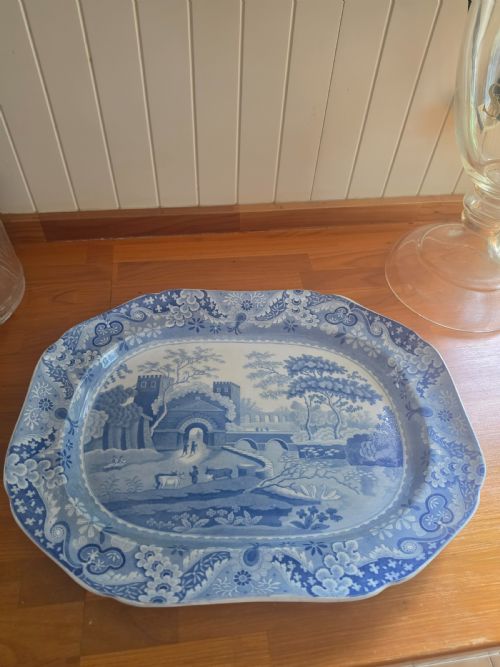
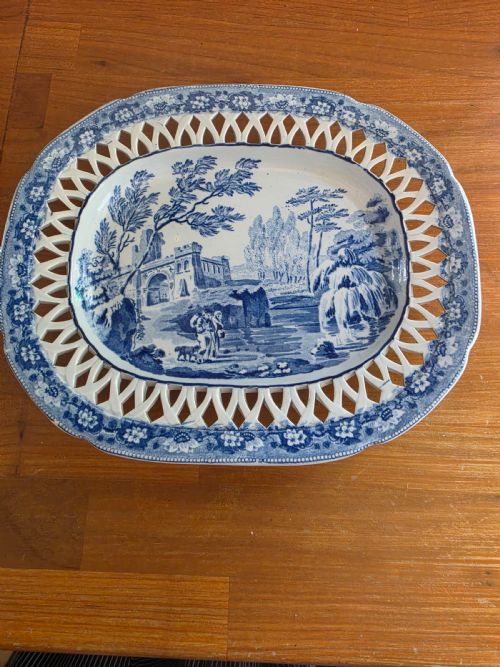
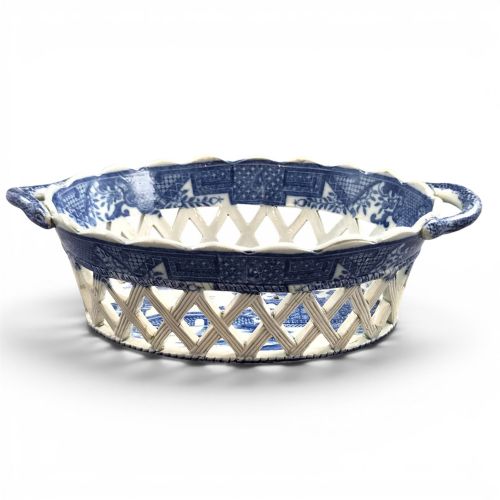
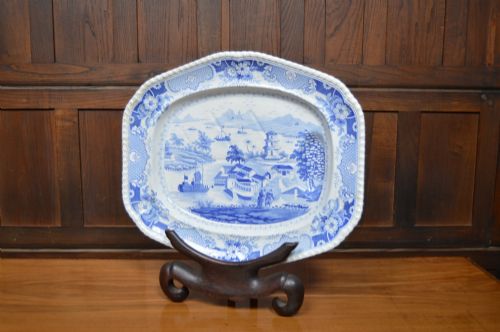
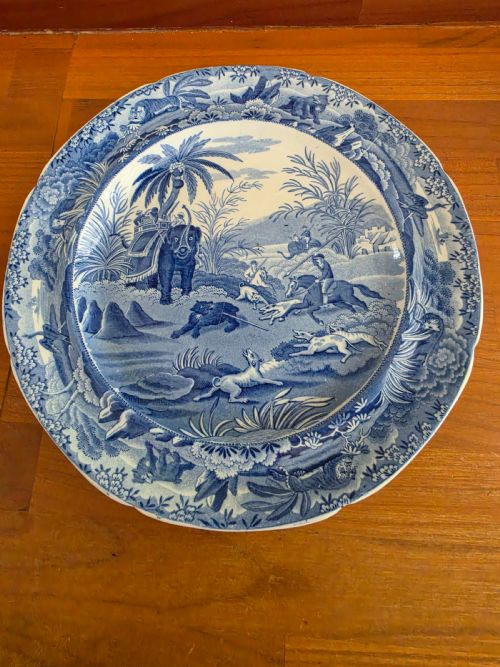
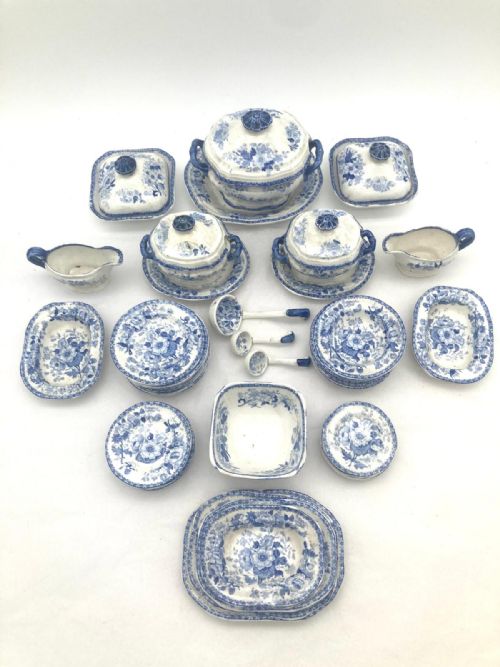
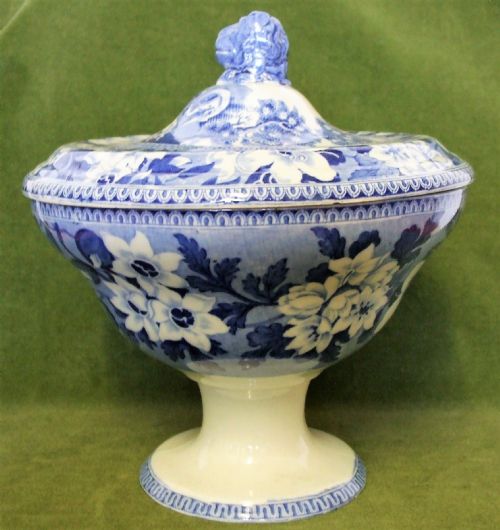
Regency blue white earthenware encompasses domestic tableware and decorative vessels produced during the Georgian, Regency and early Victorian periods. The selection on this page centres on serving platters, large meat dishes, plates and specialised forms like footbaths and chestnut baskets.
Makers recorded in the evidence range from major Staffordshire potteries to smaller works producing transfer-printed earthenware. Patterns run from topographical views and literary scenes to Chinoiserie and animal subjects.
How they were made
Potters shaped earthenware, pearlware and ironstone bodies before applying cobalt blue designs through transfer printing. Many pieces received a clear glaze or pearl glaze to enhance the brightness of the white ground beneath the printed ink.
Firing took place in traditional kilns, after which select items underwent secondary processes such as reticulation or piercing for baskets and drainers.
Listings feature earthenware, pearlware and ironstone bodies decorated with cobalt blue transfer print designs.
What varies in quality
Quality rests in the crispness of the transfer print and the registration of the cobalt ink across the ceramic surface. Superior examples maintain deep, even colour without blurring or pooling in the glaze.
Form and scale also separate standard plates from large meat platters, footbaths and compotes featuring coats of arms or intricate reticulated work.
Spode·Davenport·Minton·John Rogers and Son·Ridgway·Heathcote·Copeland and Garrett·Wedgwood
The Regency Blue White Earthenware Glossary
- Earthenware
- A porous pottery body fired at lower temperatures than stoneware or porcelain. It requires a glaze to hold liquids.
- Transferware
- Pottery decorated by applying a printed paper design from an engraved copper plate onto the ceramic body. This technique allowed intricate pictorial scenes to be reproduced consistently.
- Pearlware
- A refined earthenware developed with a bluish-tinted glaze to mimic Chinese porcelain. It dates predominantly from the late eighteenth and early nineteenth centuries.
- Reticulation
- An openwork or pierced lattice design cut into the clay before firing. It frequently appears on baskets and dessert stands.
- Tureen
- A deep covered serving vessel for soup or sauce. These often rest on matching stands or footed bases.
Regency Blue White Earthenware: Frequently Asked Questions
What periods do these pieces cover?
The inventory spans the Georgian and Regency eras into the early Victorian period. Most items date from the first three decades of the nineteenth century.
Production methods and aesthetic tastes shifted during these decades, moving from pearlware bodies toward heavier ironstone and distinct transfer-printed series.
How were footbaths used?
Footbaths served domestic washing needs in large households during the Regency period. They were substantial ceramic vessels filled with warm water for personal hygiene.
Many examples feature handles and matching jugs or stands, reflecting their status as functional items designed for daily use.
What subjects appear on the patterns?
Designs draw from topographical views, classical architecture, topographical landscapes and literary themes. Subjects range from the Bridge of Lucano to London Bridge and oriental river scenes.
Animal patterns and historical battle scenes also appear across chargers, meat platters and dinner services.
How should I display transferware?
Large platters and chargers suit plate rails, walls or sturdy sideboards where their weight is fully supported. Smaller plates and child's service items fit well within enclosed cabinets.
Avoiding direct sunlight helps preserve the brightness of the white glaze and cobalt blue transfer print over time.