


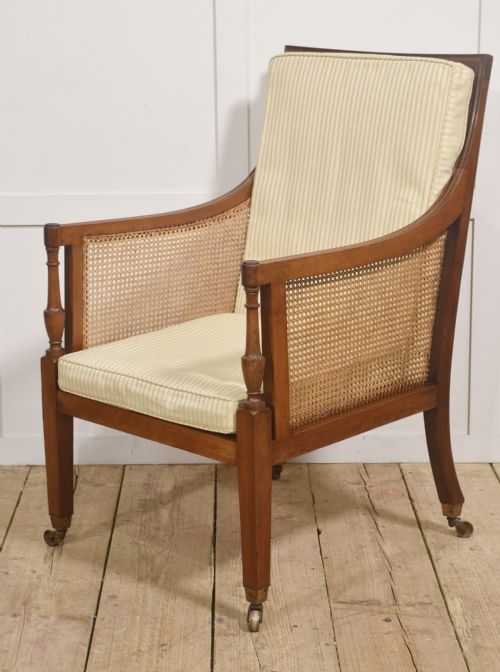


Regency Bergere Armchair
A regency bergere armchair brings enclosed cane seating and library proportions into a room.

Regency Bergere Armchair
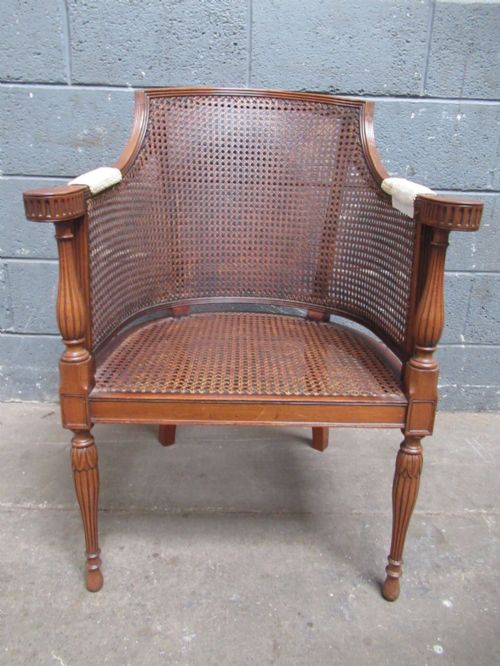
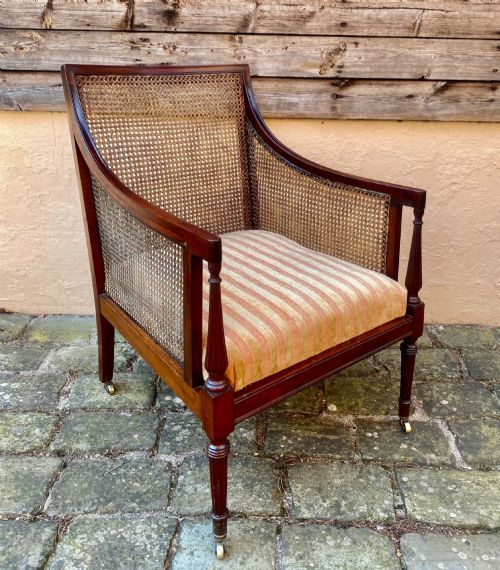
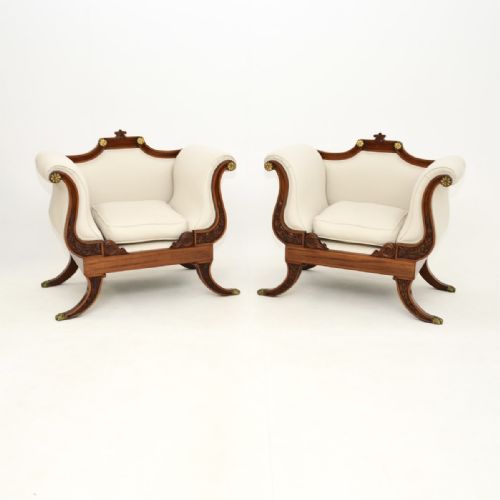
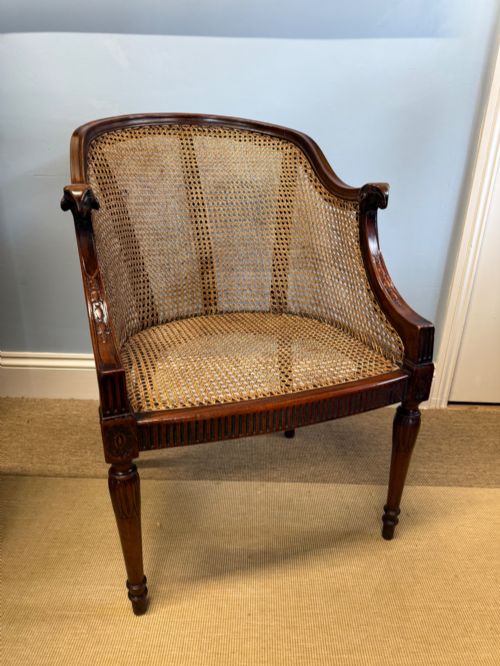
A regency bergere armchair is a deep, enclosed seat designed for reading and lounging, characteristically featuring woven cane panels on the back and sides. Most pieces you meet on this page hail from the Regency period proper or the broader nineteenth century, alongside later revival interpretations.
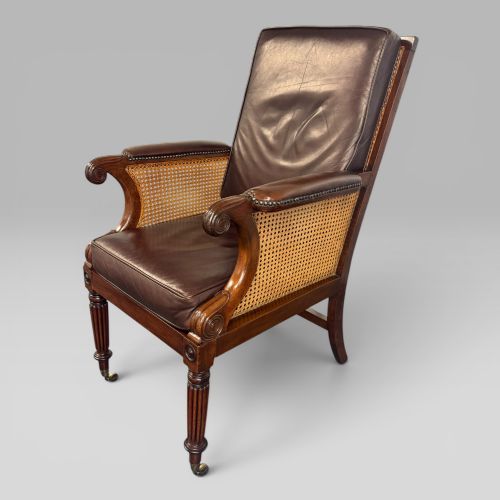
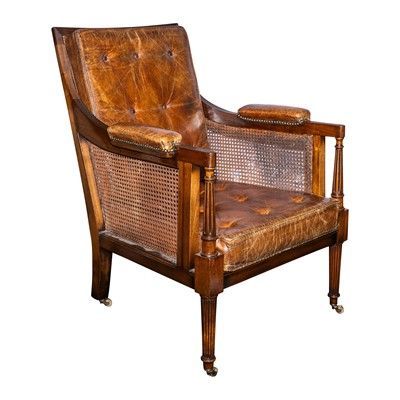
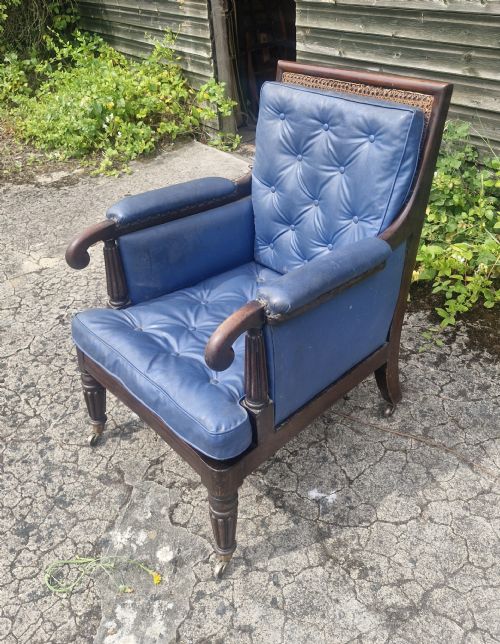
The form typically presents a low-slung, tub-shaped or library profile built to accommodate loose cushions upholstered in leather or velvet. Variations include robust William IV iterations, George IV examples, and occasional child-sized seating built to the same exacting standards.
Makers of the period utilised domestic and exotic timbers to construct frames that balance structural heft with refined neoclassical lines. You encounter straightforward seating alongside substantial library chairs fitted with lyre fronts or brass inlay.
Materials and Construction
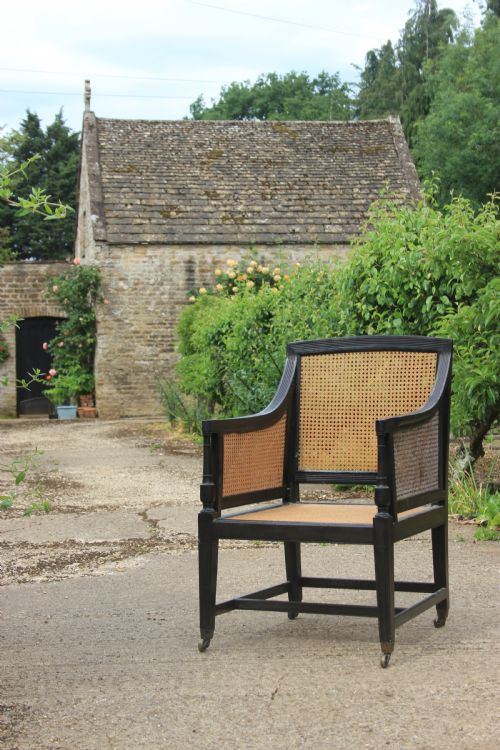
Cabinet makers built the primary frames from dense hardwoods like mahogany, rosewood, and oak, frequently employing ebonisation or simulated rosewood finishes to mimic costlier materials. Skilled hands turned and carved the wood into robust front legs, curved arm supports, and sweeping back rails.
Cane panels, often specified as rattan cane, were hand-woven directly into the frame or sub-rails to provide a resilient, ventilated back and sides. Drop-in or loose cushions upholstered in leather, velvet, or fabric completed the seat, occasionally accented with brass inlay details.
Listings feature mahogany, rosewood, and oak frames paired with traditional rattan cane and leather upholstery.
Markers of Quality
The distinction between ordinary and exceptional chairs rests in the drawing of the frame and the generosity of its proportions. Superior examples display fluid curves, balanced turnings, and a substantial gauge of timber that imparts a commanding presence in a library.
Cane-work integrity and the sophistication of secondary woods further separate the tiers of craftsmanship. Finer pieces demonstrate tight, uniform cane weaving and meticulous secondary detailing such as brass stringing or carved lyre motifs.
Gillows
The Regency Bergere Armchair Glossary
- Bergere
- An enclosed upholstered armchair with solid sides, adapted in England during the Regency to incorporate woven cane panels. The design offers deep, comfortable seating suited for long hours in a library.
- Caning
- A technique of weaving split rattan material to form a porous, flexible panel for chair backs and sides. This method provides lightweight structural support while maintaining visual lightness.
- Simulated rosewood
- A painted or stained surface treatment applied to cheaper timbers like beech or birch to imitate the deep grain and rich colour of genuine rosewood. Craftsmen utilised this method to achieve a luxurious finish at a reduced cost.
- Lyre front
- A front seat rail or arm support shaped in the stylized outline of an ancient Greek lyre instrument. This decorative feature appears frequently on library seating of the nineteenth century.
- William IV
- A transitional stylistic period spanning the 1830s characterised by heavy, robust furniture forms that evolved out of Regency neoclassicism. Pieces from this era often feature dense mahogany and bold proportions.
Regency Bergere Armchair: Frequently Asked Questions
What is a bergere armchair?
A bergere armchair is an enclosed seat featuring solid or caned sides and a deep profile designed for comfortable lounging. These chairs originated in France and became a staple of English Regency libraries.
The defining characteristic is the woven cane work wrapping the back and arms, paired with a loose seat cushion. They were built for reading rooms and studies where formal yet comfortable seating was required.
How do I date a regency armchair?
Dating relies on examining the timber species, joinery methods, and stylistic cues such as leg turning and brass inlay. True Regency pieces date from the early nineteenth century and display crisp neoclassical proportions.
Later nineteenth-century iterations and Edwardian revivals often feature heavier timbers or subtly different turnings. Comparing the construction details against documented period examples helps confirm the era of manufacture.
Were these chairs used in libraries?
Library use was the primary function for these deep, caned armchairs during the nineteenth century. The enclosed sides and supportive cane back provided comfort during extended periods of reading.
Library bergere chairs often included brass castors for easy movement across heavy carpets. Their generous proportions made them ideal additions to gentleman's studies and private collections.
How do I care for antique caning?
Antique caning requires moderate humidity and gentle cleaning to prevent the rattan fibres from drying out and snapping. Avoid placing the chair near direct heat sources or in overly dry environments.
Dusting the cane regularly with a soft brush keeps the weave clean. Periodic light conditioning can help maintain the flexibility of the historical material.