


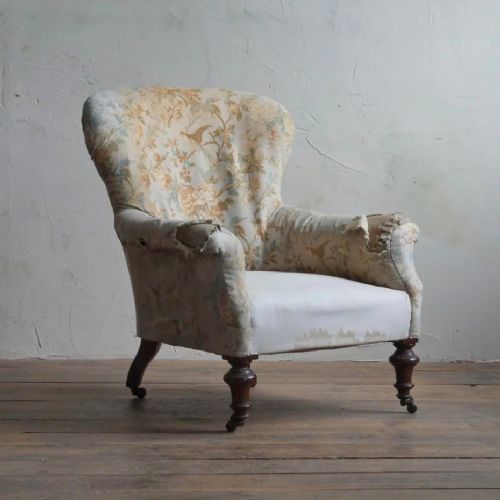


English Country Library Seat
An English country library seat offers deep comfort paired with traditional craftsmanship, making it the ideal reading chair for a quiet study.
English Country Library Seat
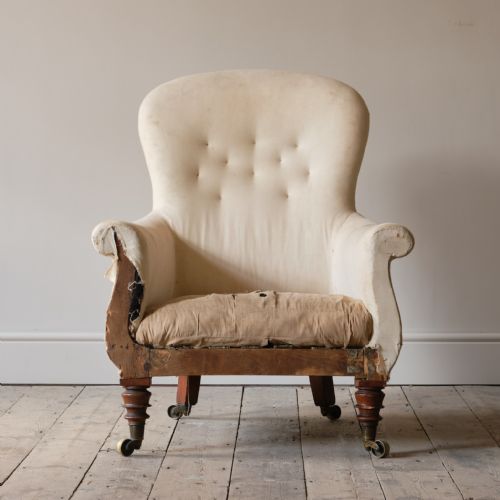
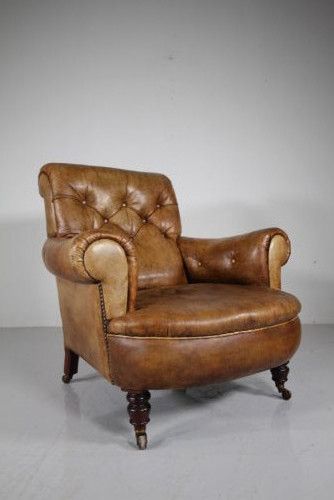
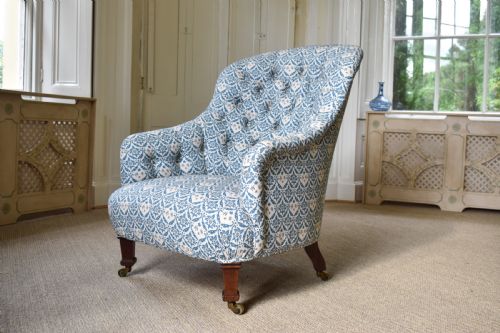
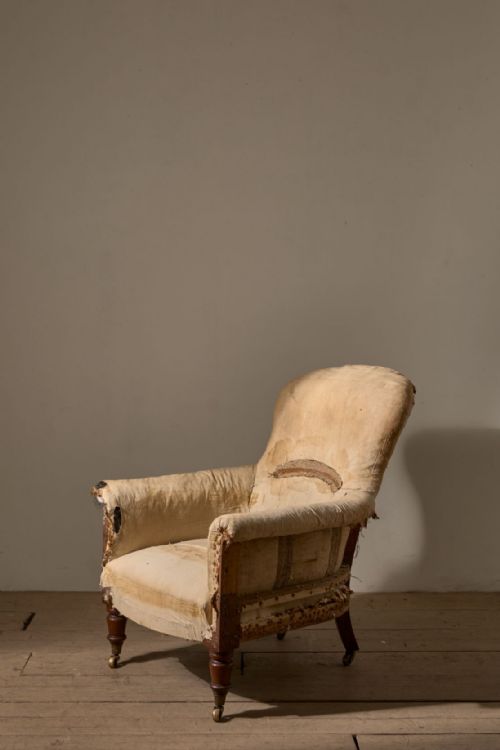
An English country library seat combines sturdy nineteenth century construction with generous proportions designed for relaxation. These armchairs frequently appear in styles such as Regency, Victorian, and Georgian, reflecting the domestic tastes of English country houses.
The selection here includes deep seated spoon back armchairs, button back designs, and open armchairs. Mahogany and rosewood form the structural foundation of these reading chairs, while upholstered elements provide cushioned support.
Makers and specific workshop pieces appear alongside vernacular designs, showing both formal library seating and relaxed country house furnishings. Buyers searching for an English country library seat will find pieces ranging from the early nineteenth century into the twentieth century.
How they were made
Cabinet makers utilised dense hardwoods such as mahogany and rosewood to construct the frames of these armchairs, ensuring lasting stability. Brass castors and fine joinery support the lower structure of many pieces.
Upholstery techniques involve traditional stuffing secured beneath materials like leather, velvet, calico, and fabric. Button back execution and deep seating require precise stitching to maintain shape and comfort over generations.
Listings feature mahogany, rosewood, brass, leather, and velvet across nineteenth century and early twentieth century periods.
What varies in quality
The refinement of the wooden frame carves out a distinction between standard workshop production and master cabinet making. Subtle proportions and the choice between figured mahogany or rosewood elevate the visual presence of a piece.
The integrity of the original upholstery materials, from supple leather to structured fabric, shapes the tactile experience. Preserved frame stability and untouched structural timber distinguish superior examples from heavily altered seating.
Howard & Sons·J.Mills
The English Country Library Seat Glossary
- Bergère
- An enclosed armchair with upholstered back and sides, usually featuring cane work or fabric panels. These seats date back to the eighteenth and nineteenth centuries.
- Gainsborough armchair
- A wide, open armed reading chair with a padded back and seat, standing on short legs. This form gained popularity during the Georgian period.
- Spoon back
- An upholstered chair back curved to match the contours of the human spine. The shape resembles the bowl of a spoon.
- Button back
- An upholstery style where buttons are pulled deep into the padding to create a grid of tufts. This technique adds tension and decorative depth to the surface.
English Country Library Seat: Frequently Asked Questions
What is an English country library seat?
An English country library seat is a large, comfortable armchair designed for reading and study in traditional residential settings. These chairs feature solid wood frames and deep upholstery.
The current selection spans the nineteenth and twentieth centuries, encompassing styles from Regency elegance to relaxed vernacular forms.
How do I identify a Regency library chair?
Regency library chairs typically display classic architectural lines, dark hardwoods like rosewood or mahogany, and refined structural details. They reflect the classical revival tastes of the early nineteenth century.
Matching pairs and bergère forms often appear within this stylistic period, paired with brass castors.
Where were these armchairs placed?
These armchairs found their place in private libraries, studies, and drawing rooms of country houses. Their generous proportions were intended for long hours of reading.
Today, they function well as standalone reading chairs in domestic living spaces or studies.
What materials make up these seats?
The structural frames rely on hardwoods including mahogany and rosewood, sometimes accented with brass fittings. Upholstery covers range from leather and velvet to fabric and calico.
Traditional stuffing materials support the upholstered surfaces beneath the outer textiles.