



Regency Armoire Cupboard
A regency armoire cupboard offers generous storage through architectural presence and figured timbers, bringing period proportion directly into a bedroom.
Regency Armoire Cupboard
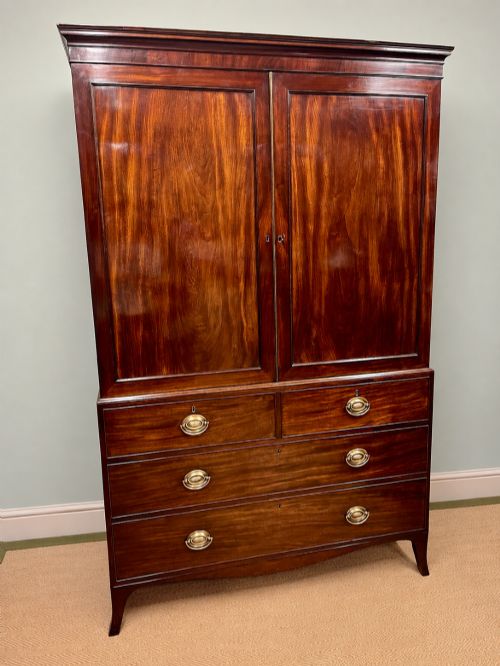
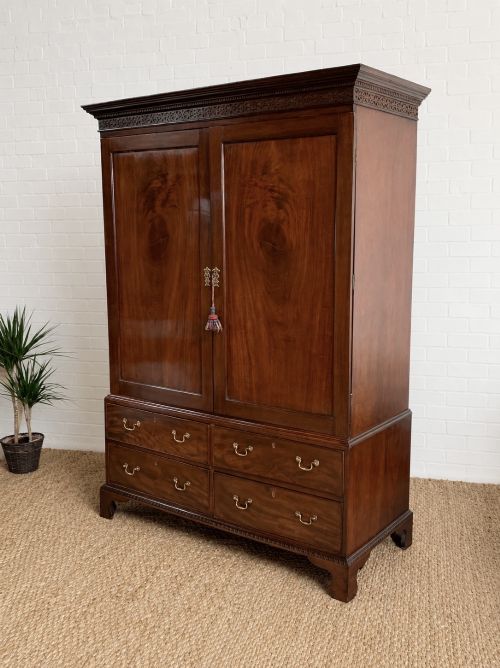
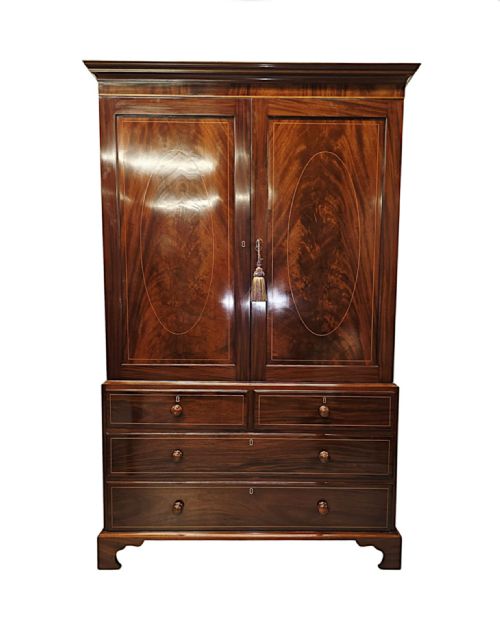
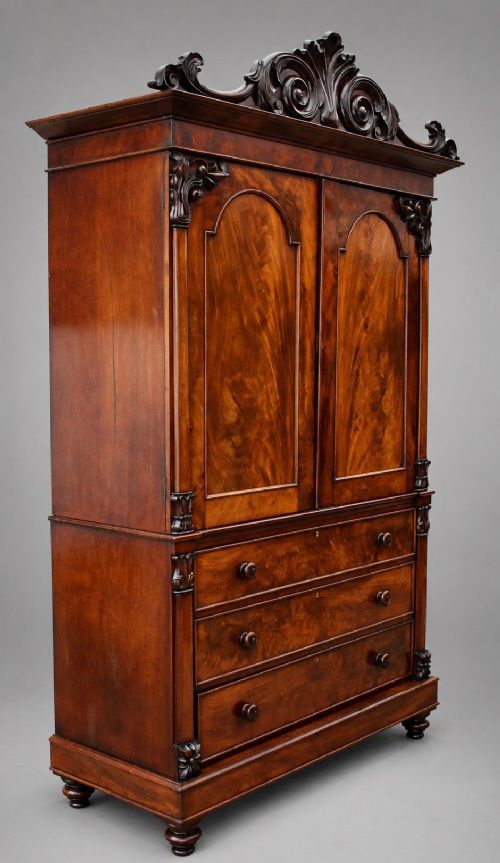
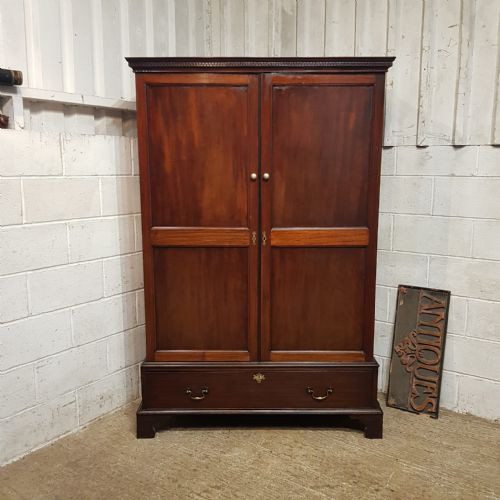
When searching for a regency armoire cupboard, buyers encounter substantial storage furniture developed from earlier linen presses and wardrobes. These pieces combine upper hanging space or sliding trays with lower drawer banks, standing on bracket feet or plinth bases.
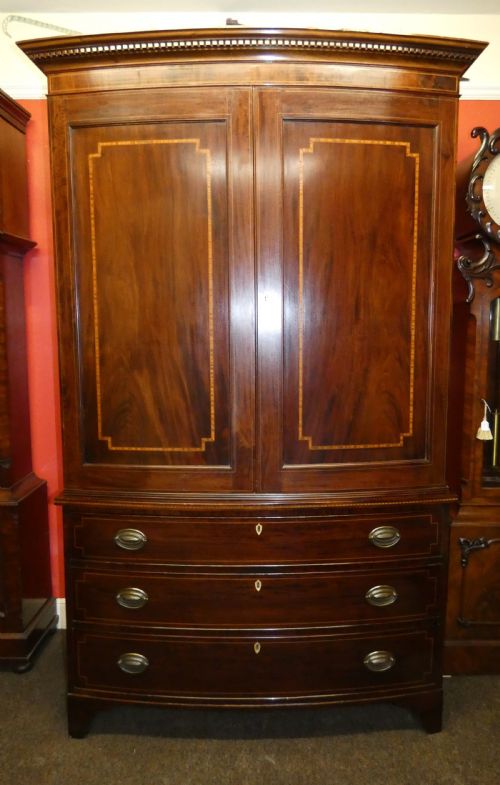
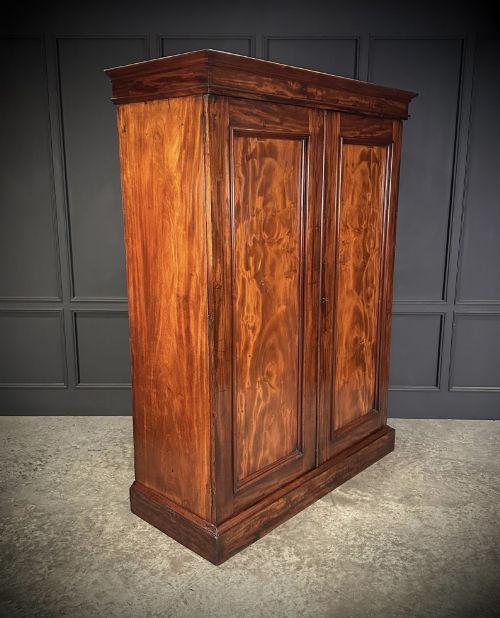
The versions met most frequently on this page date from the nineteenth century, including pieces built in the Regency, George IV, and William IV periods, alongside later revival examples. Forms range from straight fronts to bow-fronted and breakfront configurations executed in mahogany.
Regional variations appear across the selection, including Scottish, Irish, and Channel Island workshops adapting London fashions. Buyers also find corner cabinets and smaller storage cupboards serving the same domestic function.
Assessing quality and proportion
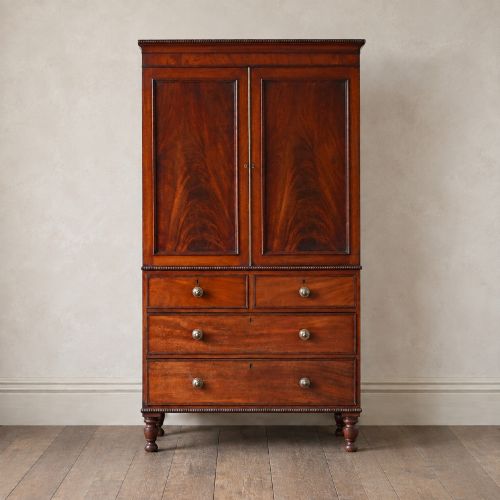
Quality rests primarily on the selection of timber veneers and the crispness of architectural details such as cornices and bracket feet. Pieces utilising matched flame mahogany across symmetrical door panels demonstrate superior craftsmanship compared to plain stock.
Construction integrity inside the piece separates standard production from finer cabinetmaking. Smoothly running internal linen slides, well-fitted drawers with hand-cut dovetails, and original brass hardware indicate higher workshops.
Several pieces preserve the original sliding trays once used to keep household linen flat and neat.
The Regency Armoire Cupboard Glossary
- Linen press
- A tall storage cabinet featuring upper doors enclosing sliding trays or shelves above a chest of drawers. This form evolved specifically for storing folded textiles before hanging wardrobes became standard.
- Flame mahogany
- A veneer cut from timber where the branches join the trunk, producing a distinctive, fiery pattern. Cabinetmakers used this to create decorative panels on door fronts.
- Blind fretwork
- Carved ornamentation applied to a solid background so that it appears pierced rather than fully open. It adorns cornices on selected pieces.
- Breakfront
- A piece of furniture where the central section projects forward from the flanking wings. This layout creates depth and breaks up large expanses of timber.
Regency Armoire Cupboard: Frequently Asked Questions
What is a regency armoire cupboard?
A regency armoire cupboard is a large nineteenth-century storage piece combining wardrobe hanging space or linen slides with lower drawers.
These pieces reflect the neoclassical tastes of the Regency and George IV periods through architectural cornices and figured mahogany veneers.
How do I use one today?
These large cupboards serve effectively as primary bedroom wardrobes or linen stores.
Internal configurations often require the addition of hanging rails or adjustable shelves to suit modern clothing storage.
How do I distinguish Regency from William IV?
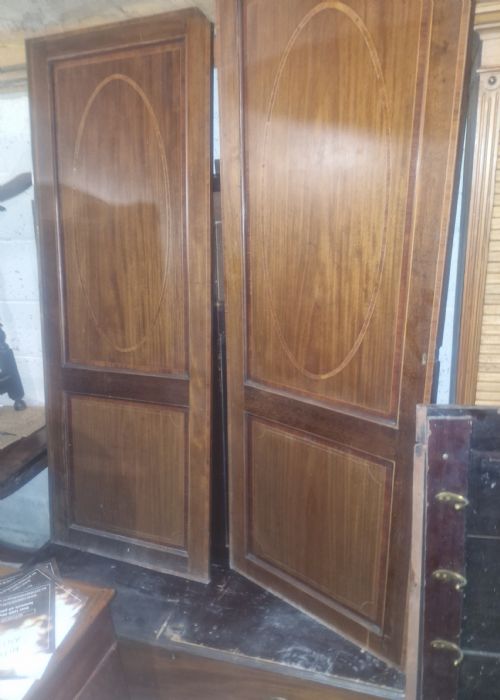
Regency pieces generally display refined neoclassical lines, delicate inlay, and restrained brass mounts.
William IV furniture tends toward heavier proportions, larger scroll feet, and bolder mahogany grain patterns.
Are painted versions period correct?
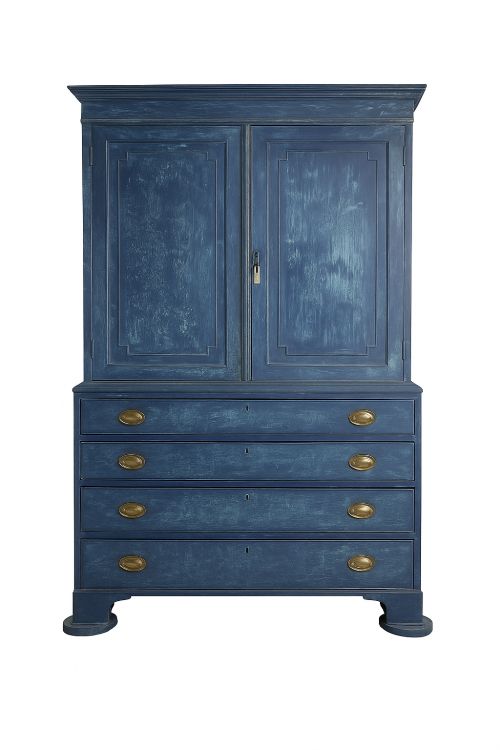
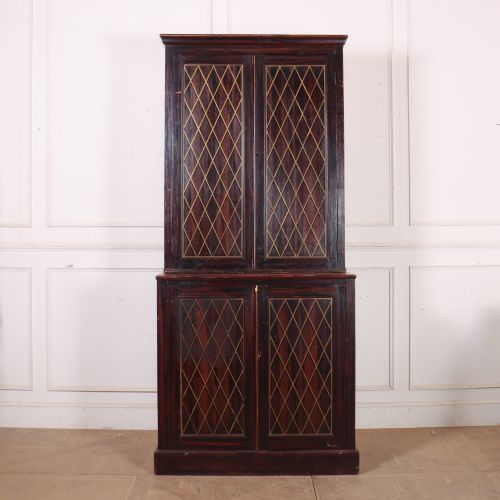
Painted finishes appear on nineteenth-century pieces alongside polished mahogany surfaces.
Decoration often involves muted colours applied to highlight panel details and architectural mouldings.