


Period Mahogany Wardrobe
A period mahogany wardrobe brings deep timber grain and classical proportion into a bedroom, offering substantial storage built to last centuries.
Period Mahogany Wardrobe
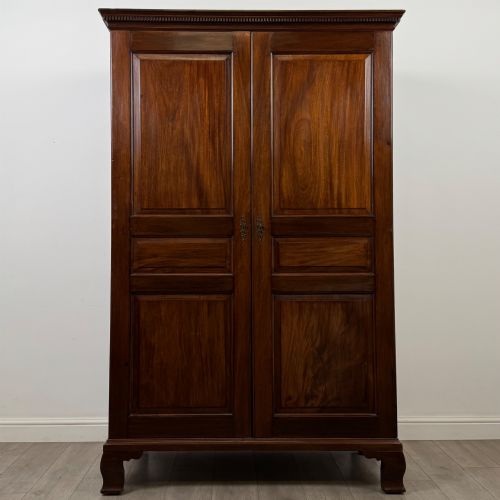
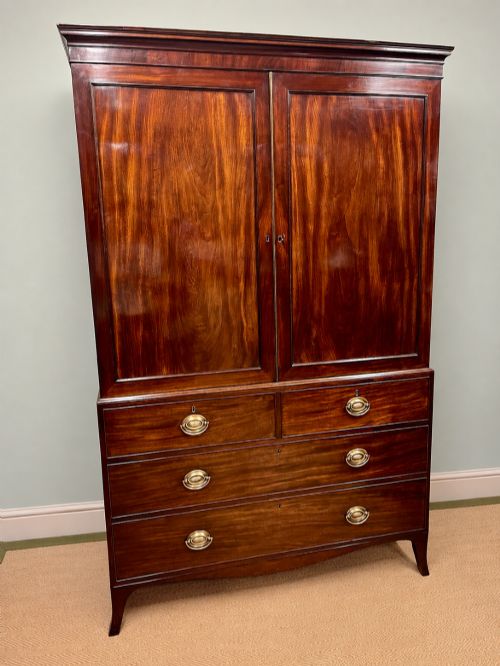
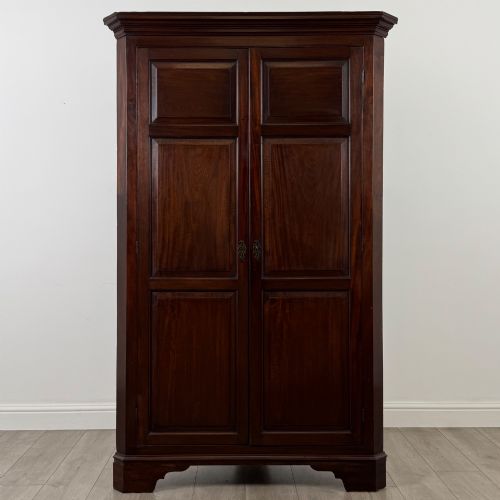
A period mahogany wardrobe encompasses tall storage furniture built across the eighteenth and nineteenth centuries, spanning Georgian, Regency, William IV, and Victorian eras. These pieces take the form of traditional hanging wardrobes, compactums, and linen presses featuring internal sliding trays or drawer banks beneath upper hanging space.
The most common examples met here belong to the Georgian and Regency periods, alongside substantial Victorian breakfront iterations. Buyers often encounter pieces described as gentleman's wardrobes or linen presses, reflecting the original domestic requirements of storing folded garments and linen alongside coats.
Origins stretch across English workshops, Irish cabinets, and regional centres such as the Channel Islands. Formats range from modest single and double door cupboards to massive multi-door breakfront combinations incorporating drawers and central mirror panels.
How they were made
Cabinet makers utilised solid timber and figured veneers over supportive secondary woods like oak, selecting Cuban mahogany for its density and deep colour. Flame mahogany veneer and satinwood stringing frequently form decorative geometric panels across door fronts and cornices.
Construction relies on traditional joinery, including hand-cut dovetails for drawer boxes and pegged mortise and tenon frames. Brass hardware, from escutcheons to hanging hooks, provides structural and visual contrast against the dark polished wood surfaces.
Gentlemen once locked their daily cravats and silk stockings securely away inside deep press trays while servants stoked the morning fires.
What varies in quality
The selection of timber grain dictates visual hierarchy, with book-matched flame mahogany veneers and figured Cuban mahogany commanding higher regard than plain stock. Mastery in matching grain patterns across large double doors demonstrates the skill of the original workshop.
Architectural ambition separates standard utility pieces from exceptional commissions, seen in details like swan-neck pediments, carved fretwork cornices, and integrated satinwood inlay. The precision of internal drawer construction and original brass locking mechanisms further define superior craftsmanship.
Gillows of Lancaster·Morris and Co·Howard and Sons Of London·Shapland and Petter of Barnstaple·Edwards and Roberts
The Period Mahogany Wardrobe Glossary
- Linen Press
- A tall piece of furniture comprising upper sliding trays for folded textiles above a chest of lower drawers. Many examples were later converted to hanging wardrobes.
- Compactum
- A multi-functional wardrobe designed to maximise storage by combining hanging space, linen slides, and multiple internal drawers within a single carcass.
- Swan-neck Pediment
- A decorative broken arch cornice curving upward and inward, frequently terminating in a scroll or patera. This feature appears on grander eighteenth-century pieces.
- Breakfront
- A large cabinet design where the central section projects forward from the flanking wings, creating visual depth and proportion. This format is common in Victorian examples.
- Flame Mahogany
- A veneer cut from timber where the grain diverges, producing a rippling flame-like pattern. Makers utilised this effect on prominent display surfaces.
- Satinwood
- A pale, dense exotic wood employed for contrasting stringing, banding, and inlay work. It highlights drawer outlines and door panels.
Period Mahogany Wardrobe: Frequently Asked Questions
How do I distinguish a linen press from a wardrobe?
A linen press traditionally houses internal sliding wooden trays behind its upper doors, designed for stacking folded garments and household linens. A wardrobe prioritises vertical hanging space for coats and long garments on rails or pegs.
Over the centuries, many linen presses underwent internal conversion to hanging wardrobes by removing the trays to suit changing domestic habits.
Will a period mahogany wardrobe fit in a modern bedroom?
Most period wardrobes arrive as large, heavy carcasses that require careful measurement of ceiling heights and stairway clearances before purchase. Many eighteenth and nineteenth-century examples dismantle into sections, including cornices, base plinths, and main side panels, to ease transport.
Checking internal depth is essential, as older hanging orientations often require shallower clothes hangers than standard modern wardrobes accommodate.
How do I tell a Georgian wardrobe from a Victorian one?
Georgian pieces generally display restrained classical proportions, architectural cornices, and bracket feet or simple plinths, often featuring rich Cuban mahogany. Victorian wardrobes tend to be heavier, with broader breakfront footprints, arched panel doors, and more exuberant figured mahogany veneers.
Hardware styles also help indicate age, moving from brass swan-neck handles on backplates in the eighteenth century to heavier brass knobs and elaborate escutcheons by the late nineteenth century.
How should I care for antique mahogany furniture?
Maintaining period mahogany requires stable room humidity and protection from direct sunlight to prevent the timber from drying and the polish from fading. Regular dusting with a soft, dry cloth preserves the wax finish without building up chemical residue.
Occasional application of traditional beeswax feeds the timber and maintains the deep lustre developed over generations of polish.