
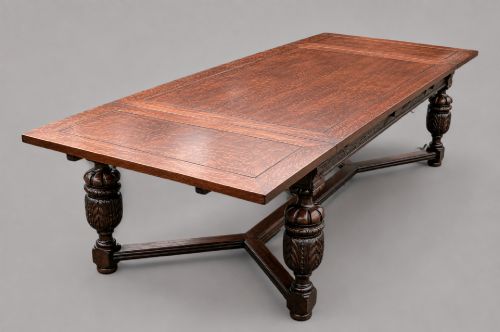
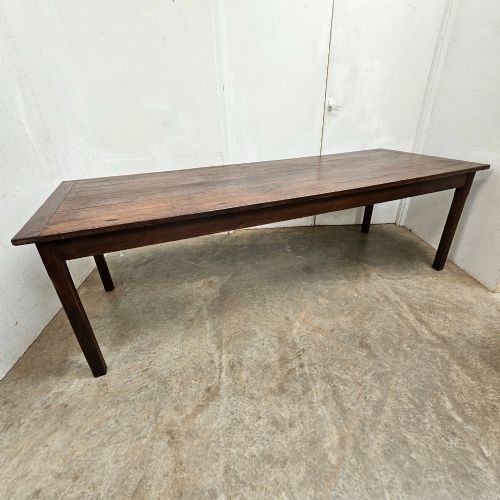
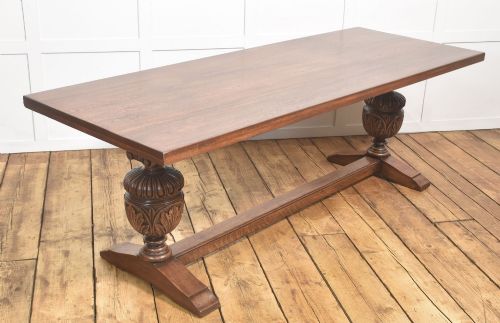
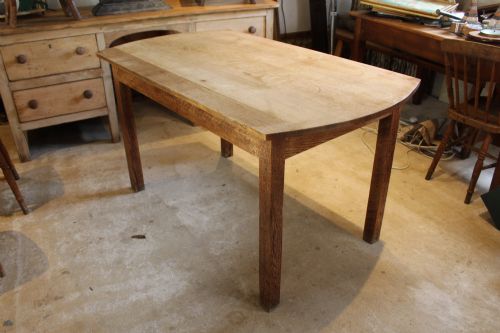
Refectory Style Dining Table
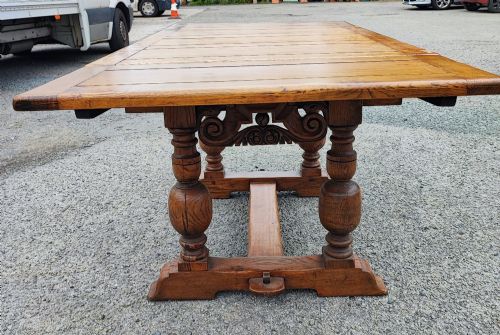
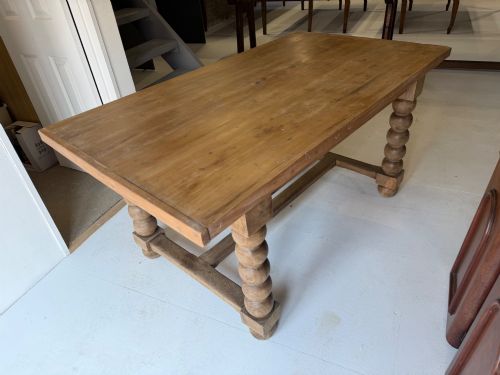
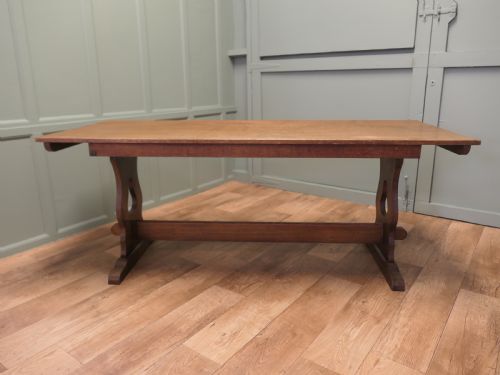
When you search for a refectory style dining table, you are looking at substantial boards supported by trestles or sturdy legs designed for communal gatherings.
Refectory Style Dining Table
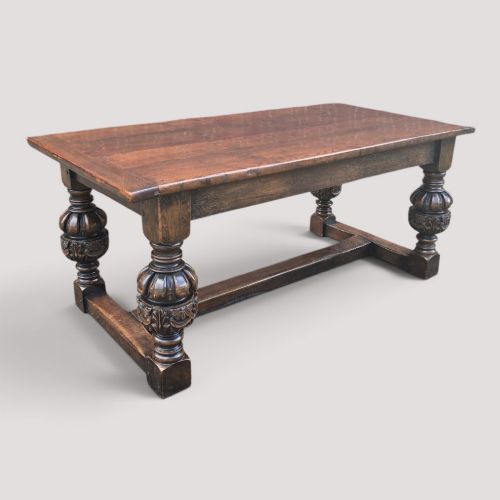
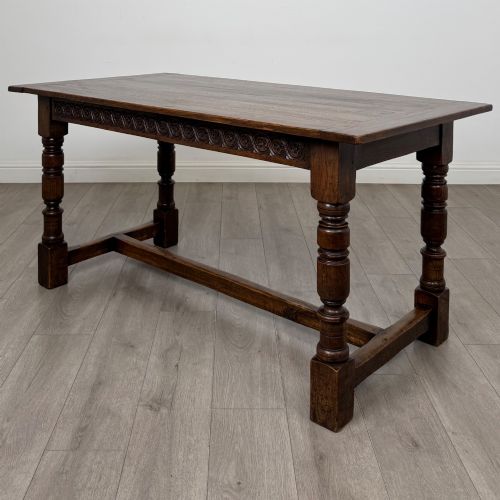
A refectory style dining table provides a long, linear surface historically utilised for large dining halls and monasteries. The examples found here span from seventeenth-century originals to nineteenth and twentieth-century revivals, including Jacobean, Elizabethan, and Arts and Crafts interpretations.
Buyers will most frequently encounter early twentieth-century oak pieces featuring draw leaves or plank tops. These variations adapt the traditional communal board for domestic dining rooms while retaining heavy stretchers and trestle ends.
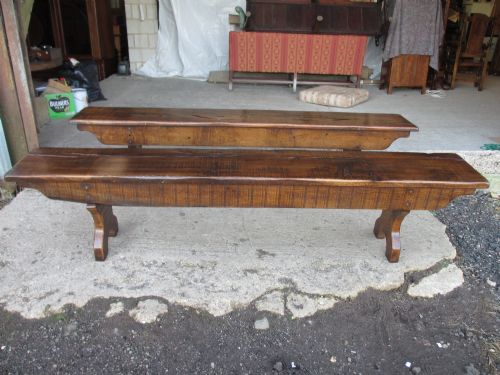
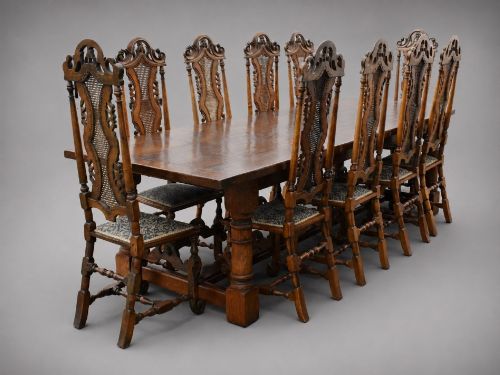
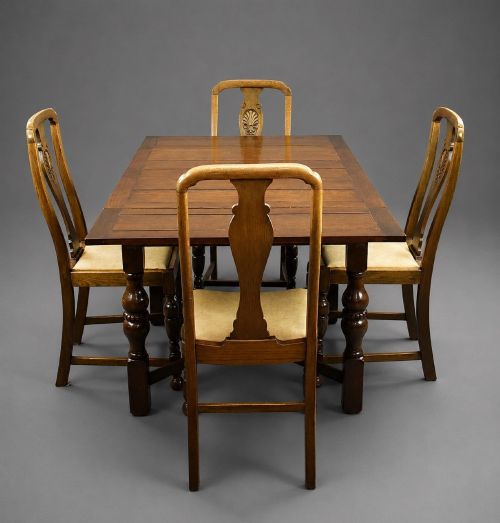
The form prioritises uncompromised legroom beneath a generous timber top. Many listings pair these tables with matching benches or high-back chairs to complete a dining suite.
Materials and construction methods
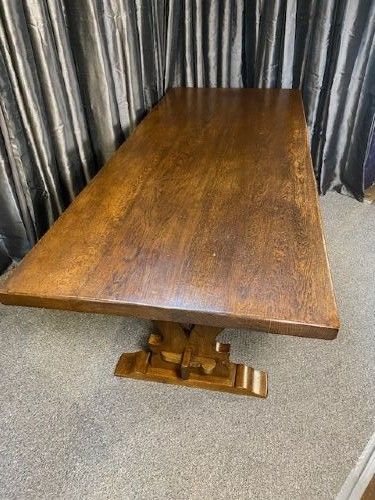
Solid oak dominates the construction of these tables, supplemented occasionally by walnut, ash, pine, and beech. Timber planks are joined to form thick tops, sometimes quarter-sawn to reveal distinct medullary rays.
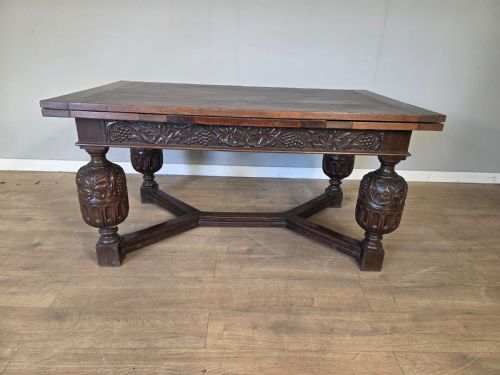
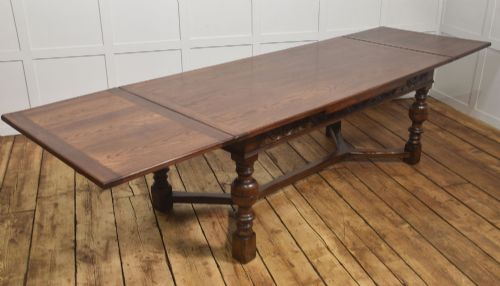
Joinery relies on traditional methods such as pegged mortise and tenon joints connecting heavy legs to stretcher rails. Draw leaf mechanisms utilise sliding under-leaves to extend the surface area smoothly.
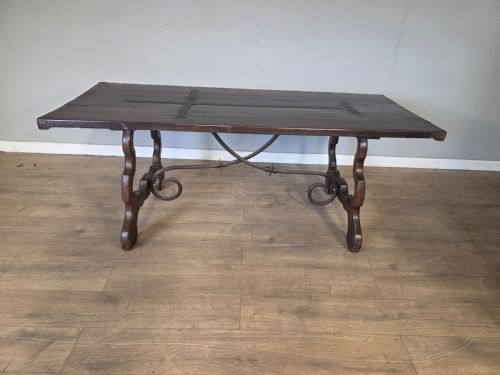
Metal elements appear sparingly as wrought iron stretchers or brass hardware for extension mechanisms. Carved detailing on friezes and bulbous legs reflects period revival styles.
Listings feature oak predominantly, alongside walnut, ash, pine, and beech across nineteenth and twentieth-century revival periods.
Distinguishing quality in construction and timber
The integrity of the timber top determines much of the quality, with thick, stable planks exhibiting tight grain commanding greater respect than warped or poorly seasoned boards. Quarter-sawn oak displays a superior figure and durability.
Underframe construction separates standard production from finer cabinetmaking. Rigid mortise and tenon joints without excessive wobble indicate superior initial assembly and sustained structural health.
Subtlety of hand-carved detailing and the smoothness of draw-leaf extension mechanisms distinguish workshop execution. Well-fitted extensions move evenly without binding against the main frame.
The Refectory Style Dining Table Glossary
- Draw leaf
- A table with pull-out leaves stored beneath the main top. These extensions slide out to lengthen the surface quickly.
- Stretcher
- A horizontal wooden brace connecting the legs of a table. It adds rigidity and stability to heavy frames.
- Trestle
- A support structure consisting of a horizontal beam fixed to two splayed feet. This design maximises legroom along the length of the table.
- Quarter-sawn
- Timber cut radially from the growth rings. This method produces durable boards with a decorative grain pattern.
- Jacobean style
- A heavy, geometric aesthetic popular in seventeenth-century furniture design. Revivals of this style feature turned legs and strapwork carving.
Refectory Style Dining Table: Frequently Asked Questions
How do I seat guests comfortably around these tables?
The absence of corner legs on trestle designs allows diners to sit along the entire length without obstruction.
Matching benches or narrow chairs maximise the seating capacity effectively.
Are twentieth-century revivals built as well as older pieces?
Many Edwardian and interwar workshops utilised seasoned solid oak and traditional joinery methods.
These revival pieces often match the structural sturdiness of earlier centuries while offering functional draw-leaf mechanisms.
How do I care for a solid wood top?
Regular dusting with a dry cloth prevents particulate accumulation on the grain.
Applying natural beeswax periodically nourishes the timber and preserves the surface sheen against everyday use.
Can I use a refectory table in a modern interior?
The linear geometry and warm timber tones integrate easily into contemporary spaces.
Pairing the heavy wooden frame with minimalist seating creates a balanced contrast in a dining room.