


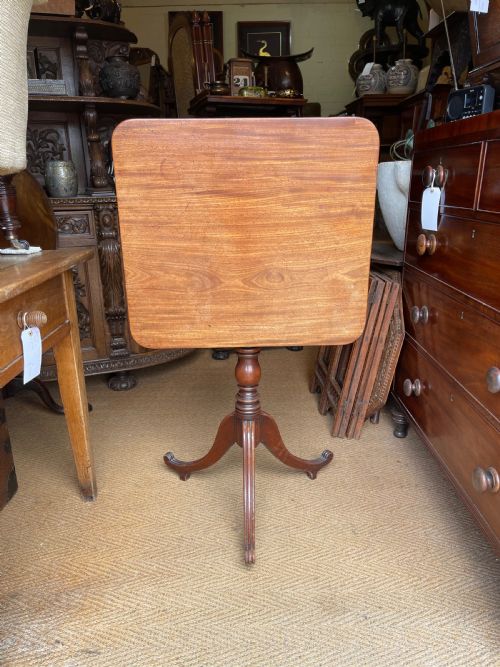


Reeded Pedestal Occasional Table
These reeded pedestal occasional table examples bring compact surfaces and classical lines to a room, offering both practical utility and refined proportion.
Reeded Pedestal Occasional Table
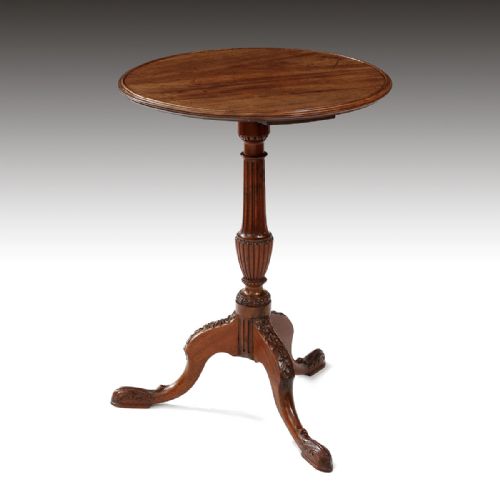
A reeded pedestal occasional table typically presents a turned central column featuring parallel concave mouldings, supporting a timber top above a tripod or stable base. You will frequently encounter forms from the Georgian and Regency periods, alongside later nineteenth century interpretations.
The selection ranges from compact wine tables and tilt-top designs to pembroke and reading tables. Mahogany remains the dominant timber across these varied formats, often accompanied by occasional examples in oak or rosewood.
Buyers often place these versatile small tables beside seating or in corners where a full-size dining or side table proves too cumbersome. Their pillar and claw constructions allow them to tuck neatly into domestic spaces.
How they were made
Cabinet makers relied primarily on solid mahogany and rich veneers, turning the central columns on a lathe to achieve the characteristic vertical reeding. Tops were frequently fashioned from single or matched timber boards, sometimes arranged to tilt on brass or wooden mechanisms.
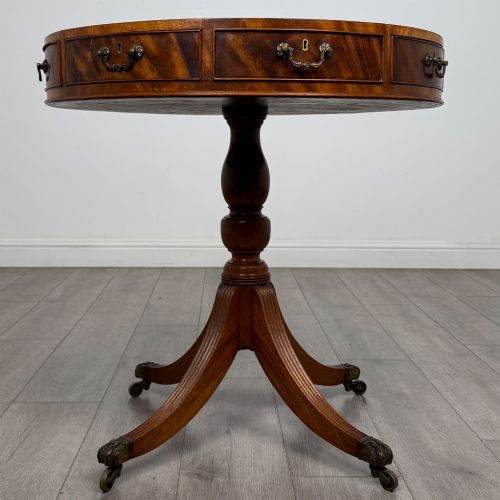
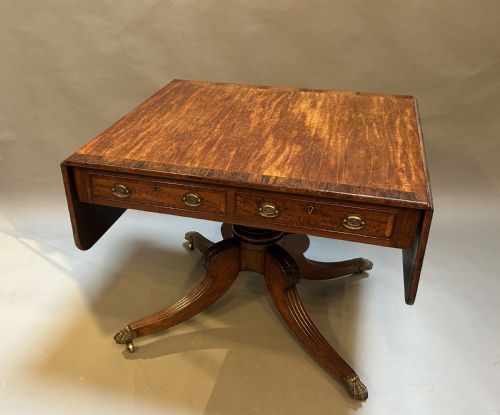
Tripod bases were joined to the central pedestals using dovetail or tenon joints, ensuring structural stability despite the slender profiles. Brass castors occasionally appear on the feet of heavier sofa and reading tables from the Regency and William IV eras.
Listings span multiple decades, incorporating Georgian, Regency, Edwardian, and nineteenth-century periods across diverse table forms.
What varies in quality
Quality rests significantly in the crispness of the turned reeding on the column and the proportional harmony between the top and the supporting legs. Finer examples display carefully selected timber grain and tighter joinery at the pedestal junction.
The execution of the base and the retention of original brass elements or tilt mechanisms distinguish standard workshop output from exceptional cabinet work.
Gillow
The Reeded Pedestal Occasional Table Glossary
- Reeding
- Parallel convex mouldings carved or turned into wood, resembling a bundle of reeds placed side by side. This decorative technique frequently ornaments the central columns of Regency and Georgian tables.
- Tripod table
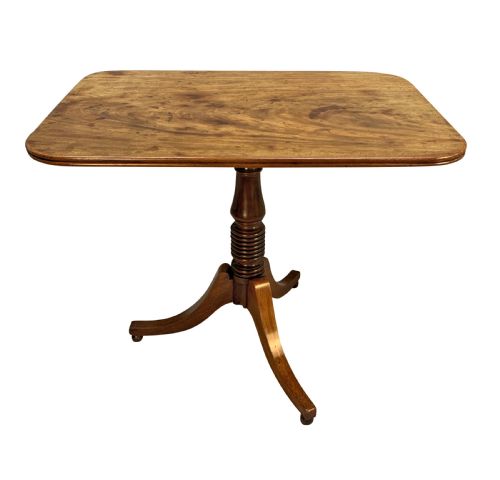
- A small freestanding table supported by a pillar on three legs. This design prevents wobbling on uneven floors.
- Tilt-top
- A hinged tabletop that can be pivoted into a vertical position when not in use. This mechanism allowed tables to be stored flat against a wall.
- Pembroke table
- A drop-leaf table with hinged flaps on either side. It first appeared in the eighteenth century as a versatile piece for breakfast or writing.
- Drum table
- A circular library or occasional table with a deep top resembling a drum. These often incorporate drawers around the perimeter.
Reeded Pedestal Occasional Table: Frequently Asked Questions
How are pedestal tables stabilised?
The weight is distributed evenly across three or four splayed legs connected securely to the central turned column.
Traditional joints and seasoned timbers prevent the pedestal from leaning under weight.
Where should I place an occasional table?
These compact surfaces suit living rooms, reading corners, or hallways where space is limited.
Their modest footprints allow them to sit easily beside armchairs or sofas.
How do I identify a Regency table?
Look for classical revival motifs, such as reeded columns, brass paw feet, and dark mahogany timbers.
proportions tend to draw inspiration from ancient Roman and Greek designs.
Can these tables hold heavy lamps?
Solid mahogany construction and sturdy tripod bases provide sufficient strength for standard table lamps and books.
Care should be taken with tilt-top variants to ensure the locking catch is engaged.