




Reeded Leg Tea Table
These reeded leg tea table examples are classic period pieces of furniture designed for entertaining, prized for their slender turned supports and folding tops.
Reeded Leg Tea Table
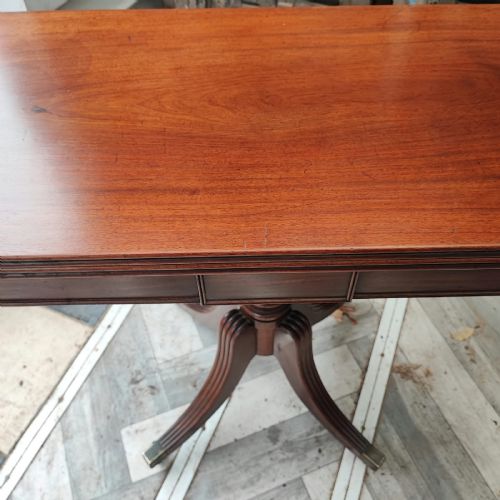
A reeded leg tea table is a versatile antique surface built primarily during the Georgian, Regency, and William IV eras. These tables typically feature a fold-over or turnover top that sits compactly against a wall when closed and opens to double the surface area for social gatherings.
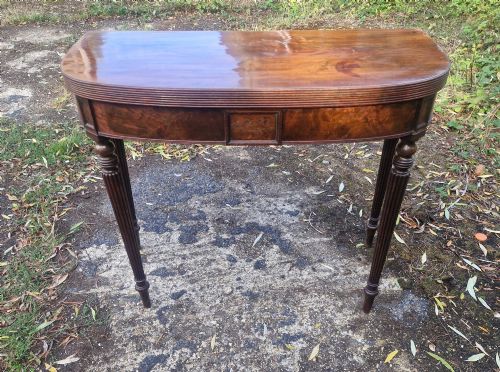
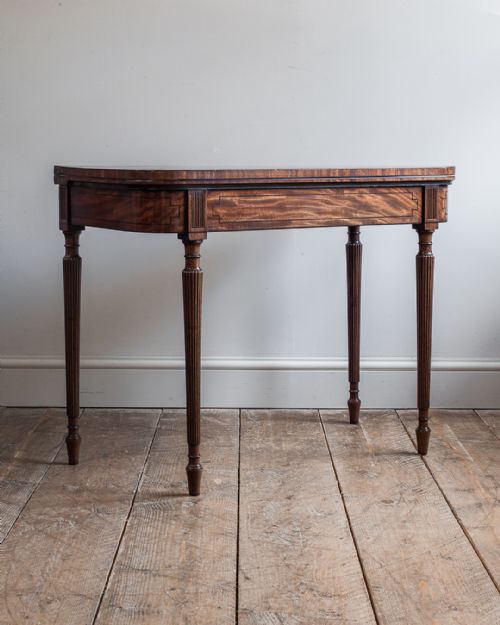
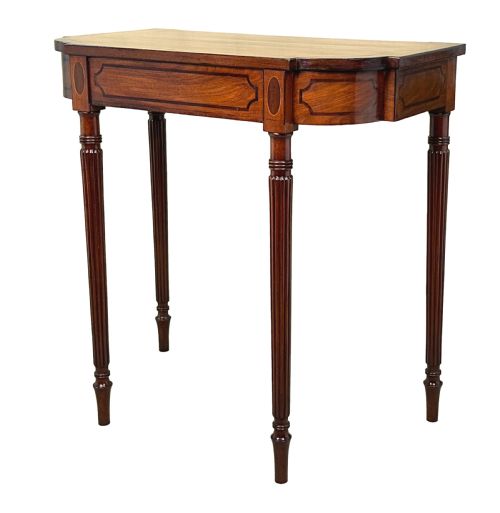
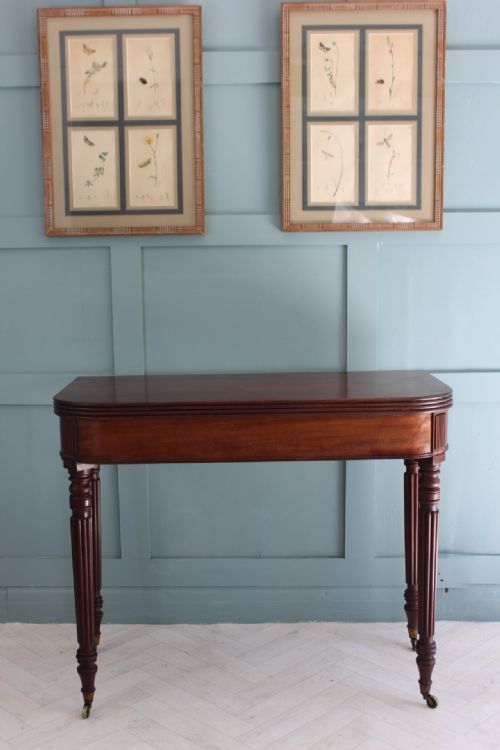
The version you are most likely to meet on this page is the mahogany D-shaped tea table from the Regency period. These pieces often incorporate boxwood inlay or delicate crossbanding, resting on the characteristic parallel carved grooves of the reeded legs.
How they were made
Cabinetmakers constructed these tables using solid mahogany and rich wood veneers, frequently applying boxwood inlay to accent the borders of the fold-over top. The distinctive vertical grooves on the legs were meticulously carved by hand to catch the light and add architectural refinement.
Many examples utilise pivoting wooden mechanisms or brass hinges to support the opening leaf safely. The timber was selected for deep natural grain patterns and finished with traditional French polish.
Reeded Leg Tea Table Retail Price Guide 2026
Typical asking prices for reeded leg tea table among the pieces listed under this phrase on Sellingantiques today, from the lower quarter to the upper quarter. They describe what is for sale here now, not the wider market.
Listings feature mahogany, rosewood, and satinwood alongside brass hardware, boxwood inlay, and cane details across Georgian and Regency periods.
What varies in quality
Quality in a reeded leg tea table depends heavily on the crispness of the hand-carved reeding and the choice of mahogany figure. Superior workshops employed dense, richly grained timber and maintained sharp, clean lines in the turned leg profiles rather than soft or blurred mouldings.
The integrity of the fold-over mechanism and the precision of the mitred joints also dictate the standard of the piece. Tables that retain their original brass fittings and harmonious proportions stand firmly at the upper end of the range.
Gillows
The Reeded Leg Tea Table Glossary
- Reeded
- A decorative moulding consisting of parallel convex strips resembling bundled reeds. It provides a crisp, classical contrast to plain turned wood legs.
- Turnover top
- A hinged table top that folds flat against itself when closed and swings open to reveal a larger surface. This design allowed furniture to serve multiple functions in smaller domestic spaces.
- Crossbanding
- A narrow strip of veneer laid around the border of a table top with the grain running perpendicular to the centre panel. It creates a neat visual frame for the main timber.
- Sabre leg
- A curving, outward-swooping furniture leg with a rounded or rectangular cross-section. It is commonly found on Regency seating and tables.
- Tilt-top
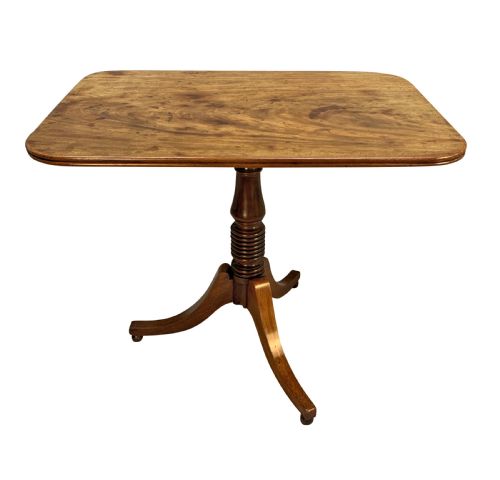
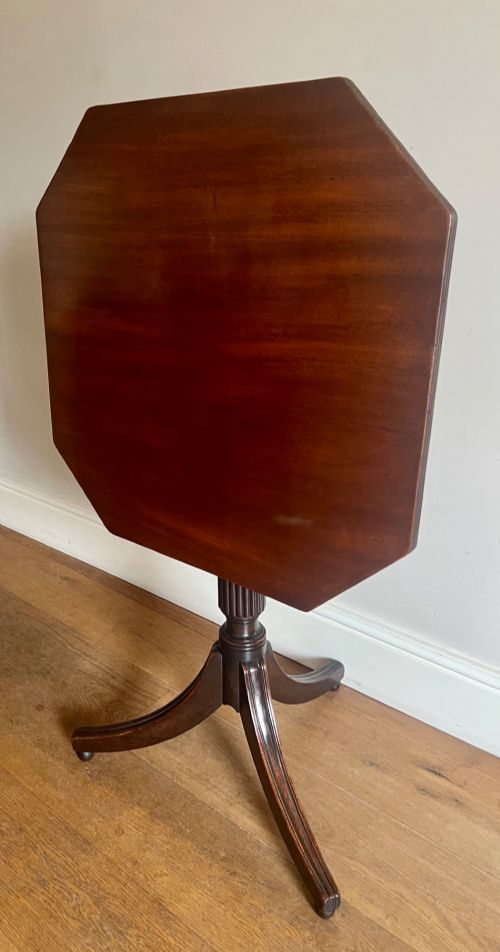
- A table top mounted on a tilting mechanism with a central pillar and tripod base. This allowed the table to be stored upright against a wall when not in use.
Reeded Leg Tea Table: Frequently Asked Questions
What is a reeded leg tea table?
A reeded leg tea table is a folding timber surface from the Georgian and Regency periods. The legs feature carved parallel vertical grooves known as reeding.
These tables were designed to stand against a drawing room wall and open out when guests arrived for tea or card games.
How do you open the top?
The top consists of two matching leaves hinged together, where one leaf rotates on a pivot or swings out on a gate leg. The pivoting action reveals a polished timber surface supported securely by the frame.
Care should be taken to support the weight evenly when operating the hinge mechanism on older tables.
What wood are they made from?
Mahogany is the primary timber used for these pieces, often paired with secondary woods like oak or pine inside the frame. Finer examples incorporate decorative boxwood inlay and satinwood borders.
Cabinetmakers selected dense cuts of mahogany to achieve deep natural colour and a smooth polished finish.
How do I tell Regency from Georgian?
Georgian furniture generally displays heavier proportions, classical carvings, and bracket feet associated with the 18th century. Regency pieces lean towards lighter, more classical lines influenced by Greek and Roman designs.
Reeded legs and brass decorative mounts become much more prominent in the Regency period.
Where should I place one?
These tables fit well in hallways as console surfaces or in living rooms placed against a wall with the top closed. Opening the leaf provides a practical surface for lamps, books, or decorative objects.
Keep them away from direct heat sources and strong sunlight to protect the polished wood finish.