


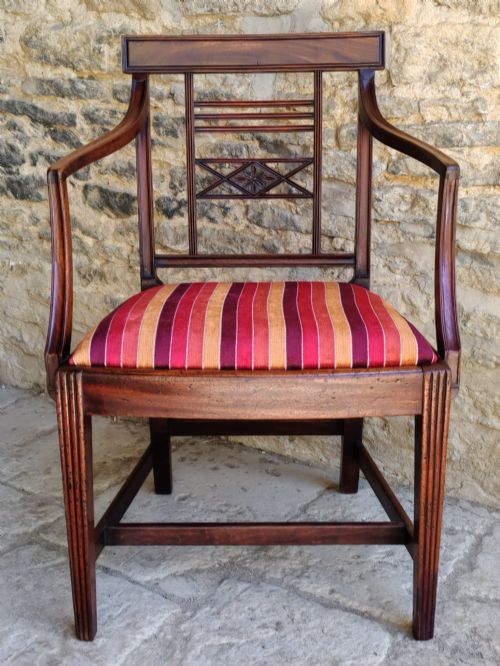
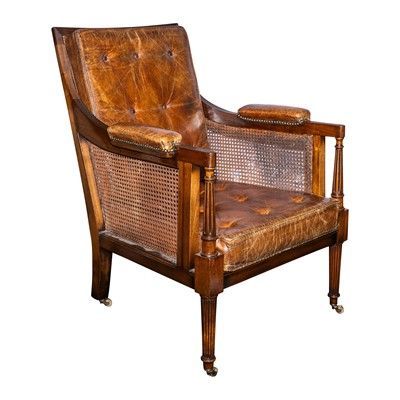
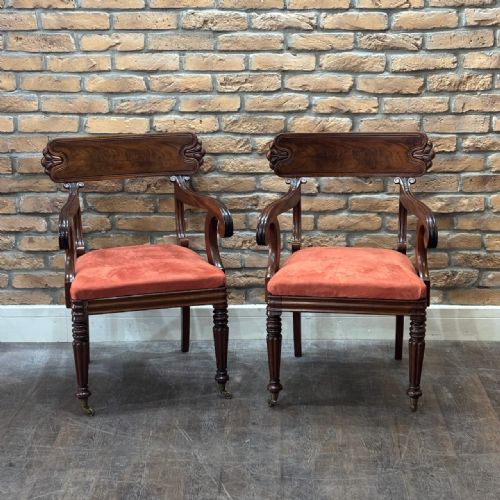


Reeded Leg Armchair
These reeded leg armchairs bring tactile elegance and solid timber construction to any room, offering a functional seat grounded in classic design.
Reeded Leg Armchair
A reeded leg armchair is a seating form defined by its distinctively carved parallel vertical grooves on the timber supports. These chairs appear across the nineteenth century, encompassing Regency, George IV, late Regency, and Victorian periods.
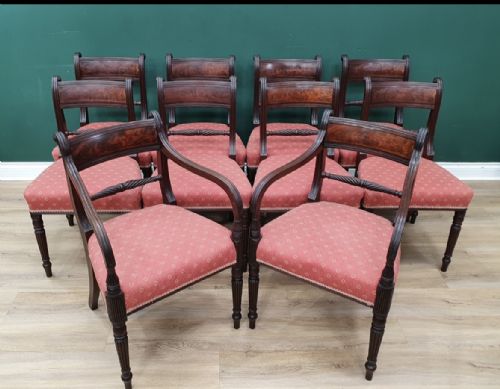
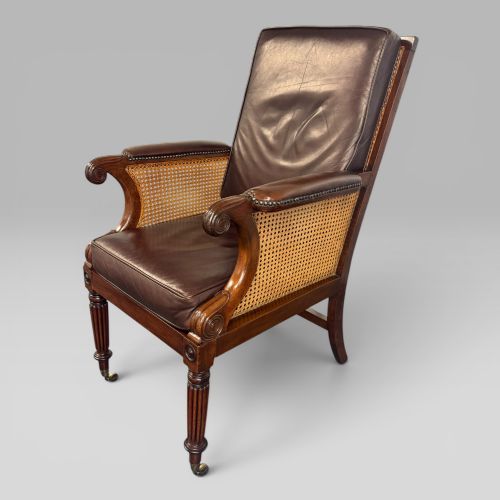
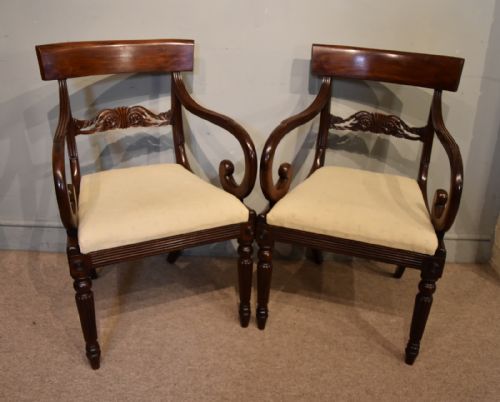
The inventory on this page includes library bergères, tub chairs, open armchairs, and barrel back forms. Mahogany serves as the primary timber, complemented by brass castors, caning, and various upholstered seats in leather, velvet, and fabric.
Examples originate from distinct workshops and regional makers, such as Scottish pieces and labelled Gillows designs. Buyers will frequently encounter mahogany frames paired with drop-in velvet seats, caned panels, or full upholstery.
How They Were Made
Cabinetmakers constructed these frames predominantly from solid mahogany, turning and carving the timber to create the characteristic parallel reeds on the legs. Joinery relies on traditional pegged and tenoned joints designed to withstand heavy daily use.
Secondary materials such as cane panels were hand-woven into the frames to create light, resilient backrests and seats. Upholstered variants utilised horsehair and webbing beneath top layers of leather, velvet, or fabric, secured with brass tacks.
Reeded Leg Armchair Retail Price Guide 2026
Typical asking prices for reeded leg armchair among the pieces listed under this phrase on Sellingantiques today, from the lower quarter to the upper quarter. They describe what is for sale here now, not the wider market.
Listings feature nineteenth-century furniture incorporating mahogany, brass, leather, cane, and velvet across Regency, George IV, and Victorian styles.
What Varies in Quality
Quality rests in the crispness and depth of the hand-carved reeding on the legs, where sharper fluting denotes superior craftsmanship. The choice of dense, richly figured mahogany timber elevates the visual weight and longevity of the frame.
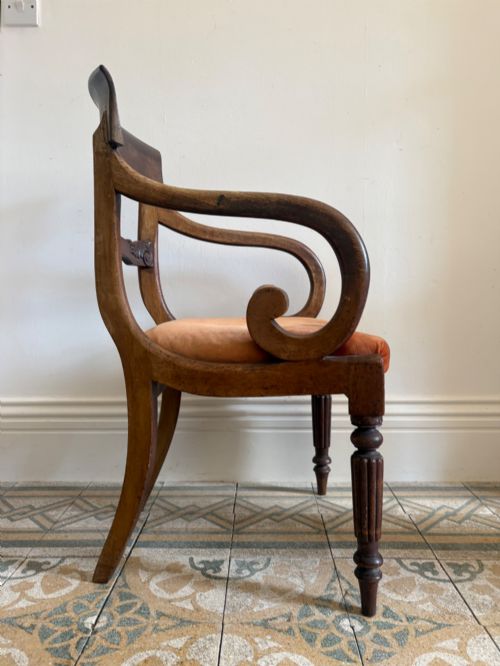
Design complexity also separates standard seating from exceptional commissions, seen in sophisticated forms like lyre fronts, scroll arms, or barrel backs. Retained signatures, stamps, or attributed work from known cabinetmakers further distinguish the highest tier.
Gillows·Daws
The Reeded Leg Armchair Glossary
- Reeded leg
- A support carved with parallel convex mouldings that resemble bound reeds. This decorative turning mimics classical columns.
- Bergère
- An enclosed upholstered armchair with wooden framing and a cane or upholstered back and sides. It originated in France during the eighteenth century.
- Library chair
- A sturdy, comfortable armchair designed for reading rooms and studies. These often feature upholstered arms and durable leather or velvet seating.
- Tub chair
- An armchair with a continuous curved back and sides forming a deep, rounded seating shell. This form wraps around the occupant for added comfort.
- Drop-in seat
- A removable upholstered frame that fits into a recess within the chair rails. It allows for straightforward reupholstering without dismantling the main structure.
Reeded Leg Armchair: Frequently Asked Questions
How do I identify a Regency period chair?
Regency chairs typically display classical influences with rich mahogany timber, elegant turned supports, and disciplined carving. Look for proportion and specific decorative elements like brass inlays or reeded profiles.
Comparing the structural details against known pieces from the era helps confirm the period of manufacture.
What is a bergere chair?
A bergère is an enclosed armchair featuring wooden framing with woven cane or upholstered sides and back panels. They were designed for comfortable lounging in libraries and drawing rooms.
Many examples include loose seat cushions covered in leather, velvet, or traditional fabric.
How were these armchairs used historically?
These armchairs served as comfortable seating in formal libraries, studies, and drawing rooms throughout the nineteenth century. Occupants used them for reading, writing, and social conversation.
Sturdy timber frames and upholstered or caned seats ensured durability during daily domestic use.
How do I care for antique mahogany furniture?
Maintain mahogany frames by keeping them away from direct sunlight and sudden temperature shifts. Dust the timber regularly with a soft, dry cloth to protect the polished surface.
Avoid chemical polishes and consult a specialist for leather or fabric maintenance.