



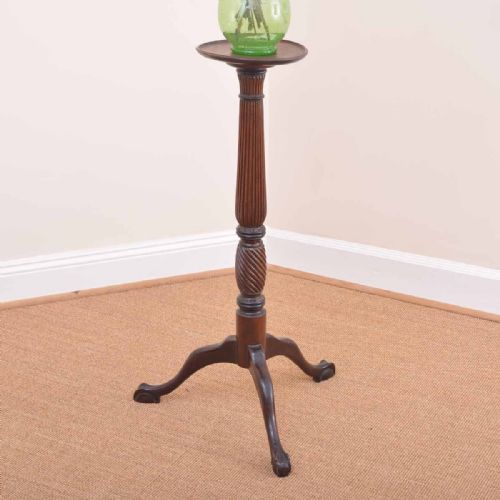

Reeded Column Stand
A reeded column stand provides architectural elegance and practical elevation, bringing classic vertical lines to interior spaces.
Reeded Column Stand
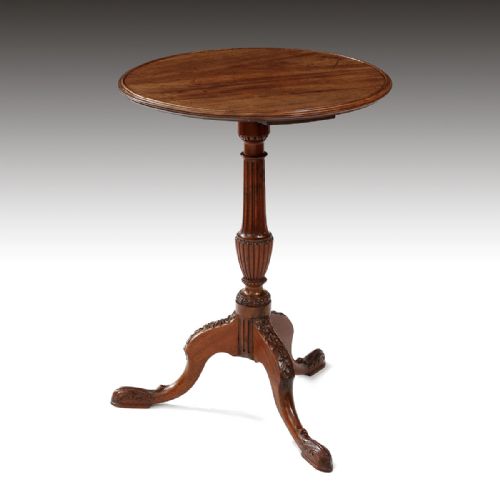
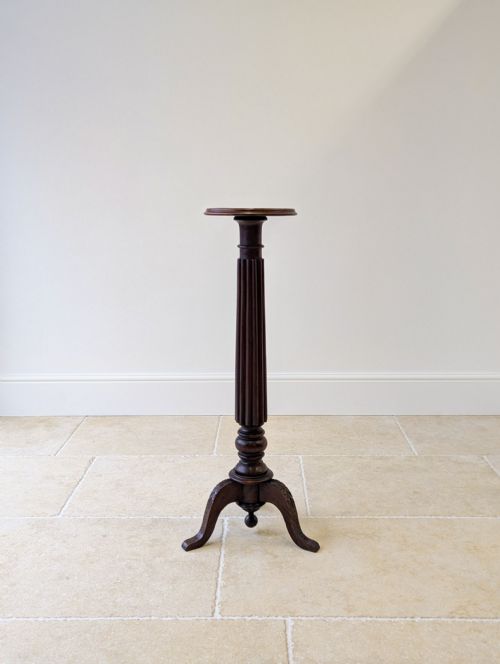
A reeded column stand brings classical proportion into domestic spaces, serving as a support for lighting or display. These pieces appear in forms such as torcheres, standard lamps, and plant stands, lifting objects above floor level with considerable architectural presence.
The pieces listed on this page span the Regency, Victorian, and Edwardian periods, alongside early twentieth-century examples. Mahogany and brass dominate the material palette, often accompanied by bronze, ebonised wood, and gilt wood.
Buyers are most likely to encounter mahogany torcheres and adjustable brass standard lamps within this selection. These items reflect the enduring appeal of classical revival styles, particularly Regency and William IV interpretations.
How they were made
Makers shaped dense timbers like mahogany on lathes to carve the parallel vertical grooves known as reeding along the shaft. This technique requires steady precision to maintain even spacing and depth down the entire length of the column.
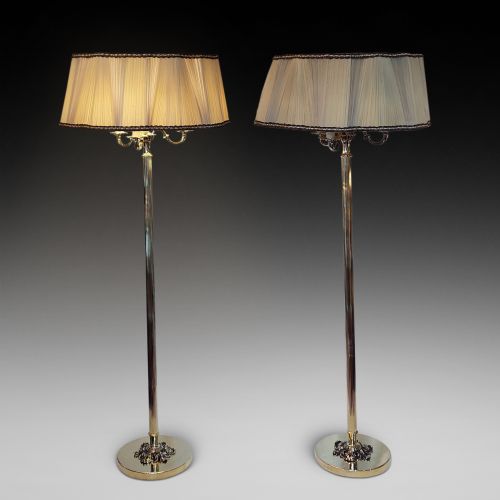
Metal examples utilise cast brass and bronze components, often combining weighted bases with adjustable height mechanisms. Gilt wood and lacquered finishes are applied to highlight decorative details such as Corinthian capitals and stepped bases.
Materials across current and past items include mahogany, brass, bronze, glass, and lacquer.
What varies in quality
Quality rests upon the crispness of the carved reeding and the structural stability of the base. Superior examples exhibit sharp, clean lines where the convex mouldings meet the shaft, whereas lesser versions show softening from wear or hurried execution.
Materials and hardware also distinguish the range, from heavy cast brass fittings to simpler plated metals. The integrity of period finishes, whether polished mahogany or original lacquer, separates standard production items from finer workshop pieces.
Gillow
The Reeded Column Stand Glossary
- Reeding
- Parallel convex mouldings carved closely together along a column or shaft. This decorative feature adds texture and visual depth to classical furniture legs and lamp standards.
- Torchere
- A tall decorative stand designed to support a lamp, candle, or decorative object. Originating in the seventeenth century, these stands elevate light sources to illuminate dark corners.
- Corinthian capital
- The uppermost decorative member of a column, adorned with carved acanthus leaves and scrolls. It marks the most ornate order of classical architecture.
- Dumb waiter
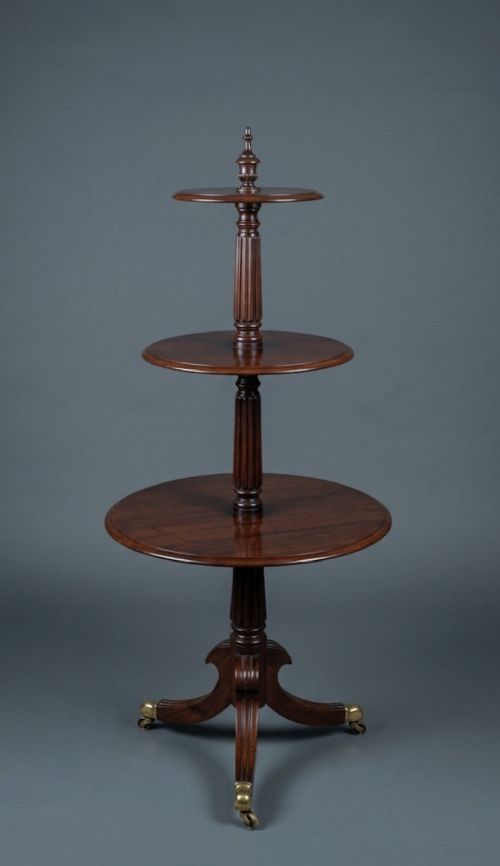
- A tiered stand featuring rotating or fixed circular trays used for serving food or displaying items. These multi-level pieces allow for compact vertical storage.
- Ebonised wood
- Timber treated with a dark stain or finish to imitate expensive ebony. This technique was popular in various nineteenth-century revivals to create high-contrast furniture details.
Reeded Column Stand: Frequently Asked Questions
What is a reeded column stand used for?
These pieces serve primarily to support standard lamps, lighting fixtures, or decorative objects like plants and urns. Their elevated design brings vertical interest to corners and open spaces within a room.
Historically, torcheres and stands functioned to hold illumination devices before electric lighting became widespread. Today, they continue to act as both functional furniture and sculptural decorative elements.
How do I date a standard lamp?
Dating relies on examining the materials, construction techniques, and stylistic revival periods represented in the piece. Regency and Victorian examples show traditional timber turning and heavy brass casting, while twentieth-century versions often feature different wiring methods and adjustable mechanisms.
Details such as the form of the base, the treatment of the capital, and the presence of maker attributions help place an item within a specific decade or century.
Where should I place a torchere stand?
A torchere stand suits corners, hallways, or beside seating where vertical height can balance low furniture. Their slender profile allows them to occupy minimal floor space while making a strong visual statement.
Care should be taken to position taller stands securely away from heavy foot traffic, particularly when they support fragile lamps or decorative items.
Are brass and mahogany stands durable?
Solid mahogany and cast brass offer robust structural integrity that withstands daily domestic use over generations. Regular dusting and appropriate care for polished wood or metal preserve their surfaces.
Adjustable models require gentle handling of their extension mechanisms to ensure the internal components remain in good working order.