





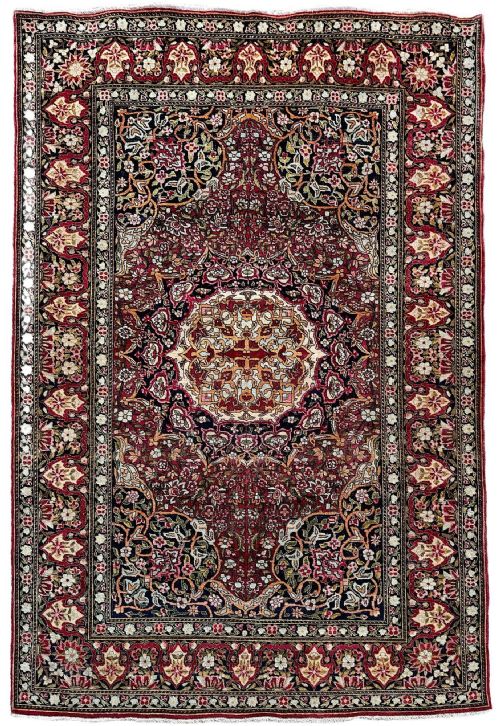
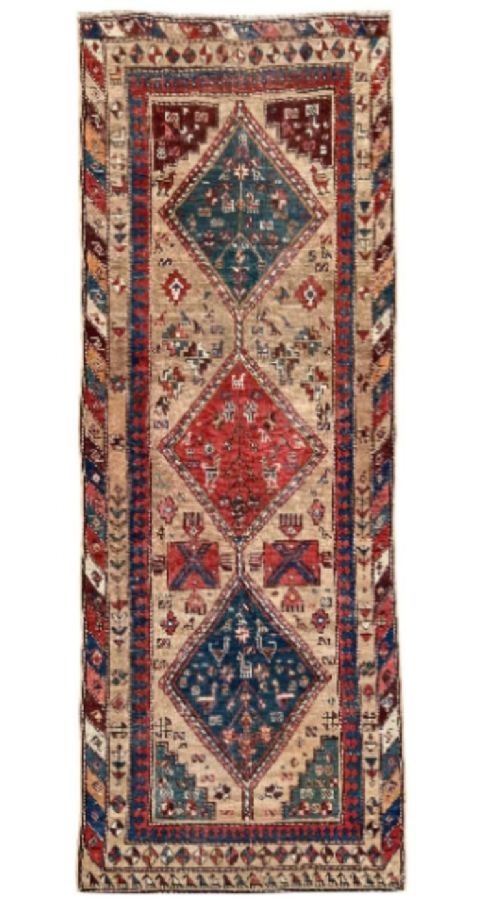
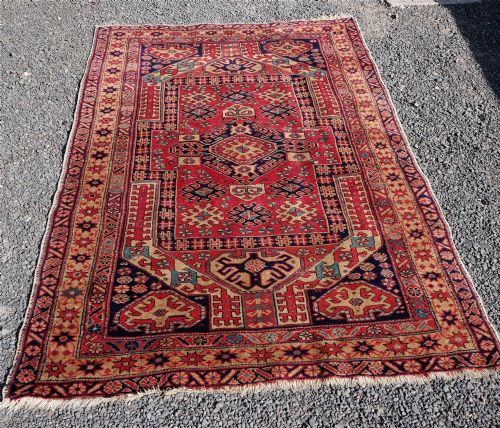
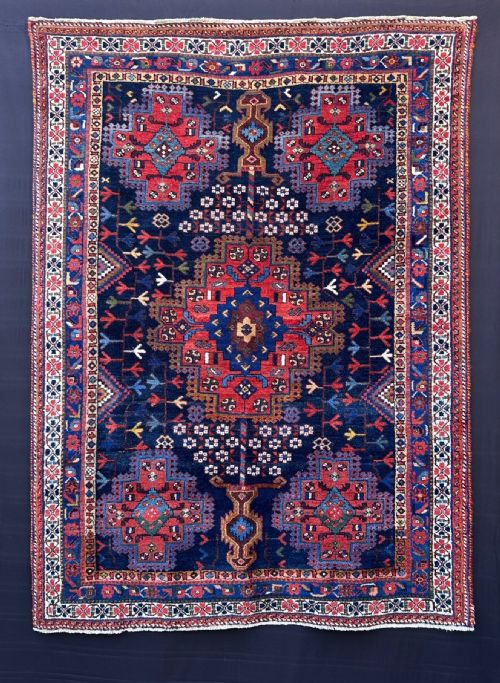
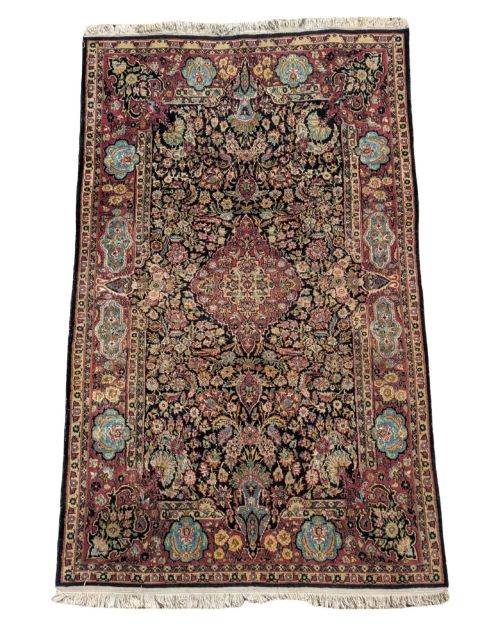
Red Wool Persian Carpet
A red wool persian carpet brings warmth, pattern, and deep cultural history directly into a hallway or living space.
Red Wool Persian Carpet
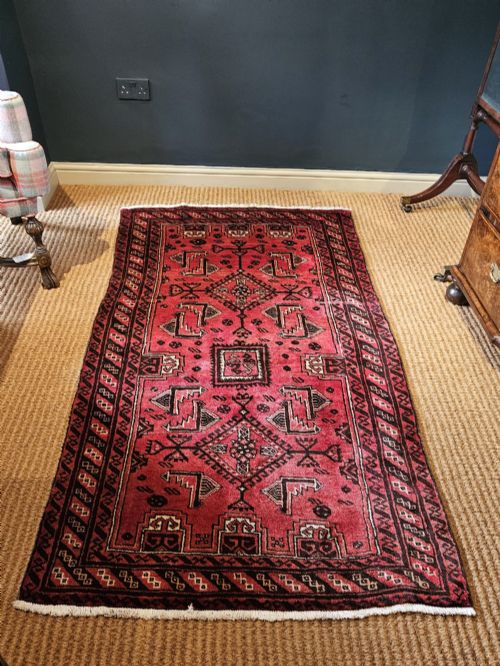
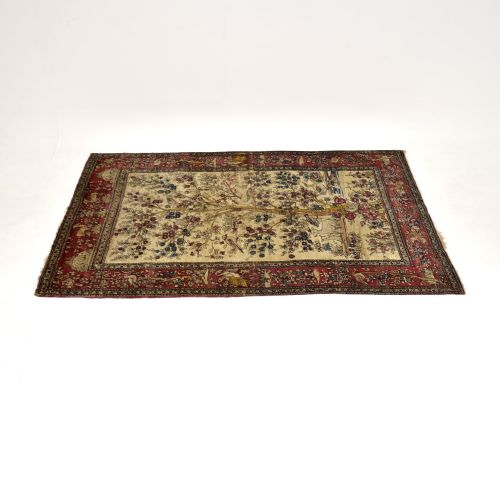
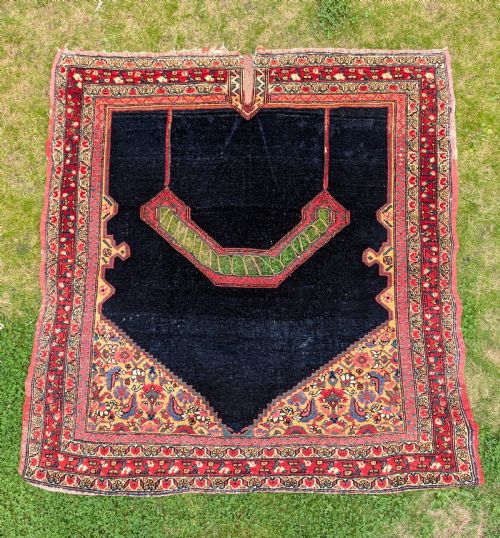
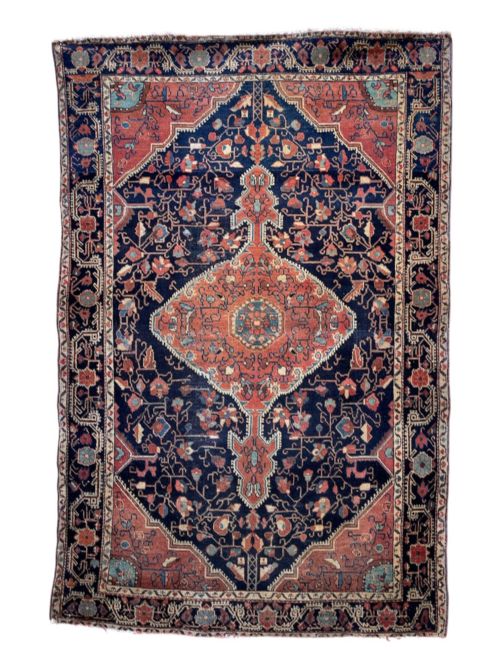
A red wool persian carpet represents centuries of weaving tradition originating from distinct towns, villages, and nomadic tribes across the region. Buyers searching for a red wool persian carpet encounter dense geometric room-size carpets, intricate medallion designs, and elongated hallway runners.
Most examples found in this selection date from the nineteenth and twentieth centuries, spanning periods from eighteen eighty to nineteen sixty. These floor coverings bridge utility and art, offering durable foundations woven by skilled hands in styles ranging from Heriz and Saroukh to traditional tribal patterns.
Materials and construction methods
Makers utilised natural materials, predominantly relying on wool, hand-spun wool, and cotton foundations to build dense, resilient piles. Silk highlights appear in select pieces to catch the light and accentuate fine botanical motifs.
Weavers knotted individual strands by hand onto cotton or wool warps, securing the structural integrity of each rug. Vegetable and natural dyes created deep crimson and rust backgrounds that mellow gracefully with age.
Red Wool Persian Carpet Retail Price Guide 2026
Typical asking prices for red wool persian carpet among the pieces listed under this phrase on Sellingantiques today, from the lower quarter to the upper quarter. They describe what is for sale here now, not the wider market.
Listings feature twentieth-century village rugs alongside nineteenth-century room-sized carpets woven from wool, cotton, and occasional silk highlights.
Distinctions in quality
Knot density and structural tightness set finer workshop carpets apart from coarser village and tribal weaves. Precision in geometric symmetry and the complexity of the internal border work distinguish master productions.
The condition of the wool pile and the integrity of the original selvedges dictate longevity and resilience under foot traffic. Material purity, such as the use of hand-spun wool and durable cotton foundations, elevates a piece further.
Saroukh Mahal Carpet·Heriz Carpet·Bakhtiar Rug·Isfahan Rug·Bidjar Rug
The Red Wool Persian Carpet Glossary
- Medallion
- A large central ornamental motif placed symmetrically in the middle of the carpet field. This design element dominates the visual centre of many traditional woven rugs.
- Warp
- The vertical threads stretched tightly on the loom before knotting begins. These foundational threads support the entire structure of the carpet.
- Weft
- The horizontal threads passed back and forth across the warps to lock the knots in place. This technique secures each row before the next tier of weaving commences.
- Selvedge
- The bound edge running along the outer longitudinal sides of the rug. Proper reinforcement here prevents the pile from fraying over decades of use.
- Pile
- The upright cut or looped threads forming the soft surface of the carpet. Higher density in this upper layer improves wear resistance.
Red Wool Persian Carpet: Frequently Asked Questions
How do I clean an old carpet?
Surface dust can be removed gently with regular low-suction vacuuming without a rotating brush head.
Deep washing requires professional intervention from specialists experienced in traditional vegetable-dyed wool textiles to prevent colour bleeding.
Where should I place a runner?
Runners suit high-traffic transitional zones such as long hallways, entryways, or narrow corridors.
They protect bare floorboards while adding a defined stripe of colour and historical texture to domestic circulation spaces.
Are these rugs durable for daily use?
Traditional knotted wool on cotton foundations withstands normal household activity remarkably well due to the inherent resilience of natural animal fibres.
Placing an appropriate underlay beneath the textile prevents slipping and reduces friction against hard flooring.
How do I identify different regional styles?
Geometrical layouts and bold corner brackets typically point towards northern village weaving traditions like Heriz or Bidjar.
Curvilinear floral sprays and intricate central medallions more frequently associate with urban workshop centres such as Kashan or Isfahan.