
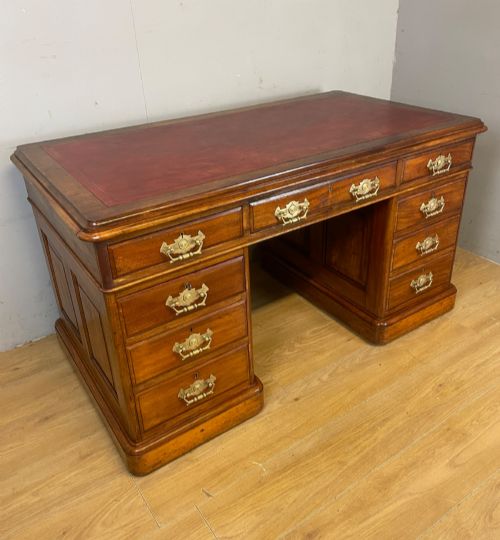
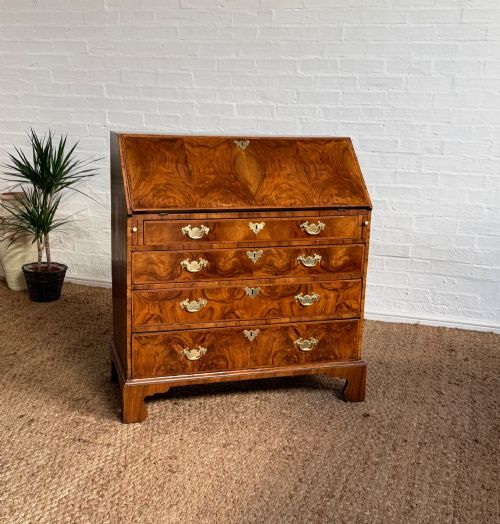
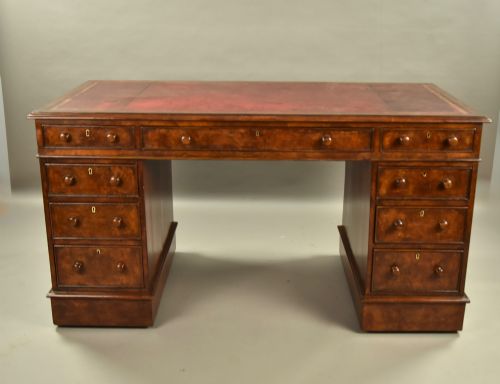
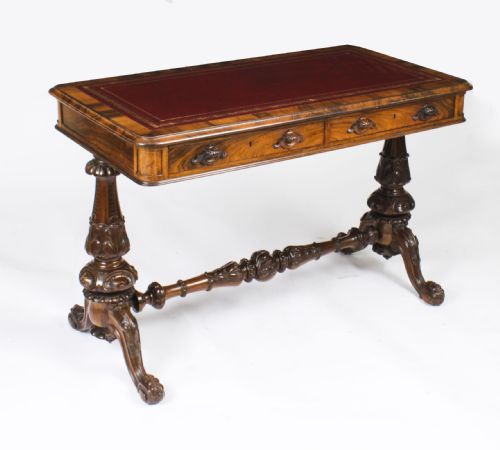





Red Walnut Writing Desk
A red walnut writing desk brings a deep warmth to a room through dense timber and patinated leather.
Red Walnut Writing Desk
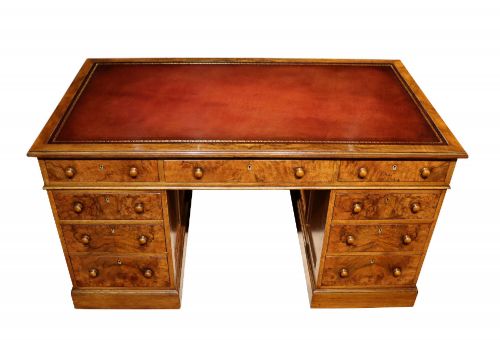
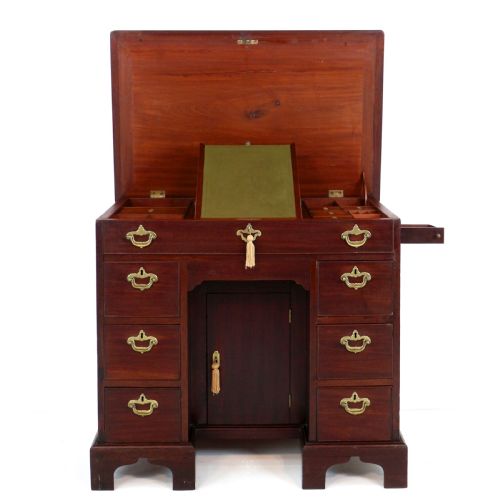
A red walnut writing desk combines structural timber with a fitted writing surface, spanning periods from mid-eighteenth-century Georgian forms to later Victorian pedestal desks and compact Davenports. Buyers searching for a red walnut writing desk encounter varied configurations, ranging from kneehole dressing tables and bureau bookcases to slope-front writing chests.
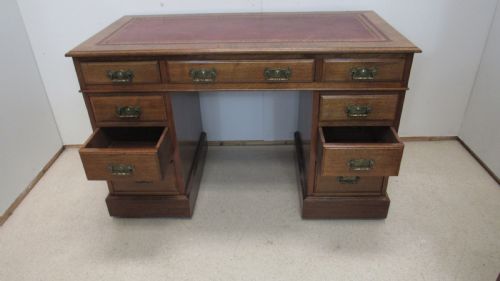
The material character shifts across eras, with eighteenth-century examples showing solid red walnut and figured veneers, while nineteenth-century pieces frequently utilise burr walnut, oak carcases, and leather inserts. Victorian interpretations often appear as compact stationery cabinets or pedestal forms designed for domestic studies.
Factors That Distinguish Quality
Quality rests in the selection of the timber grain, where heavily figured burr walnut or book-matched panels elevate a piece above plainer stock. The crispness of internal drawer fitting and the integrity of the original timber framing also separate standard production items from finer workshop output.
Surface finish and the preservation of secondary woods contribute heavily to the standing of a piece, as does the retention of period-correct brass pulls and well-fitted leather writing surfaces.
Several compact Davenport desks include hidden side inkwells that slide out like tiny wooden secrets.
Edwards & Roberts·James Shoolbred·Jas Shoolbred & Co·Angus of London·Rurka
The Red Walnut Writing Desk Glossary
- Burr walnut
- A veneer taken from the growth warts of walnut trees, prized for its swirling, highly figured pattern.
- Davenport
- A compact writing desk featuring a sloping top above a bank of side drawers, popular during the Victorian era.
- Kneehole desk
- A pedestal desk featuring a central recessed space for the legs beneath a set of drawers.
- Bureau bookcase
- A writing bureau with a sloping fall-front combined with upper shelving enclosed by doors.
- Escutcheon
- A protective plate surrounding a keyhole, usually fashioned from brass on these pieces.
Red Walnut Writing Desk: Frequently Asked Questions
How do I care for the leather top?
Clean the leather surface using a soft, dry cloth and avoid excessive moisture or harsh chemical cleaners.
nourrir the hide periodically with appropriate leather balm to prevent cracking while protecting the surrounding walnut woodwork.
Where were these desks placed originally?
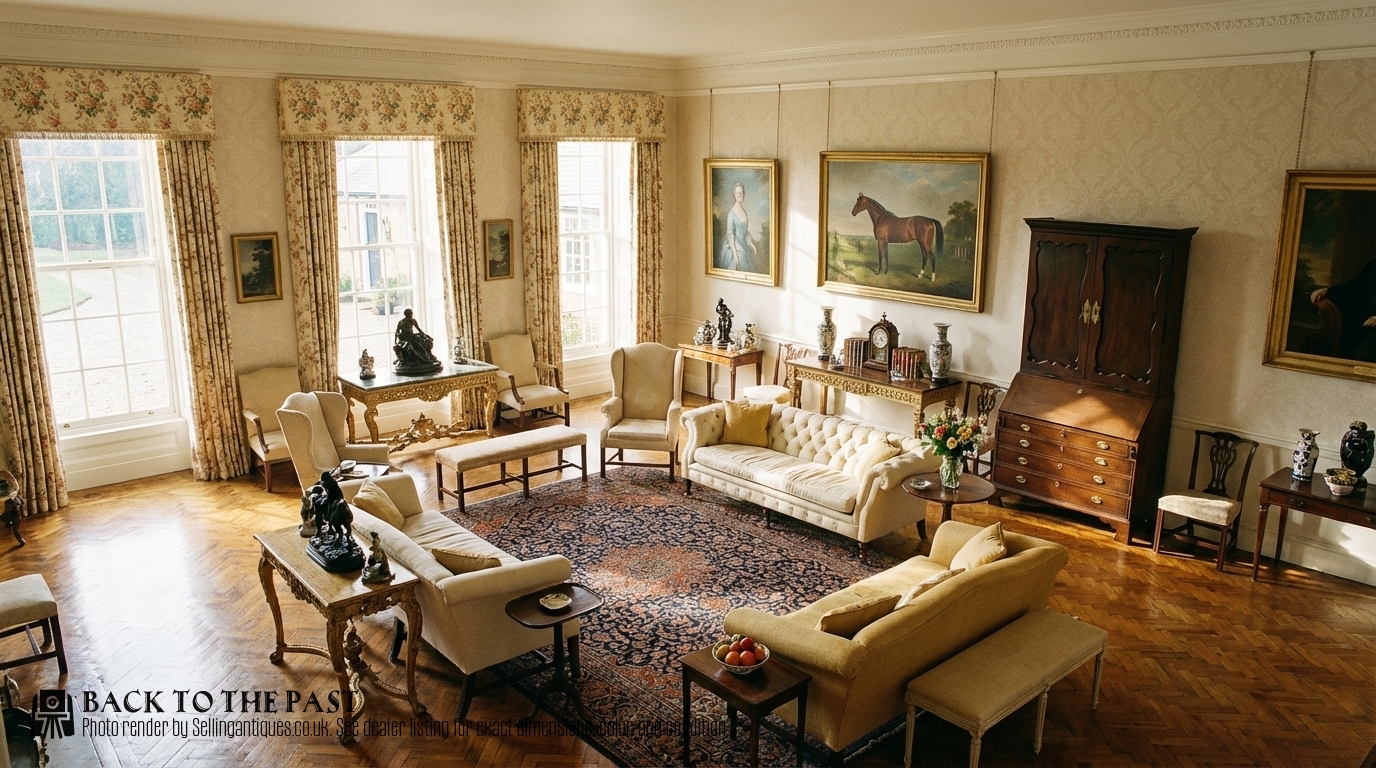
These pieces served in domestic studies, libraries, and private drawing rooms for correspondence and household administration.
Larger pedestal examples occupied professional offices, while compact Davenport desks suited smaller sitting rooms.
How do I identify George II examples?
George II pieces date from the mid-eighteenth century and typically display solid red walnut construction with restrained proportions.
They often feature fitted kneehole interiors and traditional bracket feet rather than the later Victorian plinth bases.