


Red Walnut Chairs
When you search for red walnut chairs, you are looking at timber furniture spanning from the eighteenth century into the twentieth, prized for rich grain and warm tone.
Red Walnut Chairs
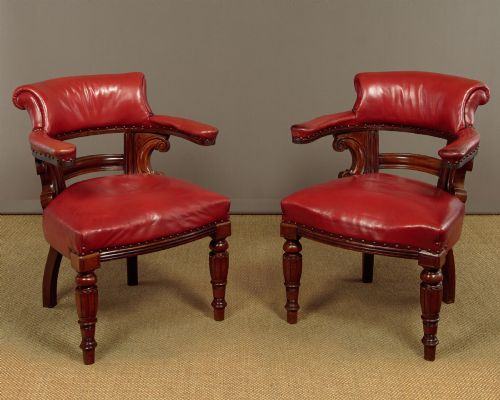
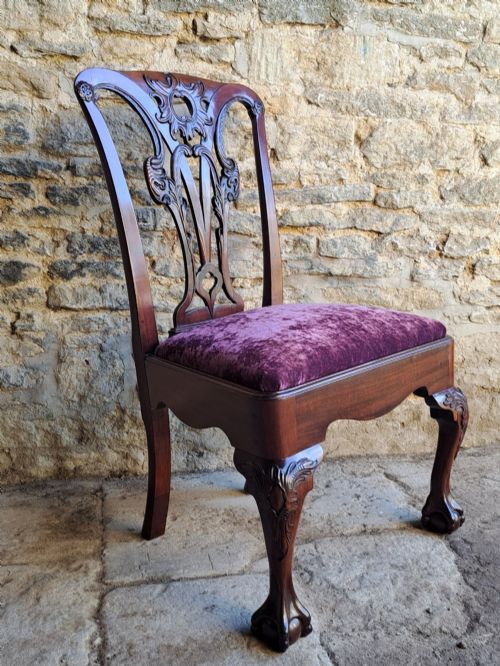
Red walnut chairs encompass seating ranging from early eighteenth-century side chairs to Victorian and Edwardian dining sets, armchairs, and desk chairs.
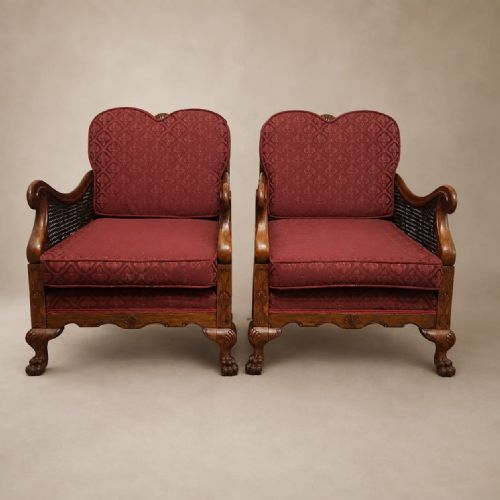
Buyers will encounter dining sets, library armchairs, and occasional parlour seating originating from English, French, and Dutch workshops.
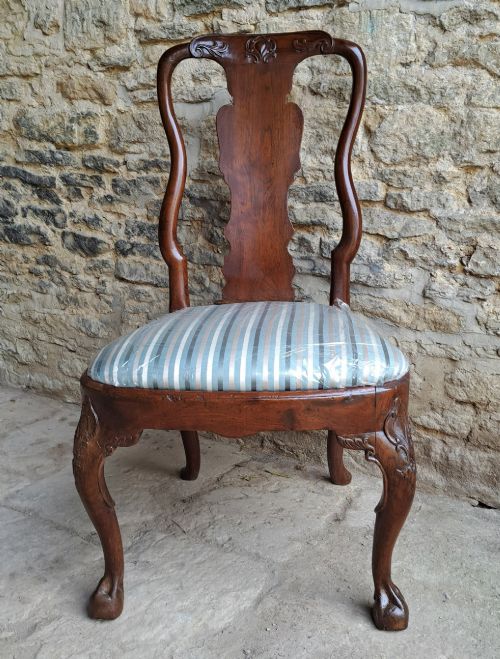
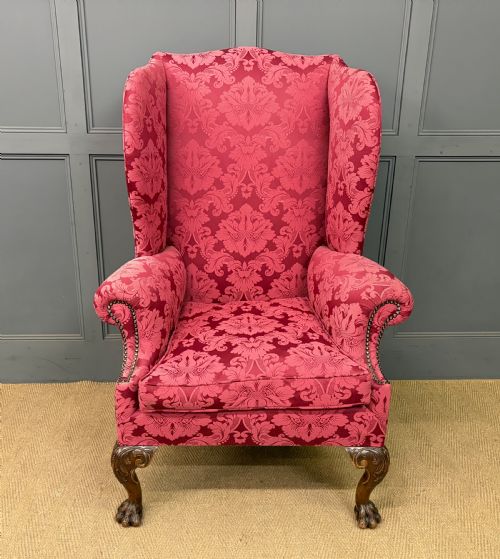
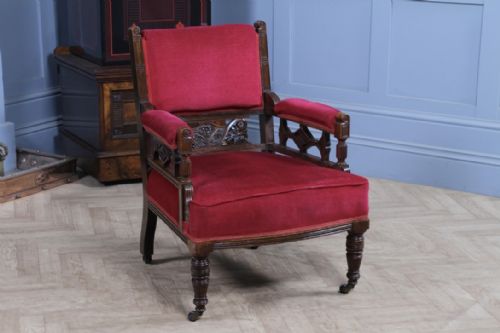
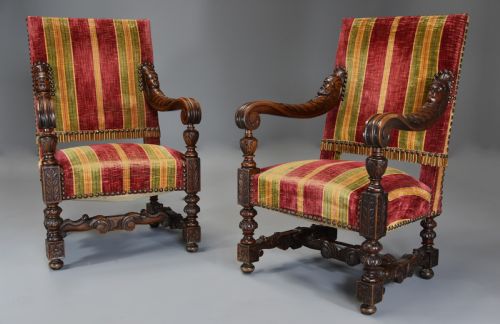
The material surface displays distinctive reddish walnut figuring across cabriole legs, carved backs, and upholstered frames.
Materials and Construction
The foundational frames utilise solid walnut and red walnut timbers, frequently shaped with cabriole legs, carved splats, and scroll terminals.
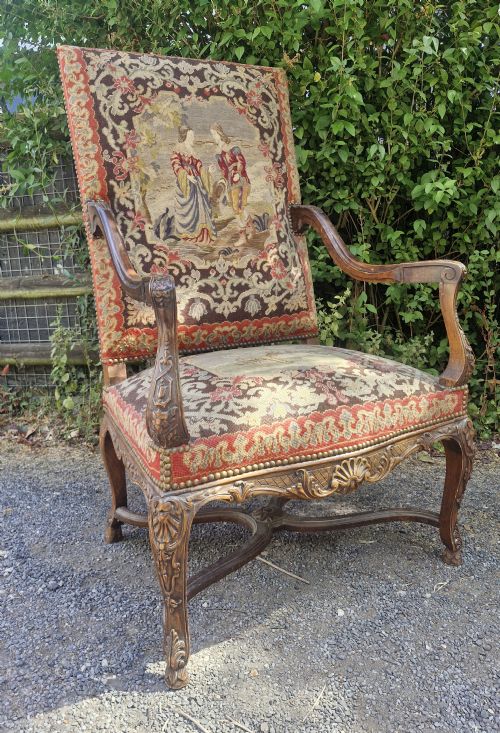
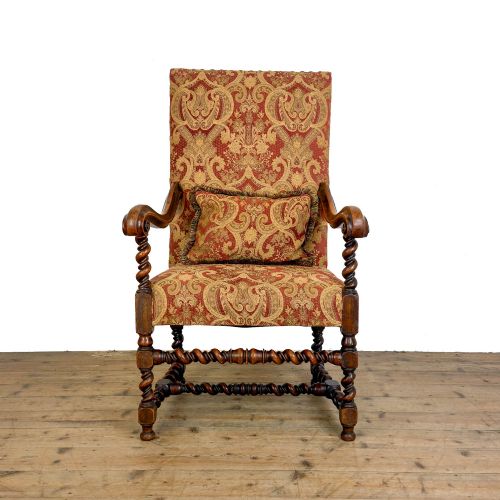
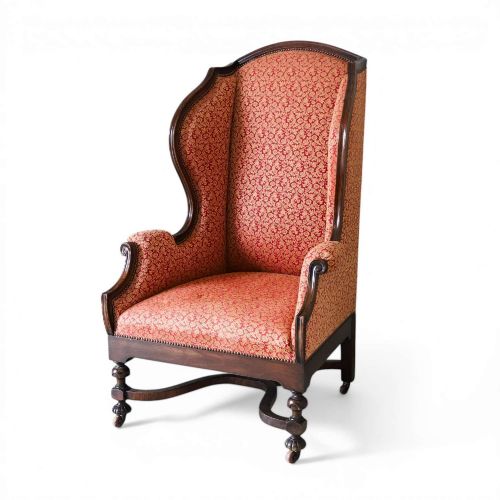
Upholstery relies on period textiles including leather, velvet, needlework, damask fabric, and decorative tapestries secured to the wooden chassis.
Some Victorian examples include revolving music and harpist stools designed specifically for nineteenth-century drawing-room recitals.
Evaluating the Seating
Quality rests upon the depth of the timber grain, the crispness of hand-carving on the walnut frames, and the integrity of the original construction joints.
Sets maintain higher value when they survive in matching groups rather than assembled pairs, while upholstery execution and fabric choice reflect the original commissioning period.
Maple and Co·W. Walker and Son·Howard and Sons·Lenygon and Co
The Red Walnut Chairs Glossary
- Cabriole leg
- A furniture leg that bends outward at the knee and tapers inward to an ankle, common on eighteenth-century and Victorian walnut designs.
- Bergere
- An enclosed upholstered armchair with wooden framing exposed around the sides and back, often fitted with cane panels.
- Fauteuil
- An open-framed armchair of French origin featuring upholstered arms, back, and seat with visible carved wooden armrests.
- Splat
- The central vertical slat of wood within a chair back, frequently shaped or carved in George II and Queen Anne styles.
Red Walnut Chairs: Frequently Asked Questions
How do I date a red walnut chair?
Dating relies on stylistic shifts in leg shapes, such as the cabriole forms of the eighteenth century compared to later Victorian revival work, alongside construction methods visible beneath the frame.
Examining joinery and the specific timber figuring helps distinguish Georgian originals from nineteenth-century copies.
Are these chairs suitable for daily dining?
Many sets of dining chairs and carvers remain structurally robust for regular use around a dining table, provided the joints are stable and secure.
Antique leather and fabric upholstery may require careful maintenance or eventual recovering to withstand heavy daily seating.
What is the difference between side chairs and armchairs?
Side chairs are built without armrests, designed primarily for placement around a dining table or against a parlour wall to save space.
Armchairs and elbow chairs incorporate side supports for comfort, making them suited to desks, libraries, and fireside settings.
How should I care for the walnut timber?
Walnut surfaces respond best to occasional polishing with traditional beeswax, avoiding modern silicone sprays that can degrade the antique finish over time.
Keeping timber seating away from direct heat sources prevents the wood from drying out and splitting.