
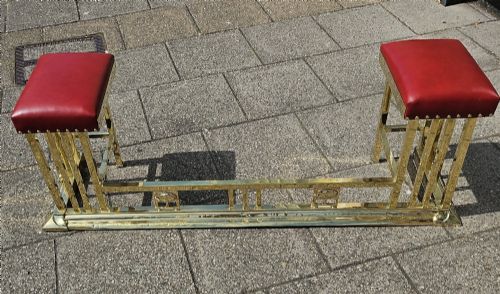


Red Upholstered Bench
A red upholstered bench brings rich colour and enduring utility to an interior, drawing on centuries of seating forms from the Georgian period to the Edwardian era.
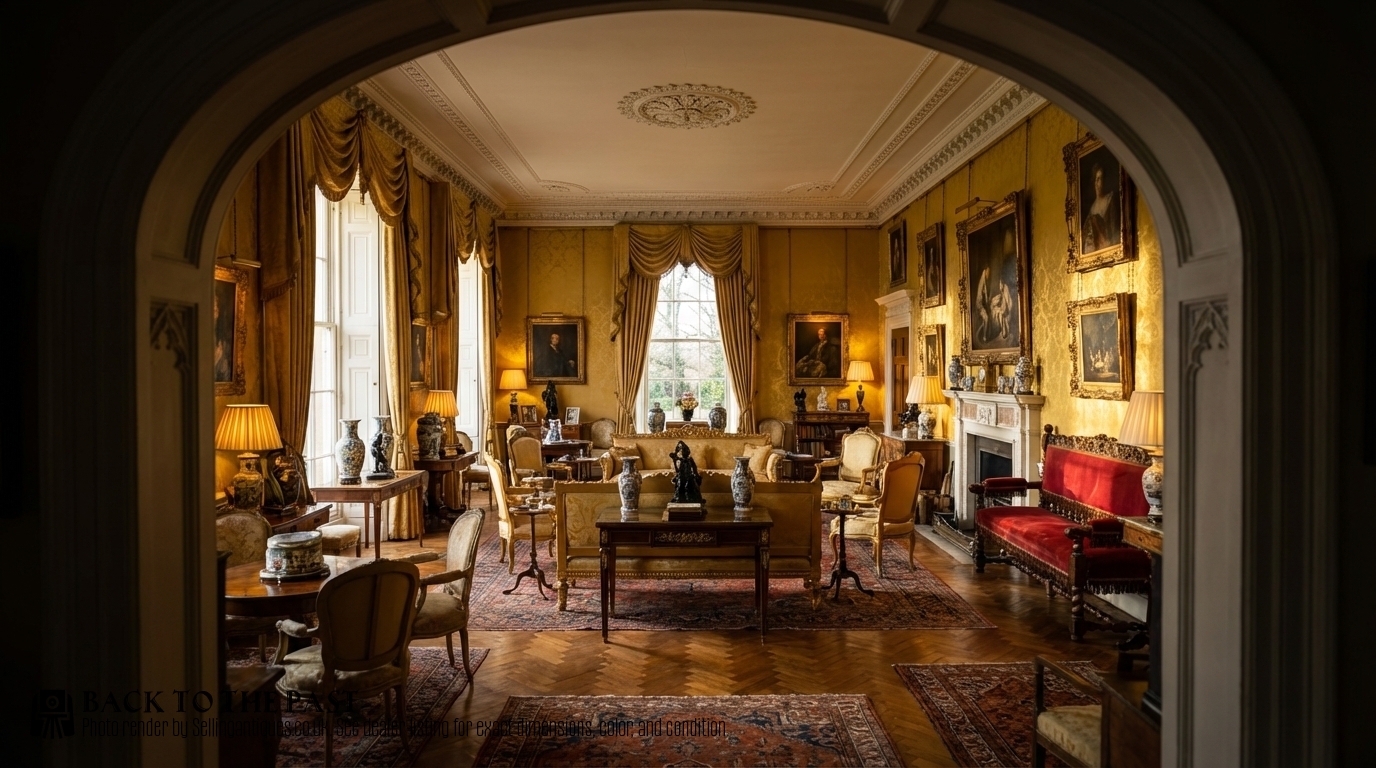
Red Upholstered Bench
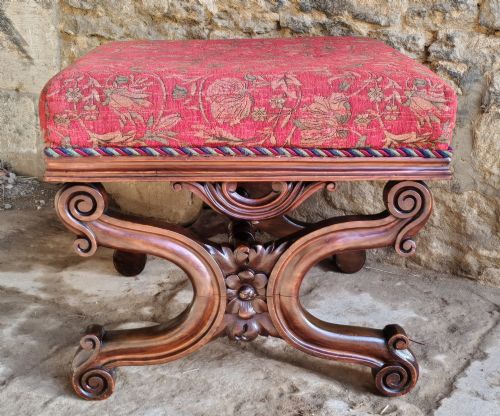
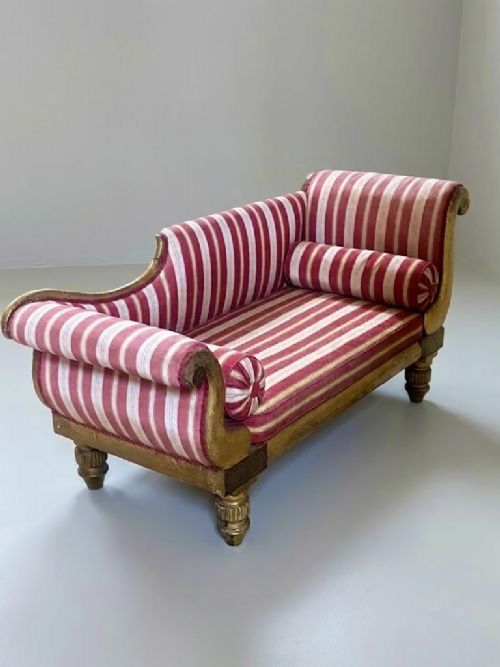
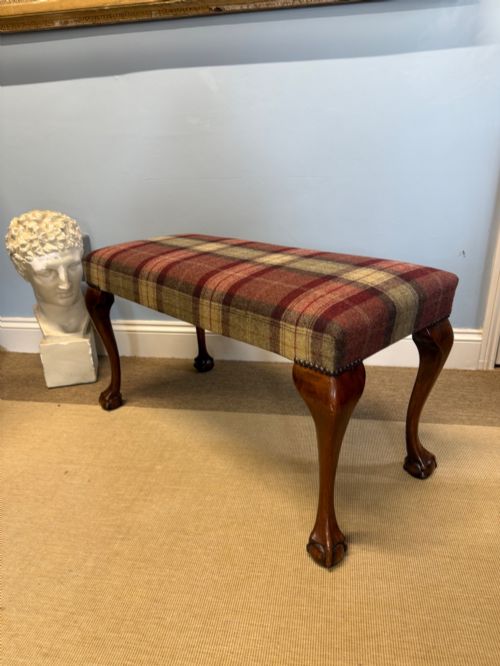
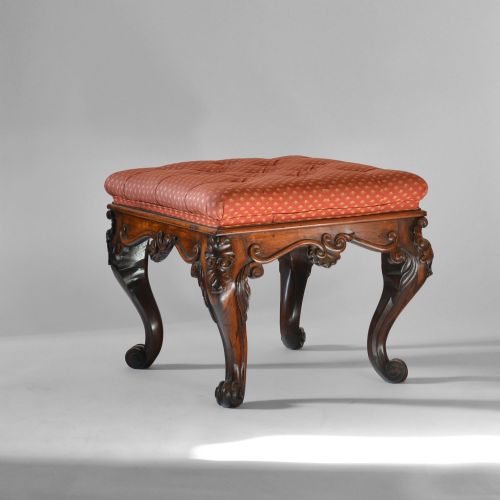
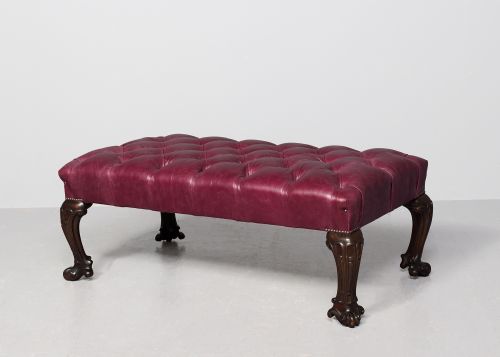
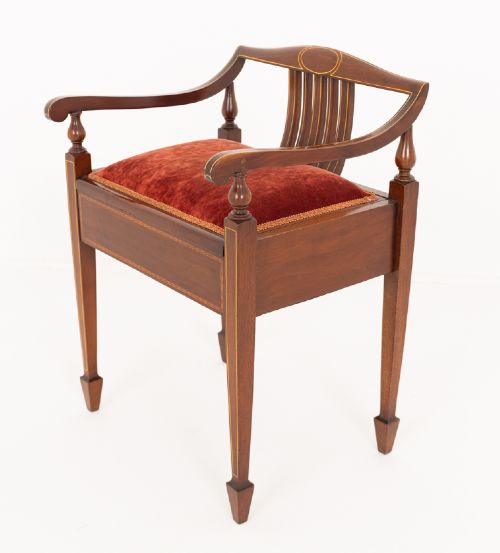
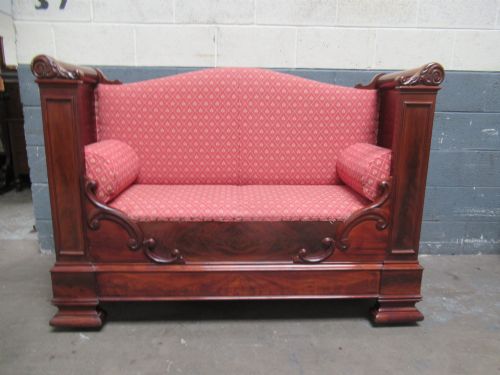
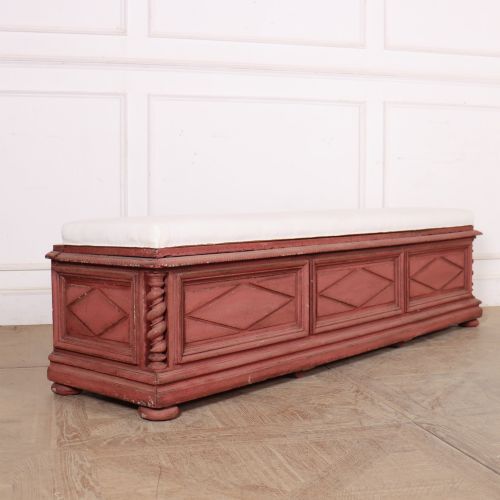
A red upholstered bench encompasses a diverse group of seating furniture, including long footstools, window seats, ottoman couches, and hall benches. When searching for this specific combination, you encounter forms ranging from compact Victorian footstools to extended Edwardian and Georgian window seats.
The materials span mahogany, walnut, and oak frames paired with textiles in crimson, burgundy, and damask. The most common manifestations on this page combine mahogany or walnut woodwork with deep red leather, hide, or woven fabric upholstery.
Origins vary across English country houses, French workshops, and Italian studios, reflecting periods from the 18th century through to the 1930s. The common thread is a padded seat surface set within a supportive timber frame.
Materials and construction methods
Frames rely predominantly on dense hardwoods such as mahogany, walnut, and oak, shaped through turning, carving, or x-frame construction. These timbers provide the structural integrity required to support frequent sitting and heavy use over generations.
Upholstery techniques involve traditional stuffing secured over webbing or springs, finished with leather, velvet, damask, or silk. Brass studs frequently edge the leather variants, securing the hides directly to the timber rails.
The inventory spans the 18th century through to the 1930s, encompassing styles from Georgian and Regency to Arts and Crafts.
Distinctions in quality and execution
The calibre of a red upholstered bench depends on the precision of the timber framing and the integrity of the joinery. Hand-carved details, well-figured mahogany or walnut grain, and robust internal webbing separate finer examples from standard production pieces.
Upholstery execution dictates the longevity and visual impact of the piece. Buttoning, precise pleating, and the selection of durable leather or heavy woven textiles demonstrate the original maker's investment in time and materials.
Hallett & Sons·Baumann
The Red Upholstered Bench Glossary
- X-frame stool
- A seat supported by intersecting diagonal legs forming an X shape, often seen in Regency and Neoclassical designs. This ancient form provides both stability and architectural presence.
- Window seat
- A long, narrow bench designed specifically to fit into a window recess. These pieces frequently feature scroll ends or arms.
- Club fender
- A low, upholstered seat built around a fireplace hearth with a metal frame. It combines practical fireside seating with robust metalwork.
- Settle
- A wooden bench with a high back and arms, often incorporating storage beneath the seat. Early examples date to the 18th century and served to block draughts in large rooms.
- Cabriole leg
- A furniture leg that curves out and then in, resembling the leg of an animal. This feature is common on Queen Anne and Georgian pieces.
Red Upholstered Bench: Frequently Asked Questions
Where should I place a red upholstered bench?
These benches suit narrow hallways, the foot of a bed, or beneath a drawing room window. Their low profiles allow them to sit comfortably without blocking light or views.
Larger versions also function effectively as alternative seating in living rooms or studies, providing an accessible surface to sit or rest feet.
How do I identify the period of a bench?
Dating relies on timber choice, leg style, and construction marks. Georgian and Regency pieces often feature finely carved mahogany and subtle curves, while Victorian examples lean toward heavier proportions and buttoned leather.
Later Edwardian and 1930s iterations frequently simplify these historic forms, incorporating lighter oak frames or eclectic revival details.
Were these benches used for storage?
Certain forms, particularly ottomans and specific hall benches, incorporate lift-out seats or hinged lids designed to hold items inside. Country house examples often utilised this cavity for boots, blankets, or household textiles.
Most traditional window seats and stools, however, remain purely decorative and structural without internal compartments.
How do I care for leather and fabric upholstery?
Leather upholstery benefits from periodic conditioning to maintain flexibility and prevent the hide from drying out. Gentle dusting keeps the surface clear of particles that can wear the grain over time.
Fabric surfaces, including velvet and damask, require regular light vacuuming with a soft brush attachment to preserve the pile and rich colour.