






Red Turkoman Textile
A red turkoman textile brings the rich geometric woolwork of Central Asian nomadic tribes directly into modern interiors as striking wall art or floor coverings.
Red Turkoman Textile
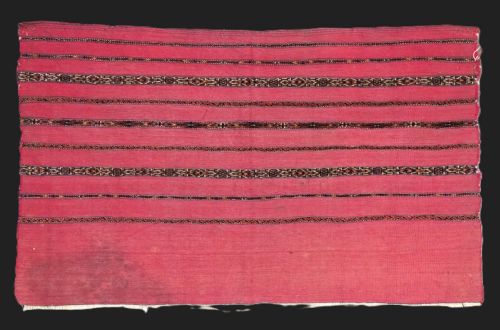
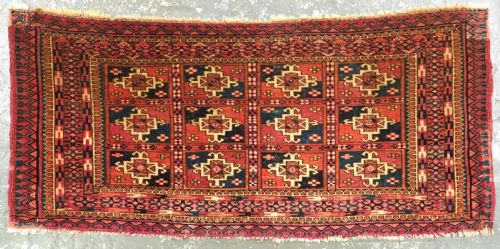
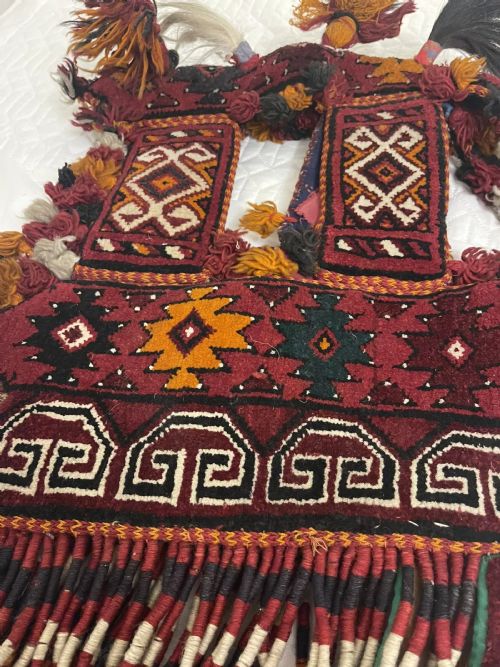
A red turkoman textile encompasses tribal rugs, wall hangings and functional bag faces produced across Central Asia by nomadic groups such as the Tekke, Salor, Ersari and Yomut tribes. These pieces frequently take the form of chuval faces, tent pole bags and wedding trappings intended for domestic use or ceremonial display within the tribe.
Buyers exploring this selection will most commonly encounter late nineteenth century wool examples alongside earlier fragments from the eighteenth and mid nineteenth centuries. The dominant visual language relies on repeated guls, intricate border motifs and saturated red wool grounds woven with natural dyes.
The objects serve as tangible fragments of tribal heritage, moving from utilitarian tent furnishings and animal trappings into collected textile art. Each piece reflects specific clan motifs and tribal weaving traditions passed down through generations.
How they were made
The construction of a red turkoman textile relies on hand-spun wool foundation and pile elements, frequently incorporating cotton details for contrast or structural support. Weavers utilised natural dyes to achieve the deep reds, madders and secondary tones that define the palette.
The textile is worked with dense knotting techniques to produce a firm handle capable of withstanding the rigours of nomadic life. Artisans structured the field with complex geometric guls and guard borders using precise counting methods derived from tribal custom.
Red Turkoman Textile Retail Price Guide 2026
Typical asking prices for red turkoman textile among the pieces listed under this phrase on Sellingantiques today, from the lower quarter to the upper quarter. They describe what is for sale here now, not the wider market.
Camels and horses dressed in fine woolen regalia for nomadic wedding processions.
What varies in quality
The quality of a red turkoman textile is distinguished by the density of the weave, the clarity of the primary guls and the depth of the natural dyes. Finer knots per square inch allow for crisper graphic definition and a more supple drape.
Design complexity and structural integrity separate standard utility pieces from exceptional tribal examples. Well-preserved chuval faces with complete borders and uncommon gul arrangements represent the upper tier of the weaving tradition.
Tekke tribe·Salor tribe·Ersari tribe·Yomut tribe
The Red Turkoman Textile Glossary
- Chuval
- A large storage bag face produced by nomadic tribes for household organisation inside the yurt. These rectangular panels form the core of surviving antique textile fragments.
- Gul
- A primary medallion motif repeated across the field of a tribal rug or trapping, often identifying the specific clan or tribe responsible for the weaving.
- Okbash
- A decorative tent pole bag shaped like a hood, designed to cover the ends of wooden poles inside the nomadic dwelling. They are prized for their compact triangular format.
- Mafrash
- A smaller storage bag face used for bedding and personal possessions within nomadic tents. They display dense geometric patterning similar to larger chuval panels.
- Trapping
- An ornamented wool textile created to adorn camels or horses during wedding processions and tribal ceremonies. These items feature specialised formats suited for animal wear.
Red Turkoman Textile: Frequently Asked Questions
What is a chuval face?
A chuval face is the decorated front panel of a large nomadic storage sack used within a traditional Central Asian tent. These panels were cut from their original utility bags when the wool wore down, preserving the intricate piled design.
Collectors prize them today as flat textile panels suitable for wall hanging or display on furniture. They showcase the primary tribal motifs in a concentrated format.
How are these textiles used today?
These woven pieces function primarily as decorative wall art, draped over furniture, or placed on floors in low-traffic areas. Their rich wool construction and geometric designs complement both modern and traditional interiors.
Mounting them on fabric-backed frames protects the structural integrity of older wool foundations. This allows the detailed tribal patterns to be viewed clearly at eye level.
What do the different guls mean?
Guls are the repeated octagonal or secondary medallions set across the field of the textile, acting as visual markers of tribal identity. Different clans such as the Tekke or Salor utilised distinct gul variations to denote lineage and heritage.
Analysing these motifs helps identify the probable tribal origin and era of the weaving. The precision and variation of the guls indicate the weaver's skill.
How do I care for antique wool?
Antique wool requires gentle maintenance, avoiding direct sunlight to prevent natural dye fading and regular light vacuuming without a rotating brush bar. Keeping the textile away from damp environments protects the natural fibres from degradation.
Professional textile conservators should handle any major cleaning or structural stabilization. Proper hanging reduces physical strain on the original cotton and wool foundations.