


Red Turkmen Chuval
A red turkmen chuval is a tribal storage bag face woven in Central Asia, prized for its deep red ground and intricate guls.
Red Turkmen Chuval
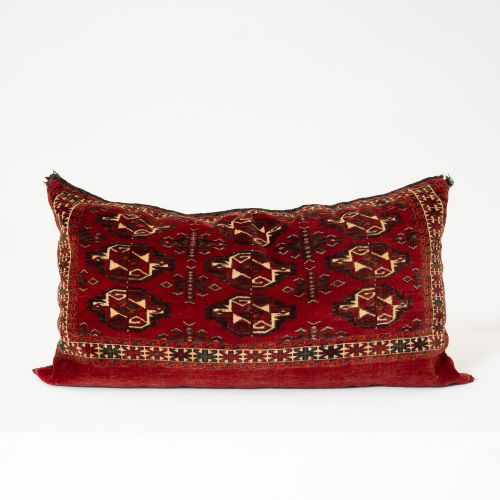
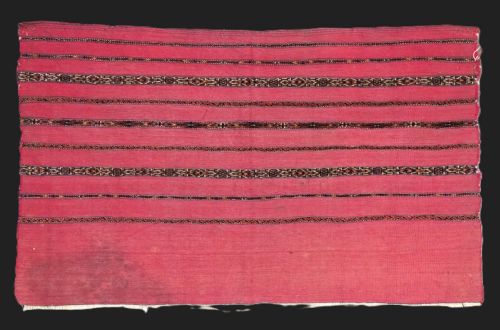
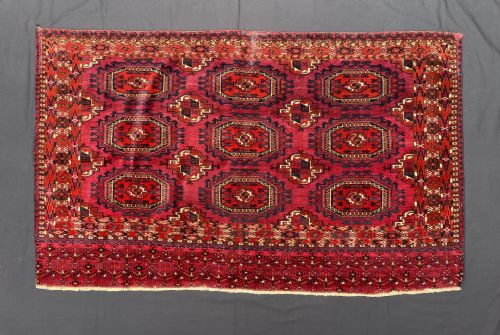
A red turkmen chuval represents a traditional nomadic storage bag face originating from the tribes of Central Asia. These textiles were historically used inside tents for storing household goods and bedding. The red turkmen chuval examples seen here range from complete pieces with backs to bag faces and fragments.
Tribal groups such as the Tekke, Ersari, Yomut, and Saryk produced these pieces across the nineteenth and early twentieth centuries. The primary visual structure relies on repeated medallion motifs known as guls, arranged in grid formations across the red field. Collectors encounter various formats, including pieces featuring Salor guls or specialised designs like the aina gul and kizil variants.
How They Were Made
Weavers constructed these textiles primarily using hand-spun wool and cotton foundations, often incorporating natural dyes to achieve the deep red grounds. Silk accents occasionally appear in details alongside white cotton highlights to contrast with the dominant red wool. The weaving technique demanded dense knotting to create durable surfaces intended for heavy nomadic use.
Structure varied from standalone bag faces to complete storage pieces equipped with plain weave backs and hanging loops. Artisans utilised specific regional palettes and dyeing traditions tied to tribal workshops across the Trans-Caspian steppes and oases.
Some storage bags come equipped with original hanging loops, ready to be mounted just as nomads hung them in their tents centuries ago.
What Varies in Quality
The fineness of the weave distinguishes standard examples from exceptional pieces, with higher knot counts producing crisper geometric details in the guls and elem borders. The depth and saturation of the natural dyes also dictate overall visual impact, particularly across the red ground fields.
Completeness alters the character of a piece, as surviving bag faces retaining their original plain weave backs or hanging loops offer a more intact historical record than isolated fragments. The complexity and rarity of the primary gul arrangement, such as multi-turreted Salor motifs, add further distinction.
The Red Turkmen Chuval Glossary
- Chuval
- A large tent storage bag made by Turkmen nomads for household possessions. These items typically feature geometric primary motifs.
- Gul
- A primary medallion or repeating guls design element used across Turkmen tribal weaving. These octagonal or polygonal motifs identify specific tribal groups.
- Elem
- The decorative lower panel of a chuval or rug, positioned beneath the main field of guls. This section often displays secondary tree or floral patterns.
- Torba
- A smaller nomadic storage bag format related to the chuval. These pieces served similar domestic storage functions within the tent.
- Kizil
- A term denoting the red ground coloration characteristic of specific Turkmen tribal weavings. This palette derives from traditional natural dyeing methods.
Red Turkmen Chuval: Frequently Asked Questions
What is a red turkmen chuval?
A red turkmen chuval is a nomadic storage bag face woven by tribes in Central Asia. They are defined by a dominant red ground and geometric gul medallions.
Historically utilised inside tents for storage, these textiles showcase the distinctive design traditions of weavers from the Tekke, Yomut, and Ersari tribes.
How were chuvals used originally?
Nomadic families used these large bags inside their dwellings to store clothing, bedding, and household valuables. They hung from tent walls or stacked on top of one another.
Because they served active storage functions, many surviving examples today are preserved as individual bag faces rather than complete sacks with backs.
How do you identify tribal origins?
Tribal attribution relies on the specific shape and arrangement of the guls, as well as the structure of the elem panels. Different groups like the Tekke or Yomut favored distinct medallion styles and colour palettes.
Examining the secondary borders and wool preparation also provides clues to the specific oasis or steppe region where the piece was made.
What materials make up these textiles?
The primary material is hand-spun wool, used for both the pile and the foundational warps and wefts. Cotton and occasional silk highlights appear in specific design areas.
Natural dyes provided the rich red tones and contrasting shades that define the appearance of nineteenth-century pieces from the region.