




Red Tekke Chuval
When you search for a red tekke chuval, you encounter traditional Central Asian tribal storage bag faces woven by nomadic weavers.
Red Tekke Chuval
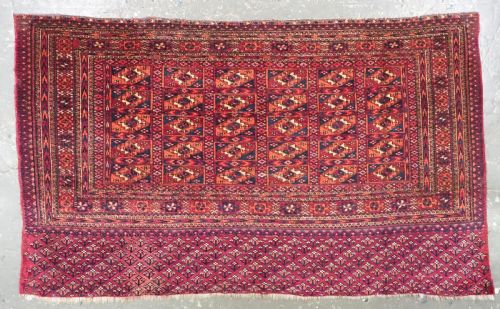
A red tekke chuval is a traditional large storage bag face produced by Turkmen tribes across Central Asia during the nineteenth and early twentieth centuries. These textiles served primarily as functional household items within nomadic tents before surviving as decorative tribal art.
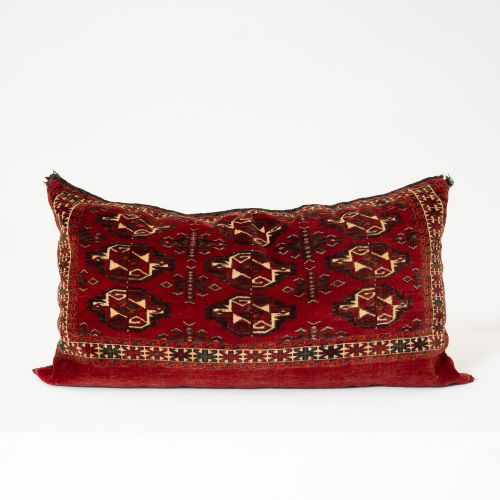
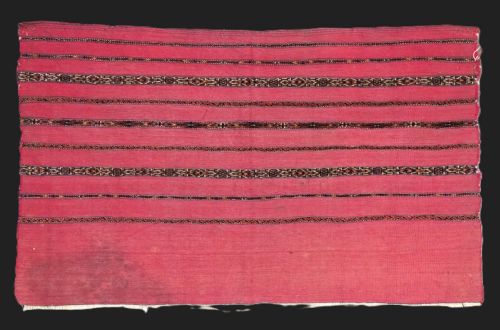
Most examples found on this page appear as complete bag faces, though some retain their plain weave backs or survive as cushions and pillows. Designs frequently incorporate repeated guls, such as Salor or aina motifs, arranged across rich madder red fields.
Materials and construction
These nomadic textiles rely entirely upon wool foundations and surface piles dyed using traditional natural colours. Cotton often appears alongside wool within the structural elements of the weave.
Weavers employed fine knotting techniques to construct dense pile surfaces, occasionally supplementing the main design with flat woven details and hanging loops attached for domestic use.
Several antique bag faces still retain their original hanging loops, ready to resume duties after more than a century of rest.
Assessing quality and craftsmanship
Quality separates ordinary tribal weaving from exceptional work through the density of the knotting and the precision of the geometric layout. Very fine weaves display crisp definition within intricate gul medallions and border elements.
The preservation of the textile alters its standing significantly, distinguishing pieces that retain complete backs and original dimensions from fragments or heavily restored examples.
The Red Tekke Chuval Glossary
- Chuval
- A large tribal storage bag used by Turkmen nomads for household possessions. These items hung inside yurts and feature elaborate face designs.
- Gul
- A primary medallion or repeating floral motif characteristic of Turkmen carpet weaving. Different tribes utilised distinct gul patterns for identification.
- Torba
- A smaller nomadic storage bag face compared to the chuval. These rectangular hangings display similar tribal motifs and colour palettes.
- Elem
- The decorative lower panel of a chuval or rug, often featuring distinct tree or floral motifs beneath the main field.
- Aina
- A mirror-related gul design found on specific tribal bag faces. This scarce motif adds significant interest for collectors of Central Asian textiles.
Red Tekke Chuval: Frequently Asked Questions
How were these bags used?
Nomadic families hung these large bags inside traditional yurts or loaded them onto camels during migrations. They served as practical containers for clothing, bedding, and valued possessions.
Over time, many bag faces were separated from their plain weave backs and preserved purely for their decorative tribal designs.
How do I live with a chuval?
These antique textiles work exceptionally well when displayed mounted and framed on a wall as a textile focal point. Their rich red tones and geometric patterns complement both modern and traditional interiors.
Protecting the wool from direct sunlight and occasional gentle dusting ensures the natural dyes and fibres remain preserved over decades of display.
How are different periods told apart?
Earlier nineteenth-century pieces often display deeper natural madder red tones, highly detailed Salor guls, and extremely fine wool manipulation. Mid-century examples reflect traditional nomadic weaving standards handed down through generations.
Later nineteenth and early twentieth-century examples occasionally show shifts in palette and a slightly broader gauge of knotting as commercial dyes and changing village economics took influence.