


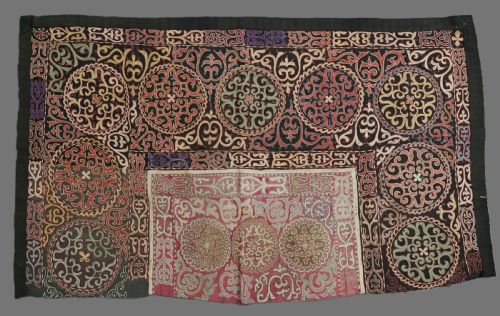

Red Silk Suzani Textile
When choosing a red silk suzani textile, a buyer secures a piece of Central Asian heritage with vibrant silk thread embroidery.
Red Silk Suzani Textile
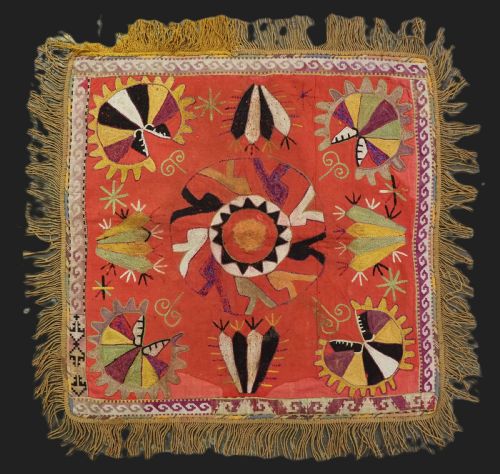
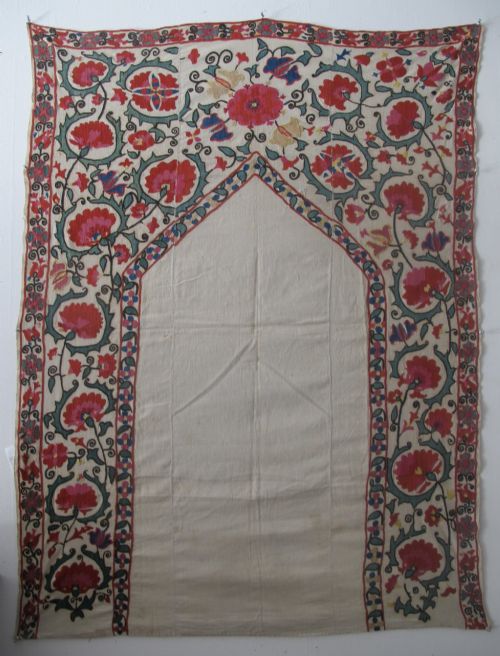
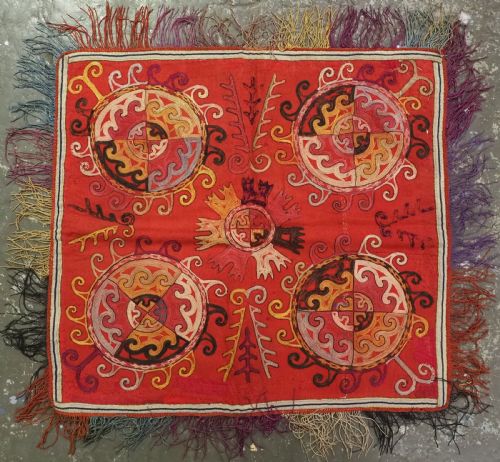
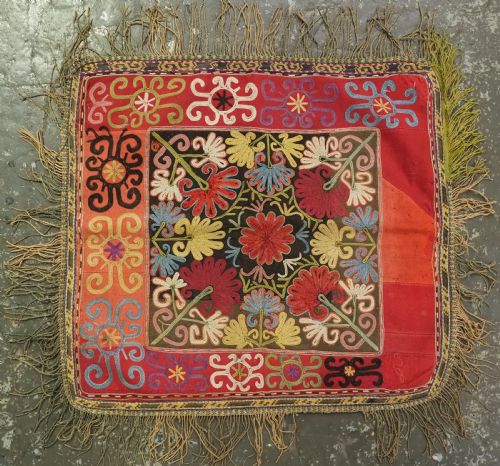
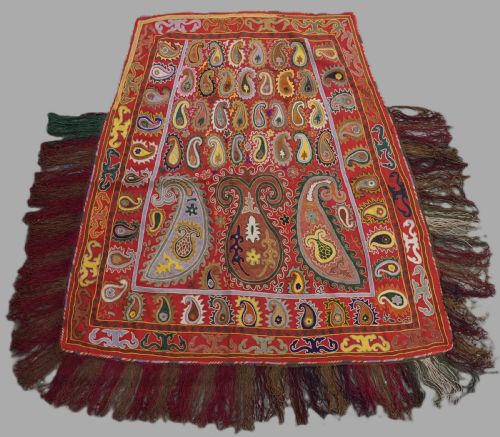
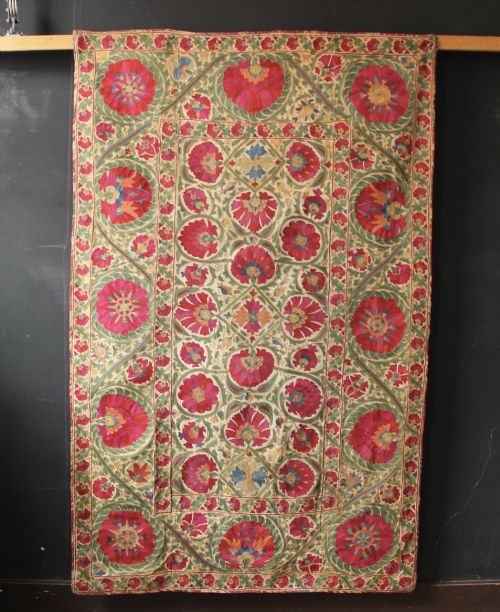
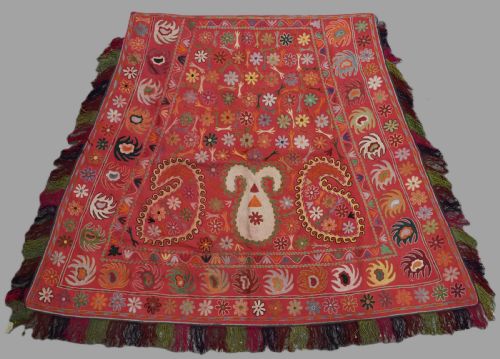
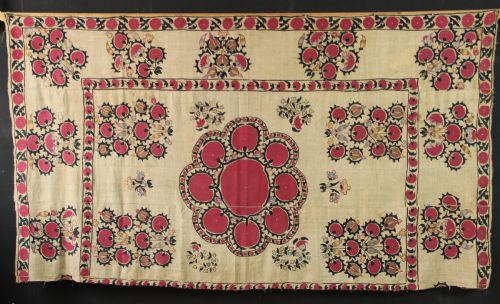
A red silk suzani textile is a form of traditional Central Asian embroidery, often created as wall hangings, dowry pieces, or ceremonial covers. These textiles originate from regions such as Uzbekistan, encompassing specific tribal works like Lakaiilgich and larger pieces from Bokhara, Tashkent, Nurata, and Samarkand.
The pieces available on this page date from the mid-nineteenth century through the early twentieth century, spanning decades of traditional needlework. Buyers encounter various formats, including full suzanis, nim suzanis which are smaller half-size versions, and specialised items like horse covers, yurt wall hangings, and dowry embroideries.
Stylistically, these textiles display Central Asian tribal motifs, folk art designs, architectural patterns, and central star compositions. They function primarily as decorative textiles and wall hangings, bringing rich colour and historical depth to interior spaces.
How They Were Made
Makers embroidered these textiles primarily using fine silk thread applied to various foundational grounds. These foundation fabrics include plain cotton, wool, linen, and adras, which is a traditional silk and cotton blended material often dyed in rich red tones.
The construction involves dense needlework executed by hand across regional workshops and nomadic tribal communities. Artisans utilised intricate stitching techniques to build up floral motifs, geometric patterns, and symbolic designs such as palak layouts and architectural elements.
Listings feature textiles spanning from the mid-nineteenth century through the early twentieth century, originating from regions including Bokhara, Tashkent, and Nurata.
What Varies in Quality
Quality in these textiles depends heavily on the density and coverage of the needlework, with fully embroidered pieces showing greater labour intensity than partial designs. The precision of the stitching and the complexity of the regional motifs also dictate the standard of execution.
The choice of ground material and the vibrancy of the surviving silk threads influence the overall impact of the piece. Additionally, regional attribution, such as the fine execution found in Tashkent full-work suzanis or Bokhara examples, guides the distinction between standard items and masterworks.
The Red Silk Suzani Textile Glossary
- Suzani
- An embroidered tribal or domestic textile originating from Central Asia, traditionally worked in silk on a woven ground. These pieces were frequently made as part of a bride's dowry.
- Nim Suzani
- A smaller version of the standard suzani, translating to half suzani. These pieces offer a more compact format while retaining the traditional embroidery and regional designs.
- Lakai
- A nomadic Turkic tribe in Central Asia known for distinct, energetic embroidery styles. Their work often includes small dowry hangings and horse covers featuring geometric motifs.
- Palak
- A specific type of suzani characterised by fully embroidered designs dominated by large medallions or star patterns. These pieces require extensive needlework covering nearly the entire ground fabric.
- Adras
- A traditional Central Asian textile woven from a mixture of silk and cotton yarns. It frequently serves as the red foundation fabric for embroidered wall hangings.
Red Silk Suzani Textile: Frequently Asked Questions
How were suzanis originally used?
Central Asian families used these embroidered textiles primarily as wall hangings, dowry items, and ceremonial covers within the home. Specific pieces also served as yurt wall decorations or decorative horse and saddle covers for ceremonies.
Over time, these domestic items became valued for their artistic merit and visual impact, transitioning from functional household objects to cherished display pieces.
How do I care for a textile?
Protect antique embroideries from direct sunlight to prevent the red ground fabrics and silk threads from fading. Mount the textile professionally to distribute its weight evenly if hung on a wall.
Avoid moisture and abrasive cleaning methods, consulting a textile conservator if the piece requires dusting or maintenance.
What is a nim suzani?
A nim suzani is a half-sized version of the standard embroidered wall hanging. These smaller textiles were produced across the same Central Asian regions and feature identical traditional motifs.
Their reduced dimensions make them suitable for hanging in more compact spaces while maintaining the intricate needlework of larger examples.
Where were these textiles made?
These pieces originated across historical centres in Central Asia, primarily within regions of modern-day Uzbekistan. Notable towns and regions include Bokhara, Tashkent, Samarkand, Nurata, and Shakrisabz, alongside work by nomadic groups such as the Lakai tribe.
Each area developed distinct design vocabularies, colour palettes, and embroidery densities that help identify their geographic origin.