


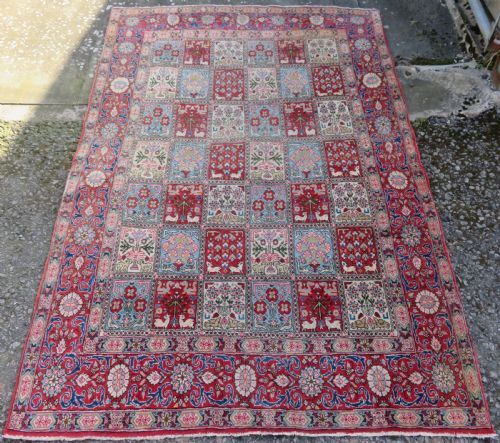


Red Silk Carpet
A red silk carpet brings luminous depth and intricate traditional design to a room through centuries of weaving heritage.
Red Silk Carpet
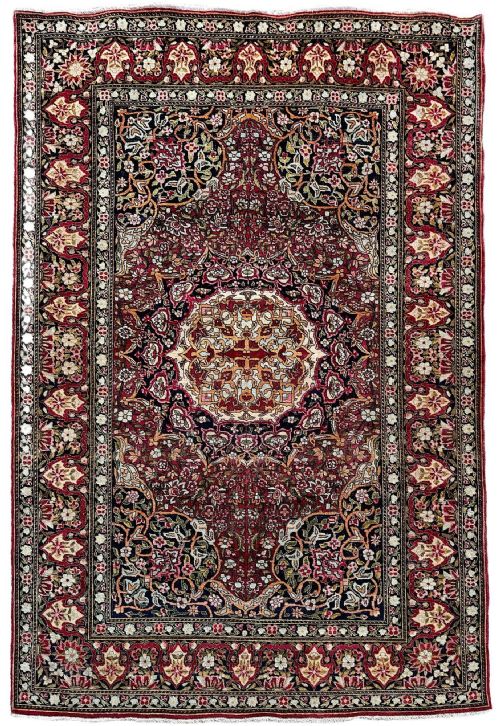
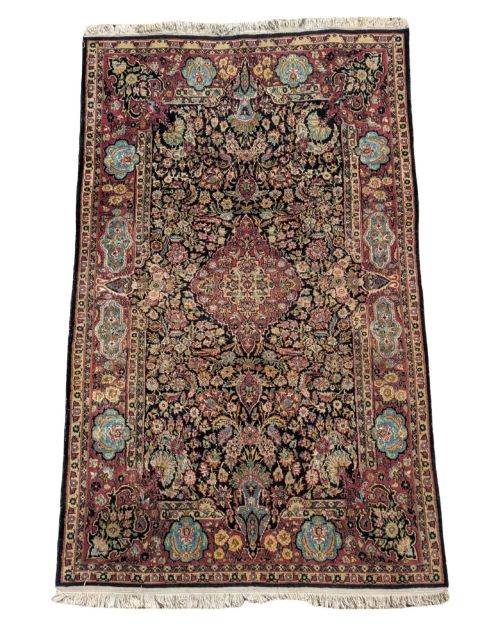
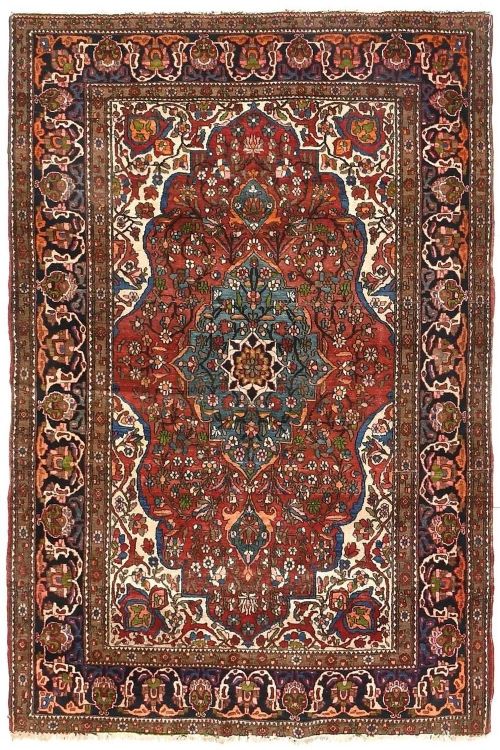
A red silk carpet encompasses fine floor coverings and wall hangings originating from Persia, Turkey, Central Asia, and East Turkestan. When exploring a red silk carpet, buyers encounter pieces spanning from the early nineteenth century through to the early twentieth century.
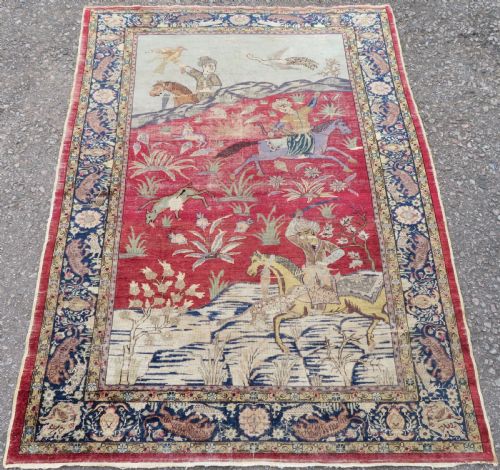
The selection includes specific regional forms such as Isfahan, Qum, Kashan, Kayseri, and Khotan pieces. These range from prayer rugs and pictorial hunting scenes to tribal dowry pieces and larger room-sized carpets.
Many examples combine pure silk construction with cotton or lambswool foundations, while others incorporate silk highlights into woollen piles. Buyers will find both full silk masterpieces and smaller tribal fragments representing distinct weaving traditions.
Materials and construction
Weavers utilised fine natural materials, pairing lustrous silk with cotton and lambswool for structural stability and varied texture. Foundation threads of cotton or silk support dense hand-knotted piles that define the intricate patterns.
Traditional techniques involve meticulous hand-weaving, often executed on vertical looms using complex knotting methods particular to workshops in Persia, Turkey, and Central Asia. The inclusion of silk highlights or complete silk foundations required exceptional skill from the maker.
An eighteenth-century Bursa rug brings centuries of quiet history straight to the floor.
Factors determining quality
Knot density and the precision of the weave dictate the crispness of the design and the durability of the textile. Pieces with finer weaves and higher knot counts present clearer pictorial details and more refined floral or geometric motifs.
The quality of the materials and the vibrancy of the dyes determine the visual impact of the piece over time. Uniformity in pile height and the integrity of the foundation threads further distinguish superior examples from standard production.
The Red Silk Carpet Glossary
- Foundation
- The structural grid of warp and weft threads that supports the knotted pile of the carpet.
- Prayer rug
- A small rug featuring a mihrab or niche design, traditionally used for individual prayer.
- Pile
- The vertical or slanted yarn on the surface of a carpet formed by the cut ends of knots.
- Knot
- The individual loops of yarn tied around warp threads that create the design and texture of the textile.
- Warp
- The vertical threads stretched tightly on the loom before the weaving begins.
Red Silk Carpet: Frequently Asked Questions
How do I clean a silk carpet?
Professional specialist cleaning is essential for antique silk textiles to prevent dye bleeding and fibre damage.
Regular gentle vacuuming without a beater bar helps remove surface dust safely.
Can these carpets be placed on the floor?
Many examples function well on the floor in areas with light foot traffic where their delicate structures face minimal wear.
Fragile or historical pieces are frequently mounted on walls to protect them from daily friction.
What is a silk highlight?
Silk highlights refer to specific sections of a rug woven in silk yarn to create contrast against a woollen background.
This technique adds shimmering depth to particular motifs while maintaining the durability of a wool pile.
How are different regional styles identified?
Regional attributions depend on specific colour palettes, knotting techniques, and characteristic floral or geometric motifs.
Turkish Kayseri pieces differ notably in design and structure from Persian Qum or Isfahan carpets.