
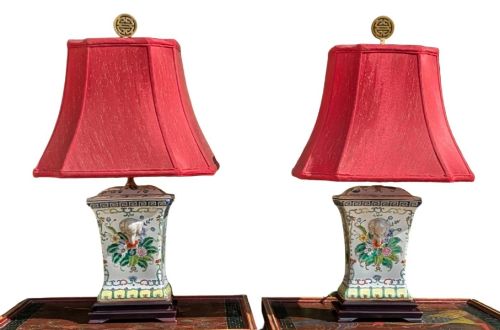
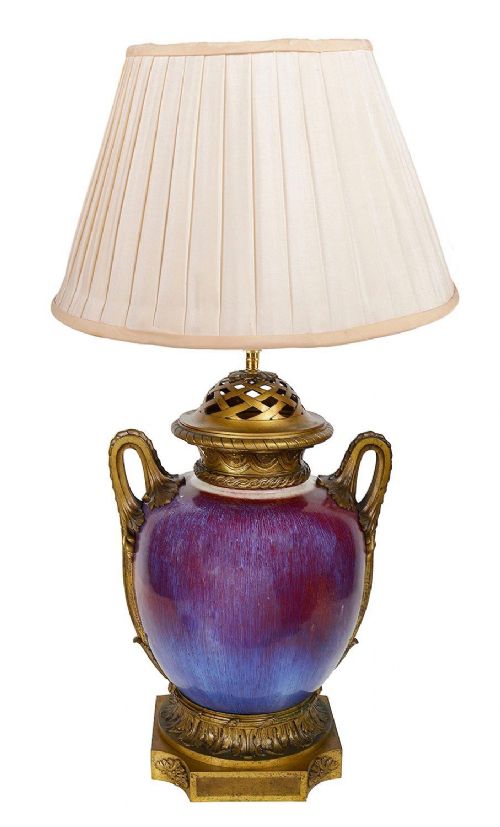


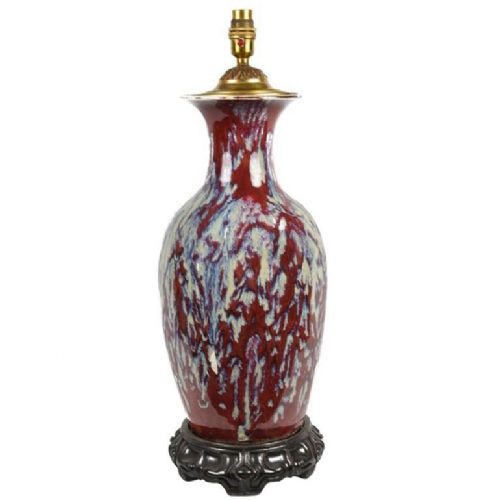
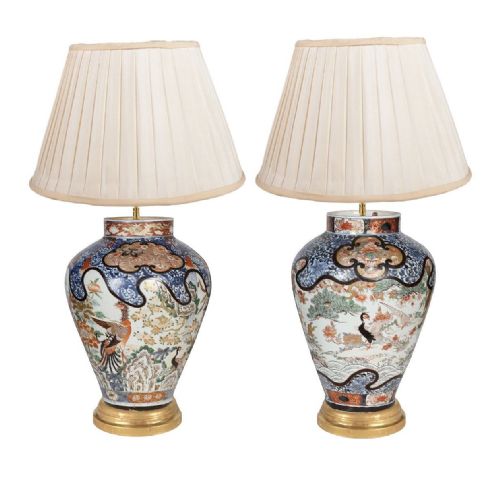


Red Porcelain Lamp
These red porcelain lamps bring deep historic glaze and form to a room, turning old vases into working lights.
Red Porcelain Lamp
A red porcelain lamp takes a historic ceramic vessel, often Chinese or Japanese, and adapts it for interior lighting. When you search for a red porcelain lamp, you meet table lamps created from centuries-old vases featuring rich red, flambe, or sang de boeuf glazes.
The pieces on this page span several centuries, drawing heavily from eighteenth and nineteenth-century East Asian export wares alongside later European examples. Makers mounted these vases with brass, ormolu, and wood to support electrical fittings while preserving the ceramic body.
Vessels range from baluster forms to spill vases and lidded jars, originating from Chinese kilns and Japanese workshops. Each lamp carries the marks of its original function as a vase before its conversion into a domestic light source.
Materials and construction
Potters shaped the porcelain bodies by hand before applying mineral glazes rich in copper or iron to achieve the deep red and sang de boeuf tones. Firing these pieces required precise temperature control in the kiln to produce the characteristic flambe effects and lustrous surfaces.
Metalworkers fitted the finished vases with brass or ormolu mounts, threading wiring through the ceramic body or securing hardware around the neck and base. Fabric and silk shades often complete the structure, balancing the heavy porcelain weight with softer textures.
Listings feature porcelain from the seventeenth through the twentieth centuries, including Japanese Meiji period pieces and Chinese Qing dynasty styles.
Factors of quality
Quality rests in the depth and control of the glaze, where copper-red and sang de boeuf surfaces show subtle variations in tone and texture rather than flat coloration. The refinement of the porcelain paste and the crispness of the underlying potting distinguish finer vessels.
The integration of metal mounts also defines the standard of the piece, as secure brass fittings and stable bases preserve the integrity of the original ceramic without damaging the body.
The Red Porcelain Lamp Glossary
- Sang de bouf
- Ox-blood red glaze developed in Chinese kilns during the Qing dynasty and later imitated in Europe. This rich copper glaze produces deep crimson and mottled tones across the porcelain surface.
- Flambe
- A streaky, variegated glaze created by controlled oxidation and reduction in the kiln. Copper and other metallic oxides run together during firing to produce dramatic colour shifts.
- Ormolu
- Gilded bronze used for decorative mounts and bases. This material frames the porcelain body and provides structural support for the electrical components.
- Baluster
- A vase form with a rounded lower body tapering to a narrow neck and flared rim. This classic silhouette appears frequently among converted table lamps.
Red Porcelain Lamp: Frequently Asked Questions
Are these lamps converted from real vases?
Most pieces begin life as decorative vases, ginger jars, or spill vases before being adapted for modern lighting. The process typically involves mounting the ceramic on a base and running a cord through the centre or attaching hardware to the top.
This method gives historic ceramics a domestic function while maintaining the visual presence of the original vessel.
What styles of porcelain can I expect?
The selection includes Chinese export wares, Japanese Kutani and Imari pieces, alongside nineteenth-century European interpretations. Glazes range from monochrome sang de boeuf and flambe reds to celadon and enamel-painted surfaces.
Forms vary from baluster vases to lidded jars, paired with brass, wood, or ormolu mounts.
How do I care for a porcelain lamp?
Dust the ceramic body gently with a soft, dry cloth to protect the glaze and any painted details. Avoid harsh chemical cleaners that might damage the surface or the metal mounts.
Check the electrical components periodically and consult a professional electrician if the wiring requires maintenance or replacement.