


Red Pine Coffer Chest
A red pine coffer chest is a sturdy timber storage box, often carrying folk paint, that brings warmth and character to a room.
Red Pine Coffer Chest
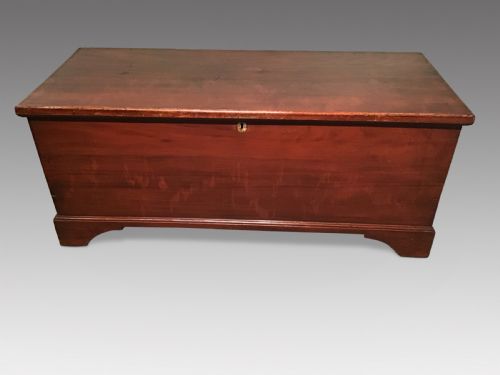
A red pine coffer chest is a traditional storage box found across various European and colonial regions, taking forms such as blanket boxes, mule chests, dowry chests, and dome-top strong boxes. These pieces serve as practical storage while displaying distinctive vernacular characteristics rooted in their regional origins.
The examples available here lean heavily into nineteenth-century production, alongside Georgian and Victorian pieces, plus specific datings like eighteen hundred, eighteen thirty-seven, eighteen sixty, and eighteen ninety. Buyers frequently encounter Hungarian, Scandinavian, and Spanish colonial variations rather than plain domestic utility boxes.
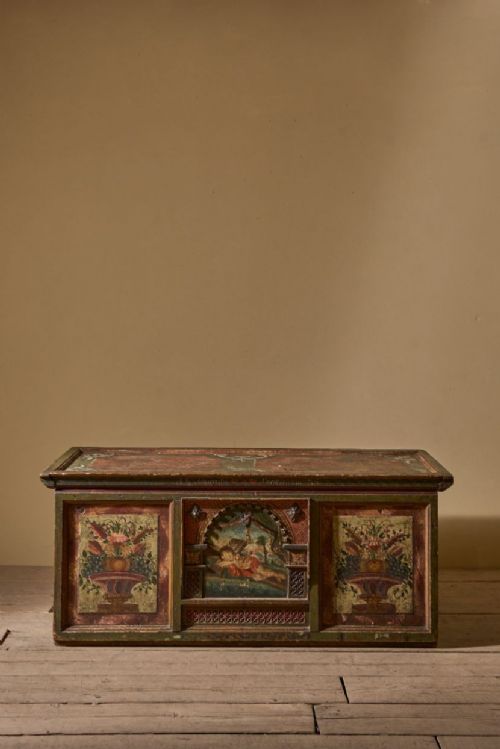
Many items in this category arrive decorated with original paint, floral motifs, mineral pigments, and Moorish style decoration. Others appear as shaped boxes on stands or feature bracket feet and fabric or baize linings.
Assessing quality in folk chests
Quality in a red pine coffer chest rests primarily on the integrity of the original paintwork and the preservation of surface detail. Pieces retaining their untouched early pigment, floral decoration, or Moorish styling hold greater visual depth than those with stripped surfaces or later repainting.
Construction methods and proportions also dictate distinction, separating basic utility trunks from finer examples like mule chests with drawers, pieces raised on bracket feet, or shaped boxes on stands. The balance between sturdy timber framing and delicate folk art execution determines the standing of each piece.
Some nineteenth-century strong boxes come equipped with interior compartments designed to keep family secrets away from prying eyes.
The Red Pine Coffer Chest Glossary
- Mule chest
- A storage chest equipped with one or more drawers beneath the main compartment. This form bridges the traditional coffer and the chest of drawers.
- Dowry chest
- A decorative box prepared for a bride to hold her household linens and personal possessions. These pieces frequently feature specialised painted or carved decoration.
- Mineral pigment
- A natural colourant derived from inorganic earth and mineral sources. Artisans used these materials to create lasting hues on folk art furniture.
- Bracket foot
- A structural and decorative foot fixed beneath the corners of a case piece. It lifts the chest slightly off the floor and shapes the silhouette.
Red Pine Coffer Chest: Frequently Asked Questions
How are red pine coffers dated?
Dating relies on construction methods, ironwork details, and stylistic markers visible in the paint and timber. Clues such as bracket feet, hand-cut fixings, and recorded dates on the wood help establish the period.
Many pieces span the Georgian and Victorian eras, while others carry specific painted dates from the nineteenth century.
What was the original purpose of a coffer?
These chests served primarily for secure storage of household valuables, textiles, winter blankets, and important documents. Their robust timber builds protected contents from dampness and pests.
In many traditions, marriage and dowry chests were commissioned to hold a bride's personal belongings and linens as she moved to a new home.
How do I care for original painted pine?
Preserving painted surfaces requires maintaining stable indoor humidity and avoiding direct sunlight, which can fade historic pigments. Dusting gently with a dry cloth keeps the surface clean without moisture damage.
Harsh chemical cleaners and modern polishes must be avoided to protect the original nineteenth-century paint layers and folk art decorations.
Where were these painted chests made?
The pieces originate from various European folk traditions, including Hungary, Sweden, and Spain. Regional workshops developed distinct decorative vocabularies and structural forms.
Swedish makers produced shaped boxes and strong boxes, while Hungarian examples often showcased vibrant floral motifs and Spanish pieces displayed Moorish influences.