






Hungarian Folk Art Box
A hungarian folk art box brings genuine regional character into a room through hand-applied colour and honest timber construction.
Hungarian Folk Art Box
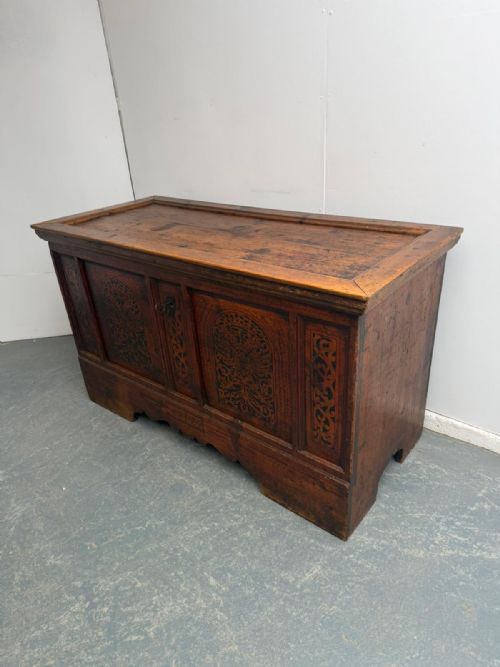
A hungarian folk art box comprises functional storage pieces built from old pine and decorated with regional paintwork. These items arrive from various historical periods, including the Georgian, Regency, and Victorian eras, alongside early twentieth-century examples.
The inventory on this page ranges from compact small boxes and coffer boxes to large mule chests and substantial three-seater box settles. Many examples retain their original painted surfaces, displaying cream, green, grey, or teal tones.
Buyers encounter country primitive aesthetics alongside European folk art and continental traditions. These forms reflect utilitarian domestic needs shaped by traditional rural craftsmanship.
Materials and construction
Makers constructed these storage pieces primarily using solid pine, relying on robust timber panels to build enduring coffers, chests, and settles. Iron and brass hardware such as hinges and latches provide structural reinforcement and functional closure.
Surface decoration relies on traditional paint and wax finishes applied directly to the timber. Artisans utilised colourful pigments to adorn the pine surfaces with floral motifs and painted details characteristic of central European folk traditions.
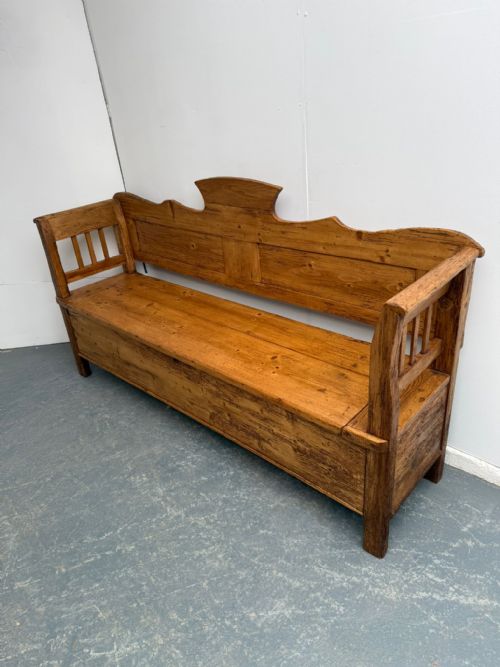
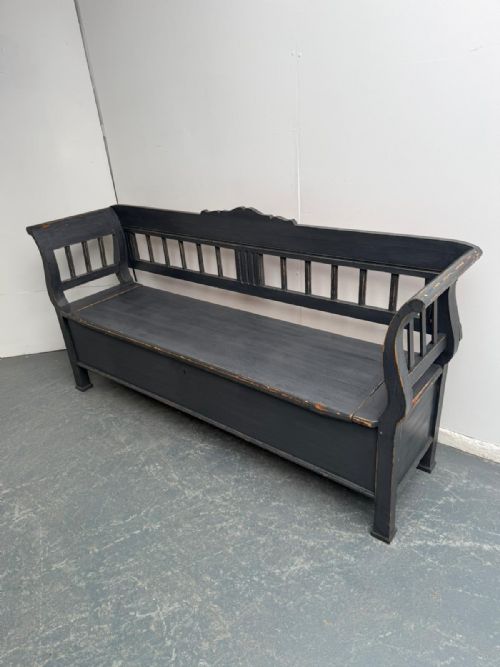
Several three-seater box settles double as seating and hidden storage, proving that nineteenth-century rural households understood the value of a tidy hallway.
Assessing quality
The distinction between tiers rests upon the preservation of the original painted surface versus later overpainting or stripping. Pieces retaining their untouched early pigment display authentic regional palettes that elevate their character.
Proportions and structural integrity also divide standard examples from superior forms, particularly in larger items like box settles and mule chests. The harmony between the pine framework and the decorative scheme determines the visual impact of each piece.
The Hungarian Folk Art Box Glossary
- Coffer box
- A sturdy storage chest with a hinged lid, traditionally used for household linens and valuables.
- Box settle
- A wooden bench featuring a high back and a box seat that lifts for storage beneath.
- Mule chest
- A large storage chest that incorporates one or more drawers beneath the main lift-top compartment.
- Country primitive
- A style of furniture shaped by local rural traditions, prioritising utility over refined academic design.
- Folk art
- Artistic work created within a traditional culture by self-taught or community artisans using local materials.
Hungarian Folk Art Box: Frequently Asked Questions
How were these chests used historically?
Rural families utilised these pieces primarily for storing textiles, garments, and household valuables in domestic interiors. Larger forms such as box settles also provided dual-purpose seating beside the hearth.
The enclosed compartments protected contents from dust and pests while offering robust surfaces for everyday room use.
How do I identify the period of a box?
Dating relies on observing construction methods, timber characteristics, and the specific style of the painted decoration. Georgian and Regency pieces show particular joinery details distinct from Victorian or nineteen-ten examples.
Examining the wear patterns on the pine and the composition of the paint layers helps establish the era of origin.
Where should I place one at home?
These painted storage pieces suit living rooms, hallways, or bedrooms where they function as focal points and practical containers. Smaller boxes sit comfortably on tables or shelves, while larger coffers serve as blanket chests at the foot of a bed.
Box settles work effectively in hallways or kitchens to provide both seating and concealed storage.