


Red Persian Woven Bag
These pieces brought together under red persian woven bag encompass authentic tribal textiles, from complete saddlebags to small vanity bags woven by nomadic confederacies across Persia.
Red Persian Woven Bag
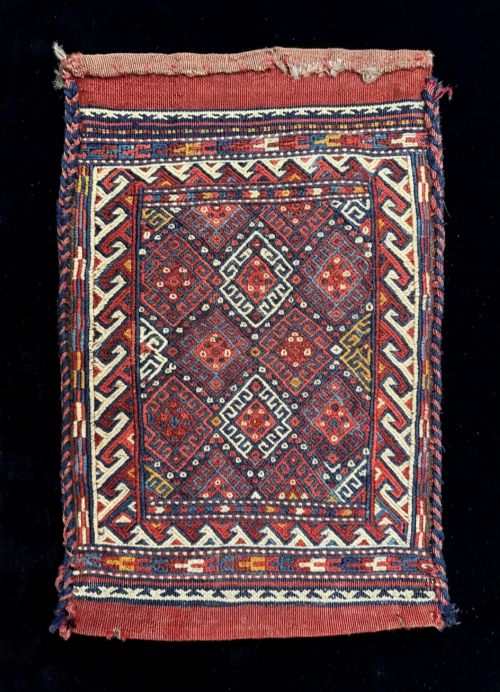
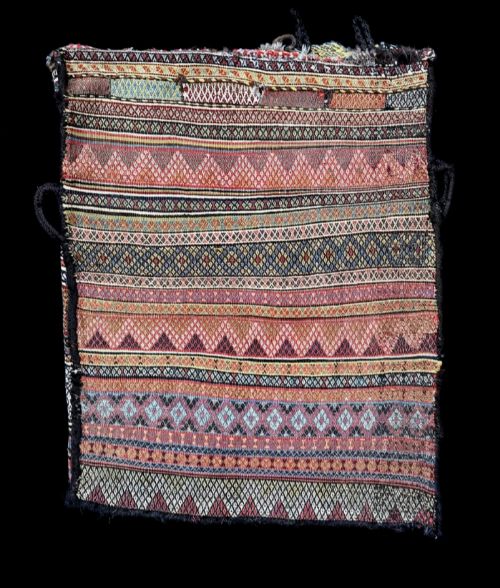
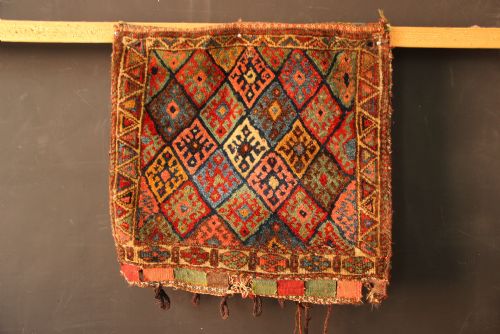
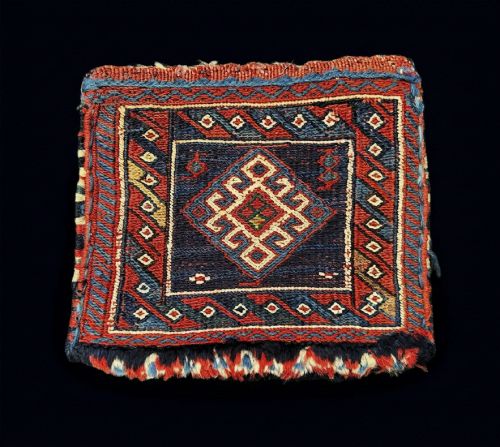
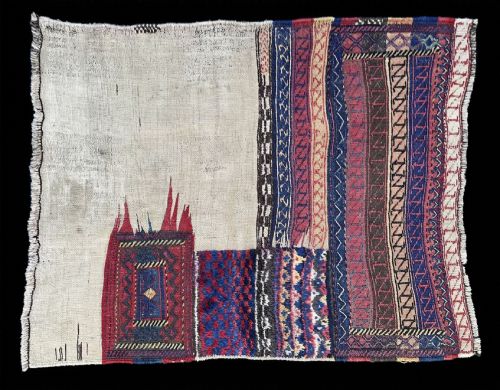
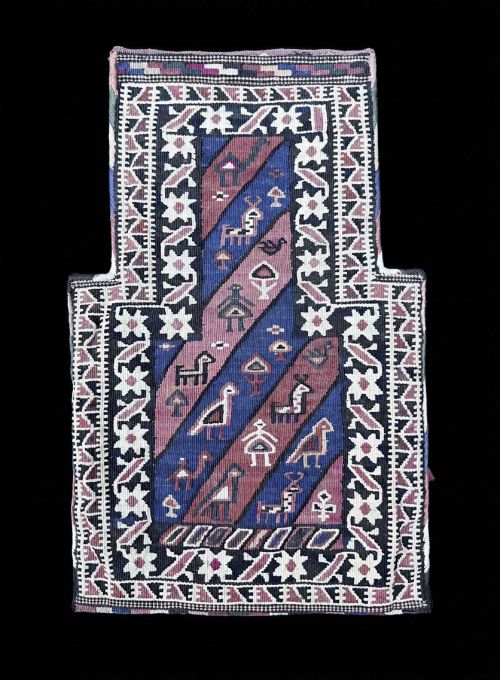
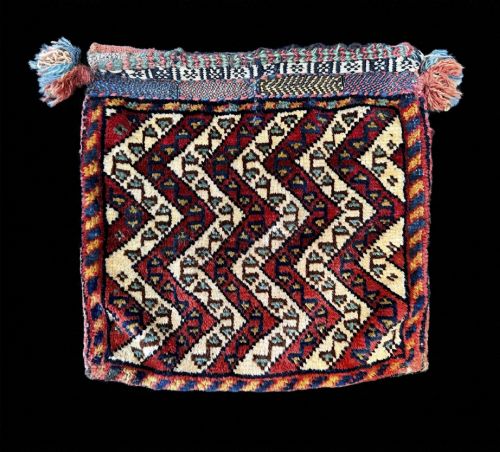
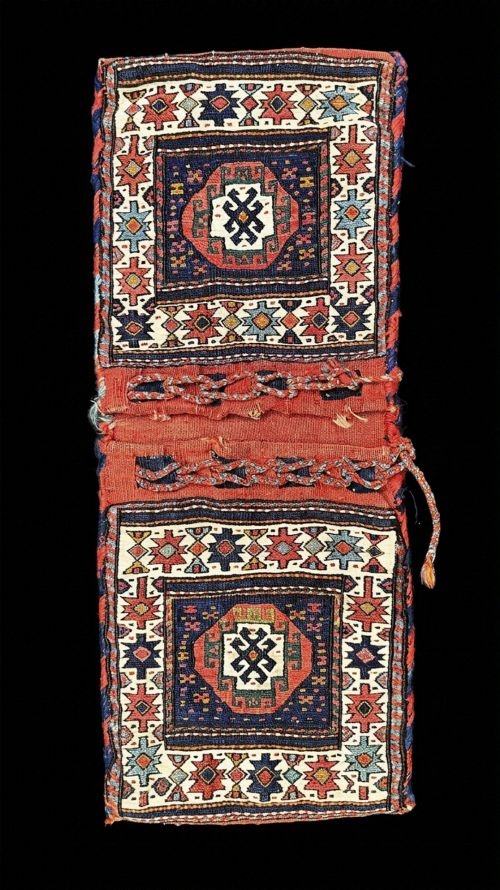
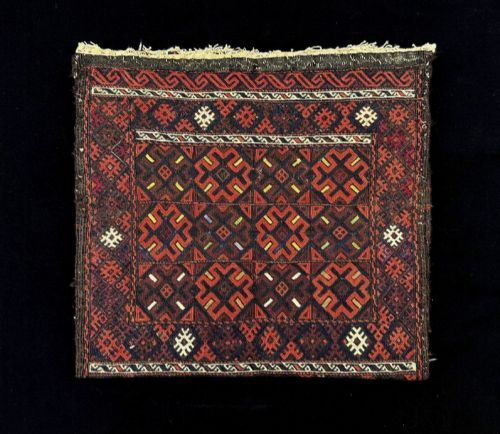
A red persian woven bag represents functional tribal weaving created by nomadic and village groups such as the Qashqai, Afshar, and Kurdish tribes. These textiles served practical purposes for transport and storage, functioning as salt bags, spoon bags, and saddlebags.
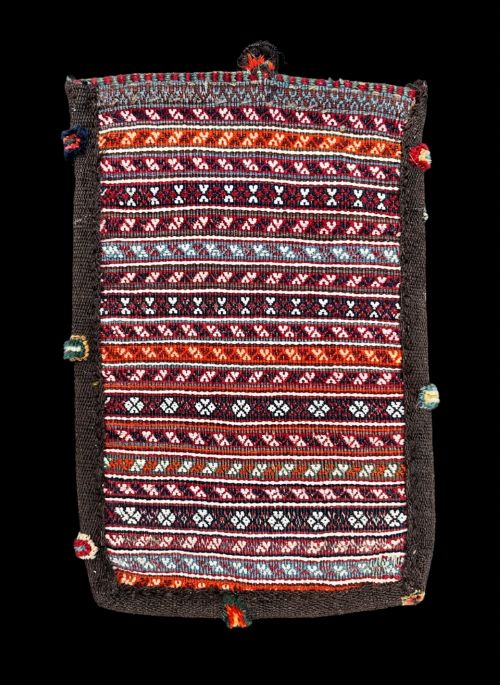
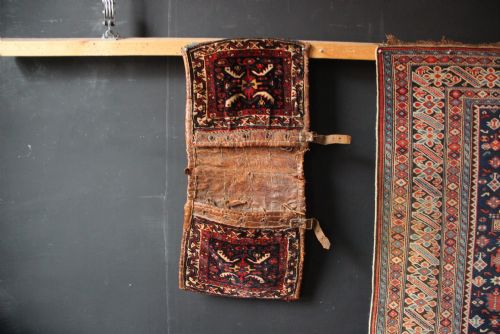
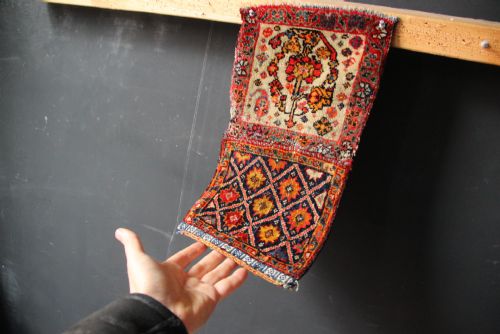
The items seen on this page span the nineteenth and early twentieth centuries, originating from regions including Fars, Kerman, and Khorassan. Buyers frequently encounter single bag faces, complete double saddlebags, and smaller utility pouches known as chantehs.
Nomadic weavers utilised local wool and natural dyes to produce durable objects that doubled as portable furnishings within tents. Each piece reflects the specific tribal iconography and geometric vocabulary of its maker.
How they were made
Weavers constructed these bags using hand-spun wool and cotton foundations, often incorporating goat hair for durability along the selvedges and backing. Natural dyes derived from plants and insects provided the saturated reds, blues, and browns characteristic of these tribal works.
Techniques varied from pile weaving using the symmetrical or asymmetrical knot to flat-woven sumac and plain weave structures. Cowrie shells and leather reinforcements were sometimes added to protect vulnerable edges and complete functional closures.
Red Persian Woven Bag Retail Price Guide 2026
Typical asking prices for red persian woven bag among the pieces listed under this phrase on Sellingantiques today, from the lower quarter to the upper quarter. They describe what is for sale here now, not the wider market.
What varies in quality
The handle and density of the wool foundation establish the structural integrity of an old bag face or complete khorjin. Finer knotting counts and well-preserved natural dye palettes separate standard utility items from exceptionally expressive tribal pieces.
Completeness alters the character of a textile, as surviving original plain-weave backs, closures, and side cords offer a more intact historical record. The clarity of geometric designs and balanced proportion within smaller formats such as chantehs also dictate the standing of a piece.
The Red Persian Woven Bag Glossary
- Khorjin
- A traditional double saddlebag designed for transport on pack animals, joined by a central web. Complete examples retain both pockets and original connecting panels.
- Chanteh
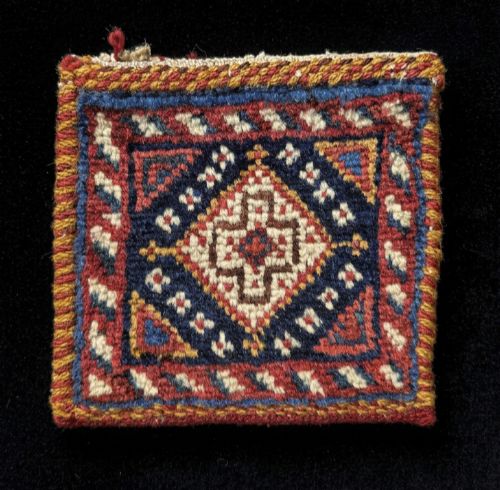
- A small personal vanity bag or pouch woven by tribal women for carrying small possessions. These miniature textiles frequently display dense geometric patterns.
- Sumac
- A flat-weaving technique where pattern wefts wrap around warp threads in a continuous wrapping motion. This method creates a sturdy, ribbed surface without cut pile.
- Balisht-Face
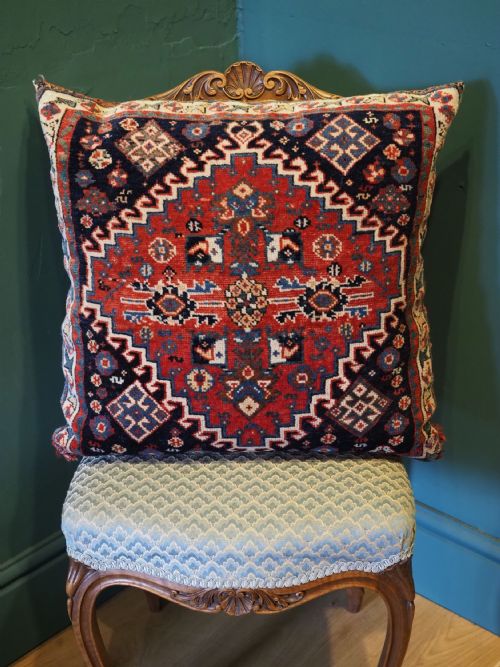
- The decorative front panel of a traditional sleeping pillow or bolster. They share the wool quality and palette of larger saddlebags but follow smaller format dimensions.
- Boteh
- A stylised almond or paisley motif representing a floral spray or cypress tree. It appears frequently across Afshar and Kurdish tribal weaving.
Red Persian Woven Bag: Frequently Asked Questions
What is a tribal bag face?
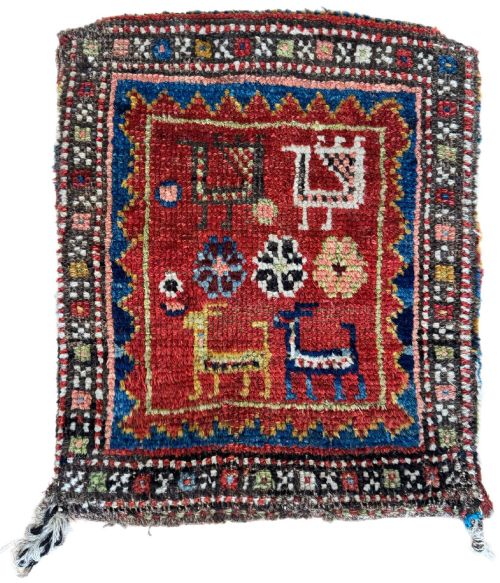
A bag face is the decorative pile-woven front panel of a nomadic storage pouch, separated from its plain-weave back over generations of use.
Collectors often frame these panels or use them as small decorative mats and cushion covers.
How were Persian saddlebags used?
Nomadic tribes slung these paired wool containers across horses, camels, and donkeys to carry household goods, salt, and personal items during seasonal migrations.
The sturdy construction protected contents from dust and rough handling on the road.
How do I care for antique wool bags?
Keep wool textiles out of direct sunlight to prevent natural dye fading and vacuum them gently with a low suction attachment without a rotating brush.
Professional specialist cleaning is recommended when dust accumulates within the wool pile.
How do I identify tribal origins?
Tribal attribution relies on specific structural traits, such as end finishes, colour combinations, and particular geometric motifs linked to confederacies like the Qashqai or Shahsavan.
Regional dye palettes and weave densities also provide clear indicators of where a bag was made.