



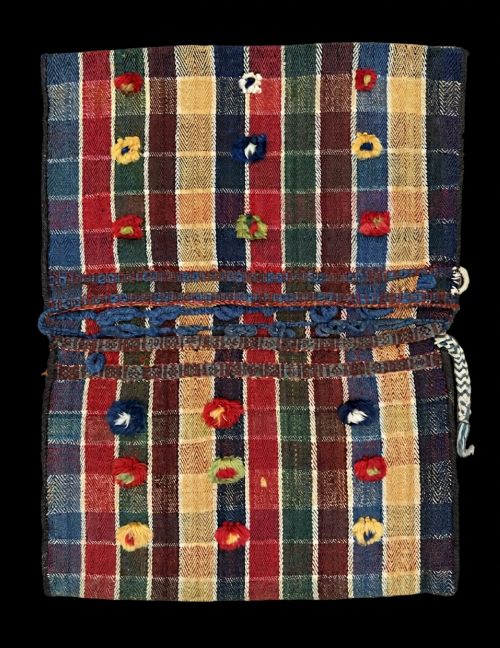


Vintage Persian Kilim Bag
These vintage persian kilim bag examples are woven tribal textiles repurposed into cushions and storage pieces, prized for their genuine nomadic character.
Vintage Persian Kilim Bag
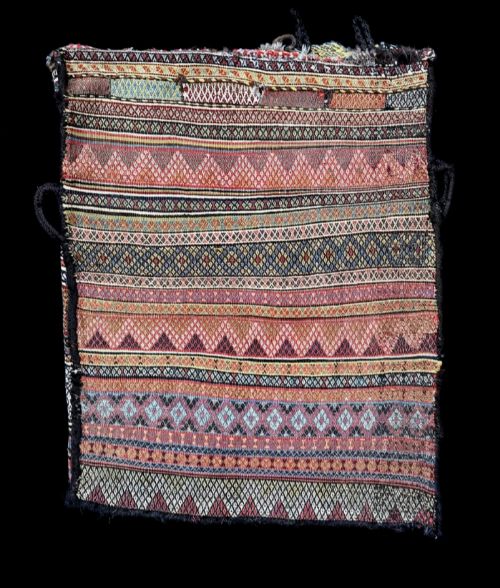
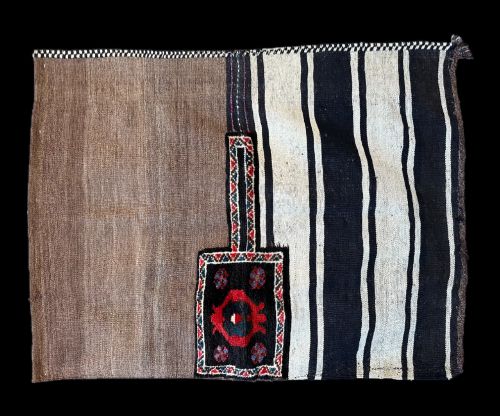
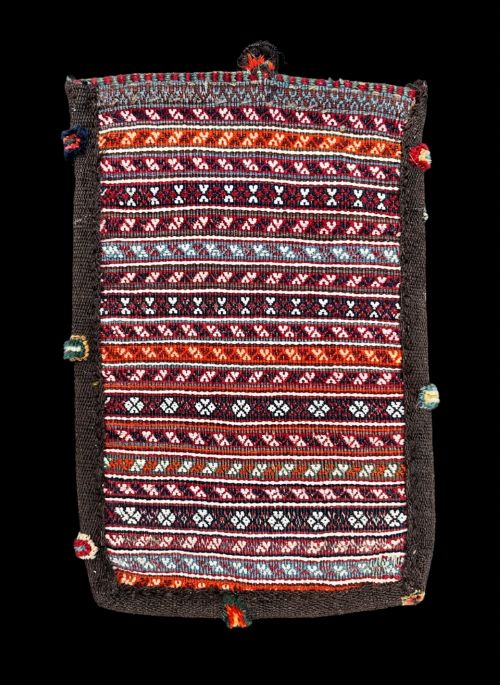
A vintage persian kilim bag encompasses utilitarian items such as storage bags, saddle-bags, spoon-bags, and wheat sacks known as tacheh, created by tribal groups across Persia. These textiles originate from nineteenth- and early twentieth-century nomadic communities including the Qashqa'i, Lori-Bakhtiari, Shahsavan, and Baluch.
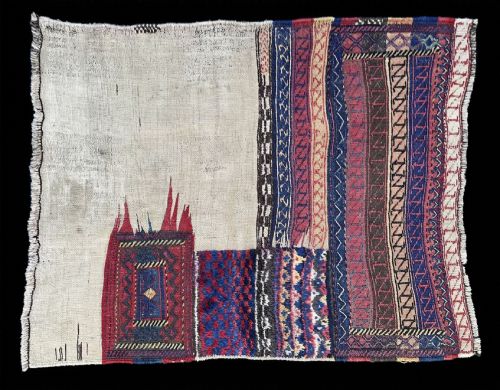
Buyers most frequently encounter these pieces converted into cushions and soft furnishings or preserved as bag faces, retaining their flat-woven slit-tapestry structure. The designs reflect regional tribal traditions from areas such as the Fars Province and the Chahar Mahal Valley.
The forms range from complete storage bags featuring original backs and banded weft work to fragments mounted as decorative cushions. Each object preserves the functional weaving methods of south-west and western Persian nomadic groups.
Factors that distinguish quality
Quality rests on the fineness of the flat-weave and the integrity of the natural dyes, which display depth and variation across the surface. Tighter knotting and precise geometric execution separate finer tribal bag faces from standard utility pieces.
The preservation of original structural elements, such as backs, banding, and selvedges, influences the character of a piece. Survival of the complete construction indicates careful stewardship since the nineteenth or early twentieth century.
Vintage Persian Kilim Bag Retail Price Guide 2026
Typical asking prices for vintage persian kilim bag among the pieces listed under this phrase on Sellingantiques today, from the lower quarter to the upper quarter. They describe what is for sale here now, not the wider market.
Some antique wheat sacks retain faint traces of agricultural dust from nineteenth-century Persian harvests.
The Vintage Persian Kilim Bag Glossary
- Kilim
- A flat-woven carpet or textile produced by tightly interweaving the warp and weft strands without a pile. This technique creates a smooth, tapestry-like surface utilised for bags and covers.
- Tacheh
- A traditional woven wheat sack or storage container made by tribal groups in western Persia. These pieces often feature geometric patterns suited to agricultural storage.
- Baladan
- A specific type of tribal spoon-bag used by nomads for domestic utensils. They display narrow proportions and dense geometric weaving.
- Qashqa'i
- A confederation of nomadic tribes in the Fars Province of south-west Persia known for distinctive geometric weaving. Their textiles often incorporate rich natural dyes and symbolic motifs.
- Bakhtiari
- Nomadic and village groups inhabiting the Chahar Mahal Valley in western Persia. Their weaving tradition produces robust storage-bags and decorative textiles.
Vintage Persian Kilim Bag: Frequently Asked Questions
What is a vintage persian kilim bag?
These items are woven utilitarian textiles created by nineteenth- and early twentieth-century nomadic tribes in Persia. They include saddle-bags, storage sacks, and tachehs that have often been adapted into cushions.
Nomadic groups used these flat-woven pieces for transporting and storing goods across regions like the Fars Province and the Chahar Mahal Valley. Today, collectors value them for their authentic tribal designs and natural materials.
How were these bags originally used?
Tribal nomads utilised these textiles as functional storage containers, grain sacks, and saddle-bags during seasonal migrations. Their durable flat-weave construction protected contents from wear and moisture.
Over time, many of these bags have been carefully repurposed into cushion faces or wall hangings for domestic interiors. This adaptation preserves the original textile while allowing modern use.
How do I identify the tribal origin?
Attribution depends on specific geometric motifs, colour combinations, and structural characteristics associated with groups such as the Qashqa'i, Lori-Bakhtiari, Shahsavan, and Baluch. Regional weaving centres and valleys impart distinct visual markers to each textile.
Examining the weave structure and dye palette helps narrow the origin to specific areas like south-west or western Persia. Historical records and comparative examples guide these regional classifications.
Are these pieces made with natural dyes?
The textiles from this period predominantly feature natural dyes derived from plants and insects, yielding rich and stable tones. These colorants age gracefully, developing subtle variations across the wool.
Examination of the yarn under magnification reveals the characteristic absorption of natural dyes into hand-spun wool. This traditional dyeing method is a hallmark of nineteenth- and early twentieth-century nomadic weaving.