


Red Navy Persian Textile
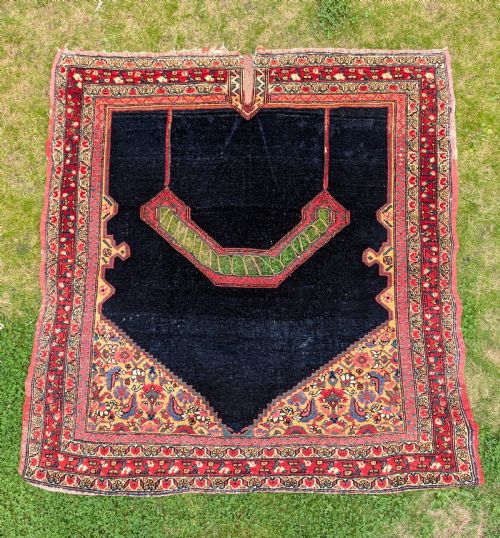
These red navy persian textile pieces are woven tribal rugs and bags from the nineteenth and early twentieth centuries that bring rich colour and history into a room.
Red Navy Persian Textile
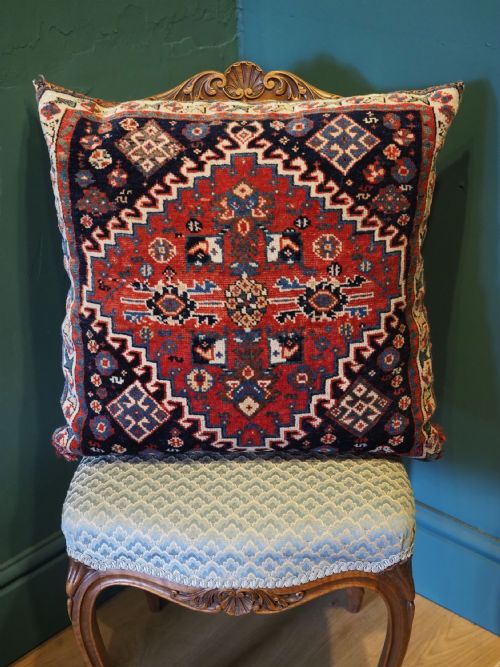
When you search for a red navy persian textile, you encounter utilitarian tribal weavings created by nomadic and village groups across Persia. These pieces include saddlebags, bag faces, cushions, and sofreh dining cloths that served practical daily functions in camp and village life.
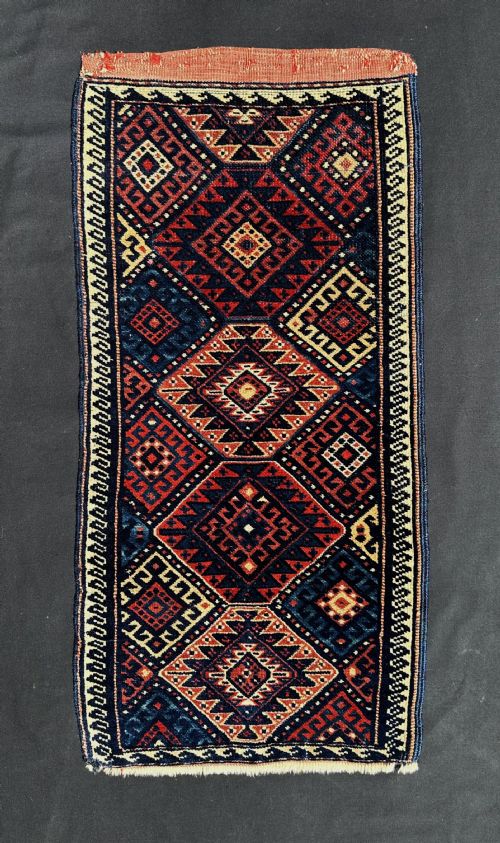
The objects on this page most commonly appear as nineteenth-century saddlebag faces and fragments originating from tribal confederations such as the Qashqai, Baluch, and Afshar. These functional items were woven for portability and hard use, carrying traditional tribal motifs that identify their makers.
Tribal pieces from regions like Fars, Khorassan, and Luristan dominate the selection, showing distinct regional palettes of deep indigo and madder red. Each item reflects the specific lifestyle and environment of the weavers who produced them without commercial templates.
Materials and Construction
The weavers utilised hand-spun wool for the pile and structure, yielding a resilient and lustrous material capable of enduring decades of heavy friction. Cotton foundations occasionally appear alongside wool warps and wefts, providing structural stability to denser formats.
Natural and vegetable dyes created the characteristic red and navy tones seen across these rugs, deriving from madder roots, indigo, and local plants. This traditional dyeing method results in subtleabrash and tonal variation as the colours age under natural light.
Listings feature items dated across the nineteenth and early twentieth centuries, spanning from eighteen-sixty to nineteen-ten.
Evaluating the Weaving
Quality rests in the handling of the wool and the depth of the natural dyes, where lustrous, oily fleeces achieve a luminous finish. Finer knotting and precise geometric drawing separate master tribal work from standard utility pieces.
The integrity of the remaining pile and the preservation of original flatweave backs or borders dictate the structural condition of each bag face or rug. Strong contrast between the indigo navy and madder red grounds indicates careful dye preparation and mordanting.
The Red Navy Persian Textile Glossary
- Sofreh
- A flatwoven dining cloth or spread used by Persian nomads for sharing meals on the ground. These textiles display bold tribal iconography and practical flatweave construction.
- Balisht
- A traditional pillow or small sleeping bag face produced by tribal groups. They are typically denser in knotting to support daily use as headrests.
- Abrash
- A natural tonal variation or streaking in the colour of the wool caused by subtle shifts in dye batches. It is a hallmark of hand-dyed tribal textiles.
- Soumak
- A technique of flatweaving that wraps supplementary weft threads around the warp to create a durable, textured surface. Shahsavan weavers frequently utilised this method for storage bags.
Red Navy Persian Textile: Frequently Asked Questions
What is a saddlebag face?
A saddlebag face is the front decorative panel of a paired utilitarian bag used by nomads for transport on horses or camels. When the bags wore out down the centre seam, the panels were often preserved as standalone rugs.
These fragments let collectors appreciate the intricate tribal patterns without needing the complete double bag structure.
How do I care for a tribal textile?
Keep these wool pieces out of direct sunlight to protect the natural vegetable dyes from fading over time. Vacuum gently with a suction-only attachment and avoid rotating beater bars.
Professional textile conservators should handle any washing or major structural stabilization to preserve the hand-spun fibres.
Where were these textiles made?
Nomadic confederations and village groups across Persia produced these pieces, with distinct regions like Fars, Khorassan, and Luristan yielding specific tribal designs. Each geographic area developed its own palette and iconography.
Local environmental conditions and available dye plants directly influenced the visual character of the weaving.