




Red Mahogany Storage Chest
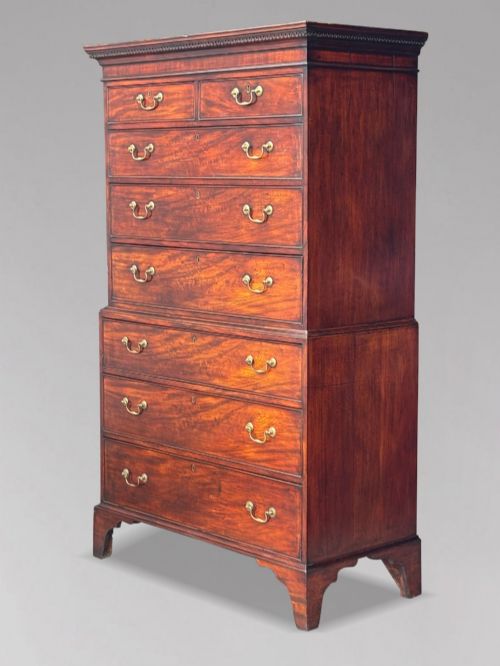
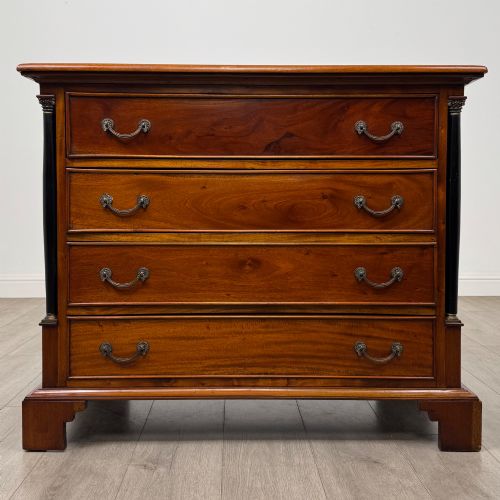
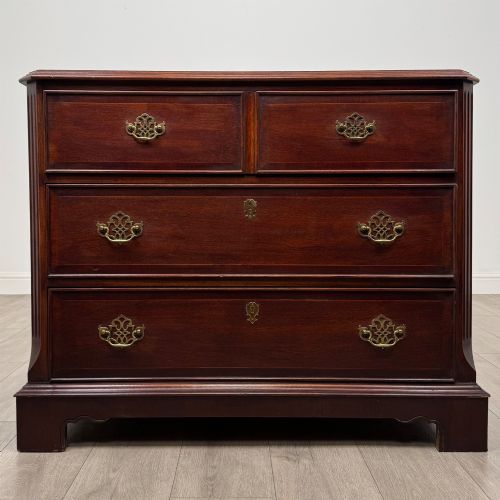
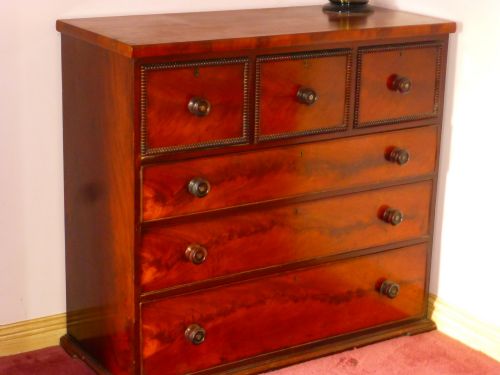
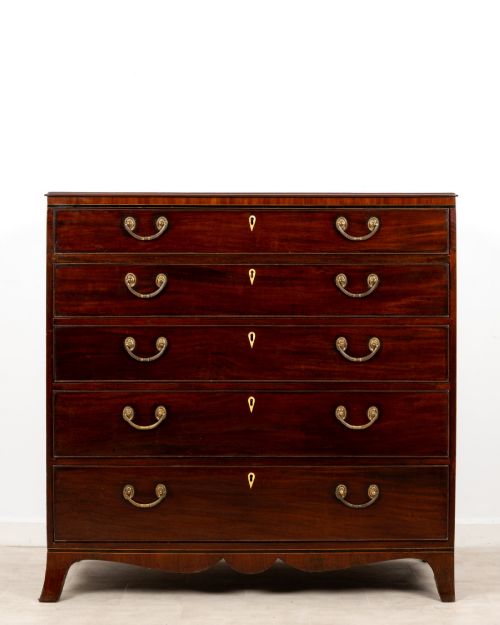
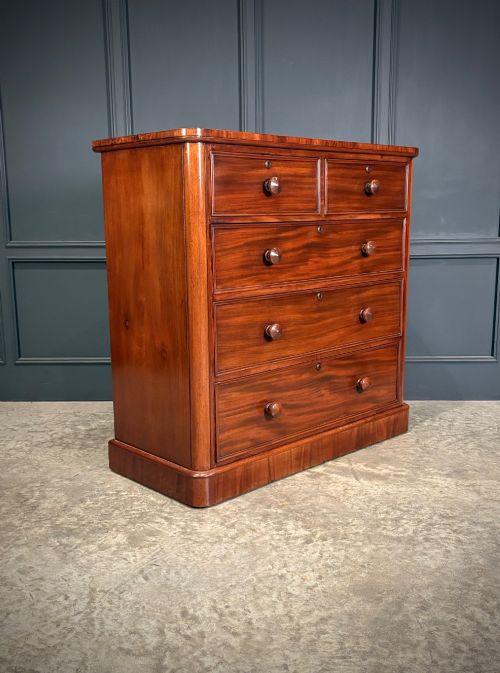
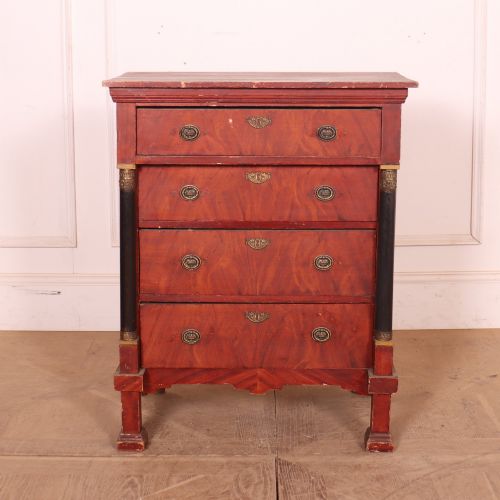
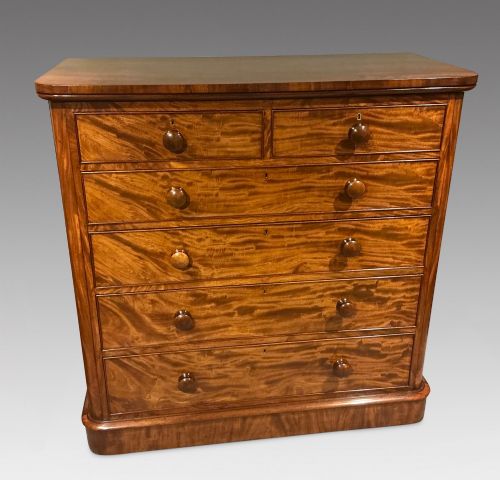
A red mahogany storage chest brings rich, dark timber and solid proportion into a room, serving as both a practical repository and a focal point.
Red Mahogany Storage Chest
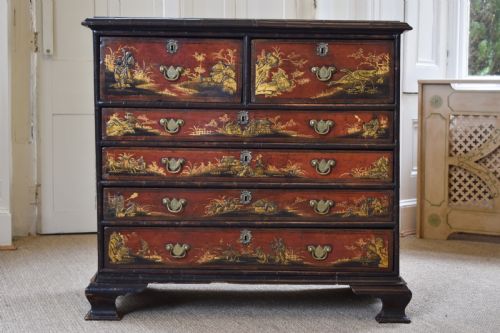
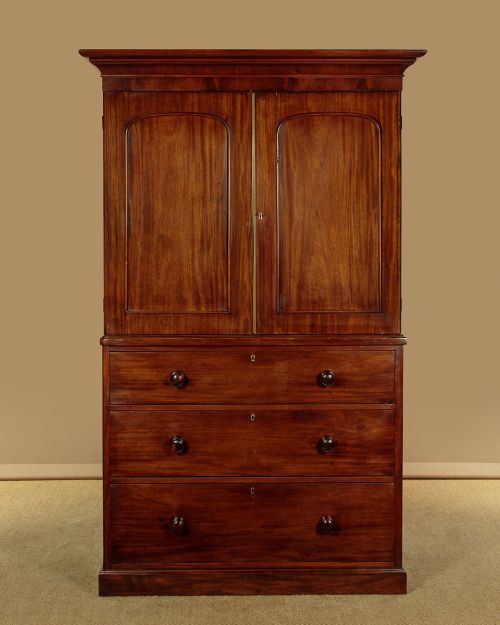
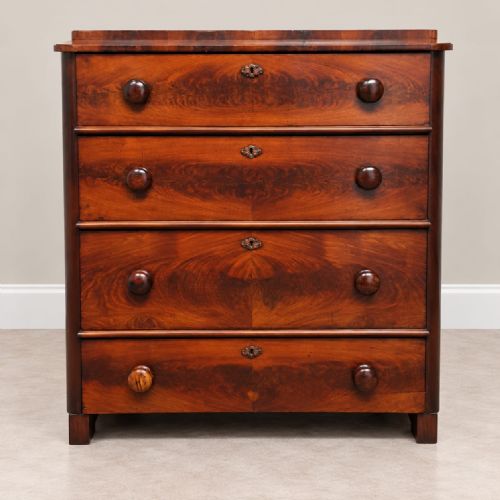
A red mahogany storage chest encompasses functional timber forms designed for household organisation, appearing frequently as chests of drawers, bachelor chests, and linen presses across this selection. Buyers seeking a red mahogany storage chest will encounter sturdy constructions spanning the eighteenth century, the Victorian era, and the Edwardian period, each reflecting the domestic requirements of its time.
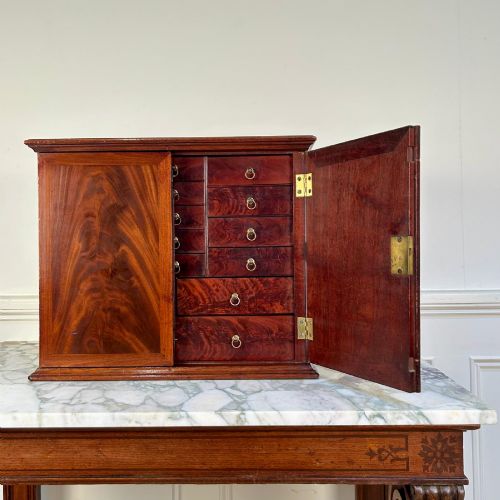
The objects vary from tall chests on chests and serpentine commodes to compact cabinets and specialised collector pieces equipped with multiple internal drawers. Examples range from formal George III designs to simpler nineteenth-century interpretations, offering diverse scales suitable for various room layouts.
How they were made
Cabinetmakers constructed these pieces primarily using solid mahogany and flame mahogany veneer applied to secondary timbers such as oak and pine. Secondary woods often lined the interior drawers, providing structural stability while the exterior display surfaces exhibited rich grain patterns.
Construction techniques incorporated dovetailed drawer joints and bracket feet, occasionally complemented by crossbanding, brass hardware, bone details, and leather surfaces. Workshops relied on hand-tooling and careful timber selection to achieve durable joints and smooth drawer operations.
Red Mahogany Storage Chest Retail Price Guide 2026
Typical asking prices for red mahogany storage chest among the pieces listed under this phrase on Sellingantiques today, from the lower quarter to the upper quarter. They describe what is for sale here now, not the wider market.
Listings feature robust nineteenth-century storage pieces alongside eighteenth-century forms, constructed from mahogany, pine, oak, and ebonised wood.
What varies in quality
Quality rests in the grain choice of the timber, particularly the depth and movement found in flame mahogany veneer, alongside the precision of the cabinetmaker's joints. Superior examples display thoughtful timber matching across drawer fronts and crisp carving on mouldings and feet.
Hallett And Sons·Mon Krieger
The Red Mahogany Storage Chest Glossary
- Flame mahogany
- A veneer cut from the fork of the mahogany tree, producing a distinctive, fiery grain pattern with high visual movement. It was frequently applied to the principal drawer fronts of formal furniture.
- Brushing slide
- A pull-out shelf integrated above the top drawer of a chest, historically used for folding clothes or writing. These surfaces typically sit at a comfortable waist height.
- Crossbanding
- A narrow strip of veneer laid around the border of a drawer front or tabletop with the grain running perpendicular to the main panel. This decorative technique creates a defined visual frame.
- Serpentine front
- A furniture front characterised by a wavy contour that curves outward in the centre and inward at the ends. This shape requires considerable skill from the woodworker to execute cleanly.
- Biedermeyer
- A Central European style spanning the nineteenth century that favoured clean lines, utilitarian comfort, and minimal ornamentation over heavy historicism. It allowed natural timber grains to provide the primary decoration.
Red Mahogany Storage Chest: Frequently Asked Questions
What is a bachelor chest?
A bachelor chest is a compact chest of drawers typically featuring a pull-out slide used for writing or sorting papers.
These pieces were designed for smaller bedchambers or personal dressing rooms during the eighteenth century.
How do I care for a mahogany chest?
Keep the timber away from direct heat sources and strong sunlight to prevent the red finish from fading and the wood from splitting.
Apply a traditional wax polish occasionally to nourish the surface and maintain its natural lustre.
What is a linen press?
A linen press is a tall piece of furniture featuring upper doors that enclose sliding shelves, sitting above a chest of lower drawers.
Historically, households utilised these large cabinets to store household linens flat and protected from dust.
How do I identify a George III chest?
George III pieces date from the latter half of the eighteenth century and often display restrained classical proportions, fine bracket feet, and dense mahogany timbers.
Look for hand-cut dovetails and traditional oak or pine drawer linings that indicate eighteenth-century construction methods.