




Wooden Specimen Box
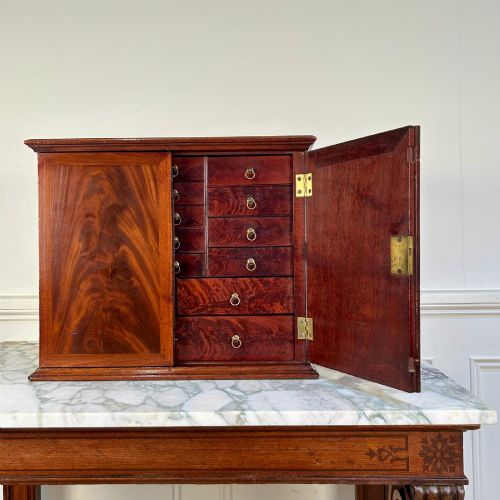
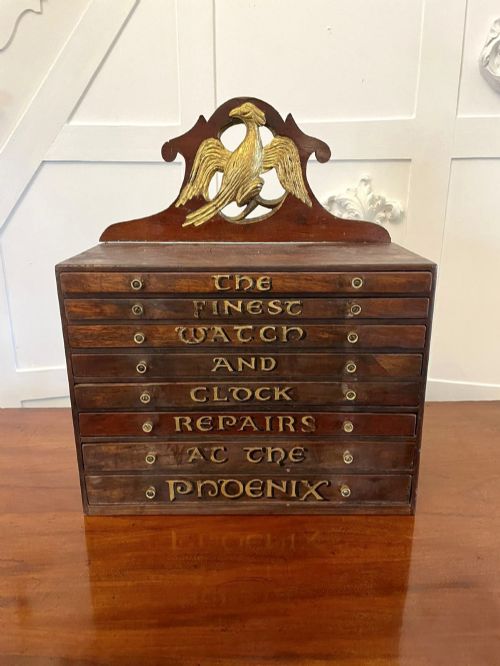
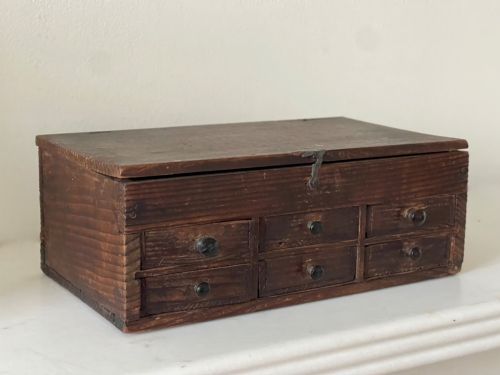
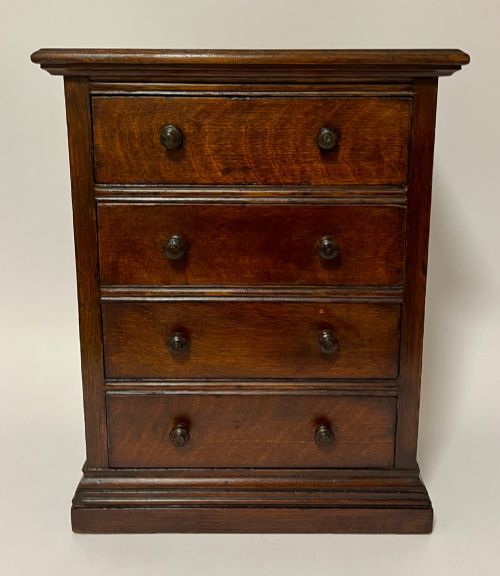
These wooden specimen box pieces are compact table chests and cases designed to house natural history and small curated objects.
Wooden Specimen Box
A wooden specimen box takes the form of a tabletop cabinet, miniature chest of drawers, or glass-fronted display case designed for orderly storage. The pieces found here span the Georgian, Regency, Victorian, and Edwardian eras, reaching into early twentieth-century utilitarian and industrial formats.
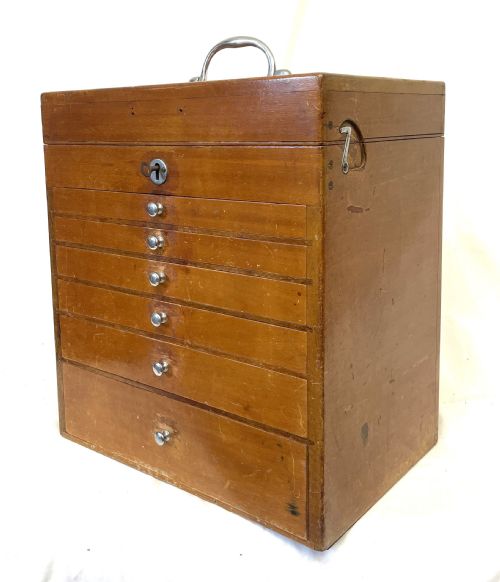
The most common formats on this page are multi-drawer mahogany and oak cabinets designed originally for collectors, alongside specialised containers like microscope slide cabinets and instrument cases. These portable wooden chests often feature internal banks of shallow drawers tailored for orderly categorization.
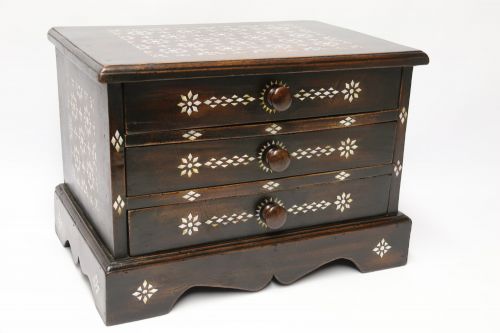
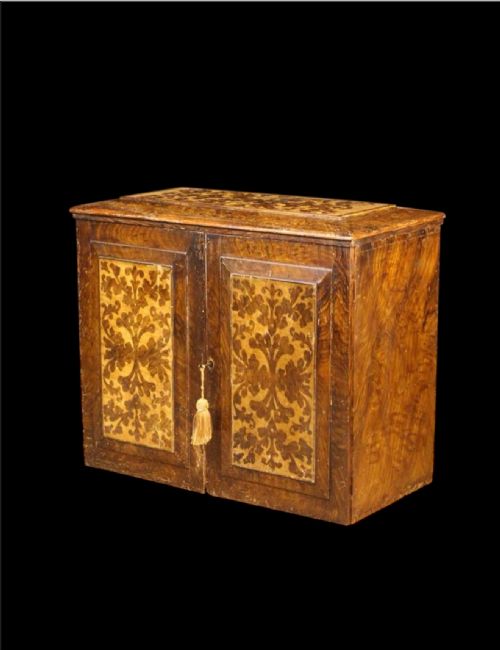
Makers ranged from domestic English cabinet-makers working in mahogany and walnut to colonial workshops producing inlaid hardwood and Anglo-Indian pieces. Alongside natural history cabinets, the selection includes stationery boxes, medical carrying chests, and miniature chests of drawers.
How they were made
Makers constructed these cabinets using dense timbers such as mahogany, oak, walnut, and satinwood, often pairing primary display surfaces with secondary woods for internal drawer construction. Brass fittings appear frequently as drawer pulls, campaign handles, carrying brackets, and locking escutcheons.
Surface decoration relies on natural timber grain, fine inlay work, and specialised techniques such as Tunbridge Ware mosaic banding. Glazed doors and lift-off lids utilise fitted glass panes to protect contents while maintaining visibility for display.
One extraordinary nineteenth-century microscope slide cabinet on record arrives accompanied by a remarkable archive of two hundred and eighty slides.
What varies in quality
Construction standards distinguish utilitarian storage from refined cabinet-making, visible in the precision of drawer dovetailing and the snugness of fit across multiple internal tiers. Superior examples employ carefully selected timber veneers and balanced grain patterns across the primary facade.
Hardware integration marks another distinction, where heavy brass drop handles, working locks with original keys, and finely framed glass panels elevate a functional carrying chest into a decorative tabletop showcase.
Edmund Nye
The Wooden Specimen Box Glossary
- Campaign style
- Describing portable furniture fitted with flush brass handles and corner brackets designed for easy transport on travels.
- Specimen woods
- A selection of diverse decorative timbers utilised together to create contrasting geometric patterns or inlaid surface designs.
- Tunbridge Ware
- A form of British woodwork characterised by mosaic patterns built from tiny blocks of naturally coloured wood.
- Escutcheon
- A protective brass plate surrounding a keyhole on a cabinet door or drawer front.
- Dovetail
- An interlocking joint used in drawer construction, valued for its mechanical strength and durability.
Wooden Specimen Box: Frequently Asked Questions
What were wooden specimen boxes used for?
These cabinets served naturalists, collectors, and specialists for housing delicate items like microscope slides, shells, insects, and geological samples.
They also accommodated medical instruments, watch repair tools, and personal valuables within secure tabletop compartments.
How do I date a wooden specimen box?
Dating relies on timber choice, construction methods, and hardware styles characteristic of periods from Georgian through Edwardian eras.
Victorian and nineteenth-century pieces often feature mahogany or walnut with hand-cut dovetails and brass campaign hardware.
Are keys usually included with these cabinets?
Some period cabinets retain their original working keys and functional brass locks, though many survive without them.
Locks were standard for securing private collections and delicate instruments from unauthorized handling.
How do I care for antique wooden specimen cases?
Keep wooden cases away from direct sunlight and steady heat sources to prevent timber warping and veneer shrinkage.
Dust surfaces gently with a dry cloth and apply occasional clear wax to maintain the polish of the wood.