

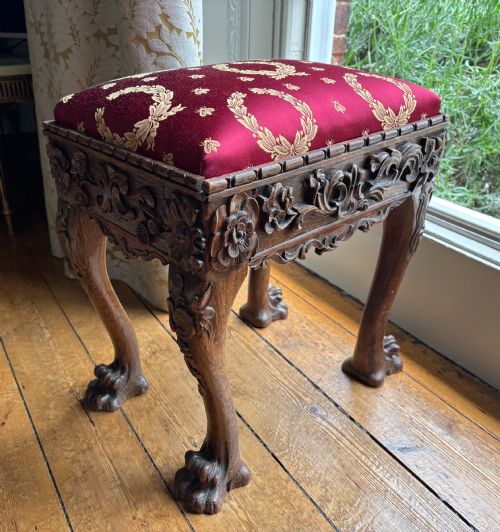
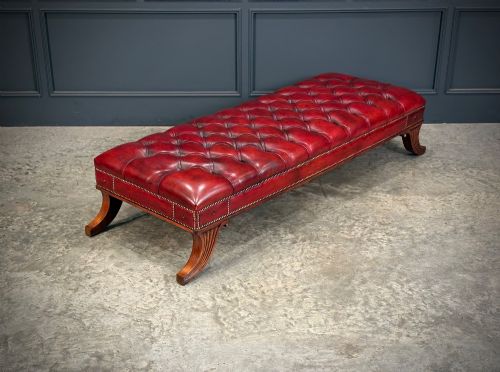
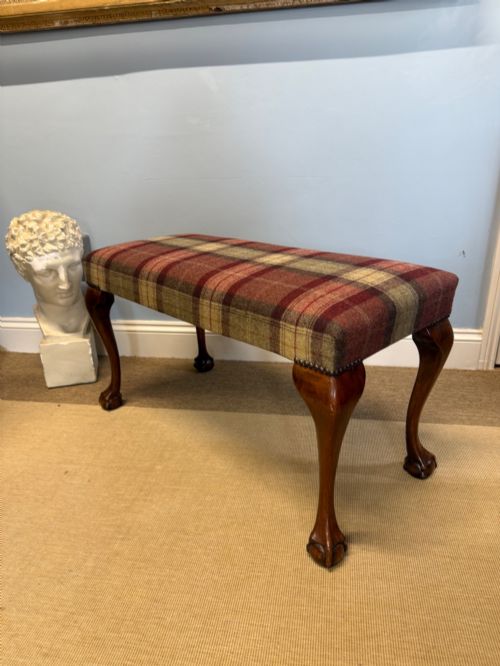
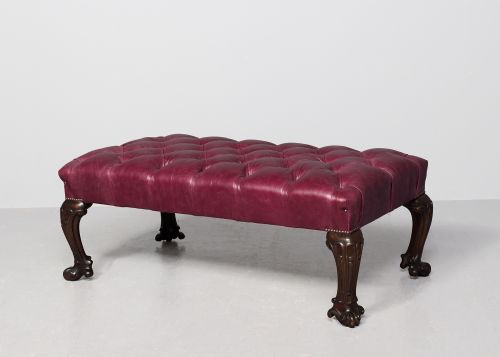
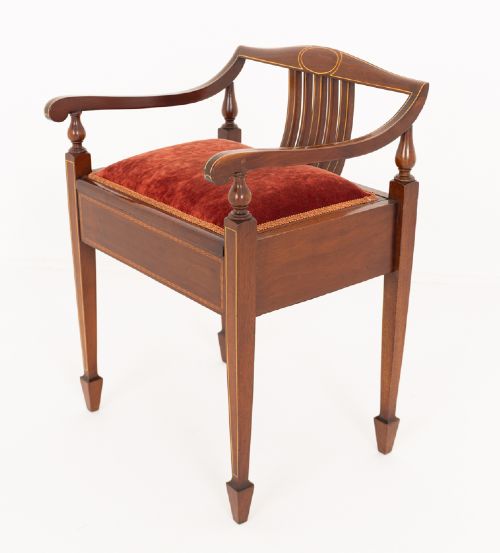
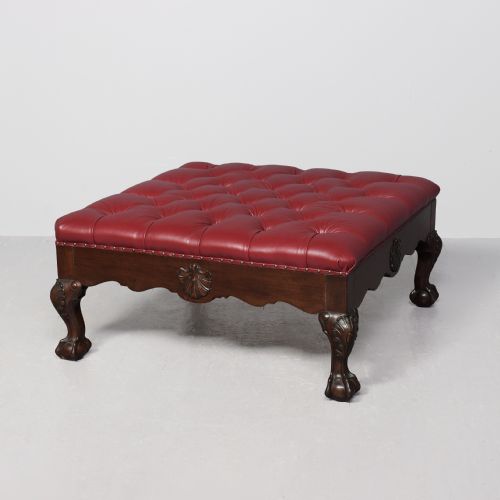
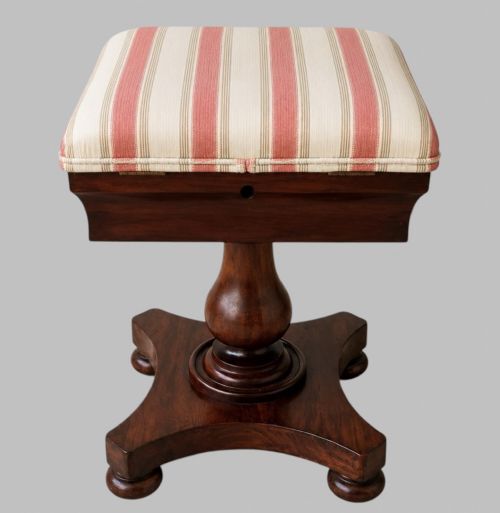


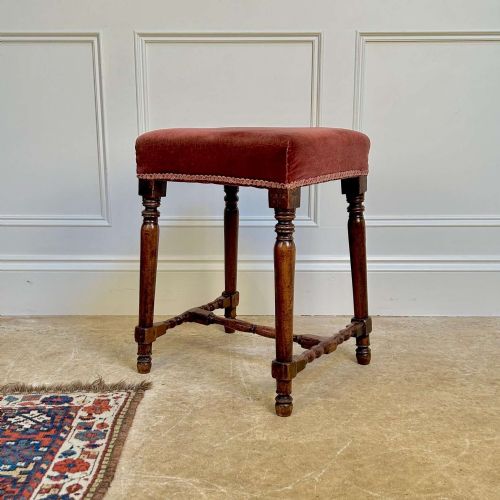


Red Mahogany Stool
These substantial seats combine rich timber frames with traditional hides and textiles, making a red mahogany stool a practical and handsome addition to any interior.
Red Mahogany Stool
When you search for a red mahogany stool, you encounter a variety of forms spanning multiple centuries, from simple footstools to piano seats and long window benches. The pieces appearing here range from mid-eighteenth-century Georgian examples to Edwardian revivals, reflecting shifts in domestic seating over generations.
The most common versions met on this page are nineteenth-century footstools and dressing table seats, often framed in dense timber and upholstered in hide or needlepoint. Piano stools and music seats with adjustable mechanisms or lift-up lids also feature heavily among the recorded items.
Makers and workshops across the Georgian, Victorian and Edwardian eras adapted these seating forms for different rooms, resulting in square, rectangular, and x-frame configurations. Whether built for a drawing room or a bedroom, each red mahogany stool demonstrates the enduring utility of traditional seating.
Judging Quality and Execution
Quality reveals itself in the crispness of the timber carving and the joinery of the frame, where tight joints and well-defined mouldings distinguish superior pieces. The depth of colour and grain figure in the mahogany timber also indicate the selection exercised by the original maker.
Upholstery execution alters the character of the piece, with hand-stitched buttoning, traditional hide selection, and careful brass stud placement representing higher standards of workshop production. Well-executed adjustable mechanisms on piano stools operate smoothly and retain their original components.
Red Mahogany Stool Retail Price Guide 2026
Typical asking prices for red mahogany stool among the pieces listed under this phrase on Sellingantiques today, from the lower quarter to the upper quarter. They describe what is for sale here now, not the wider market.
Listings span periods from the 18th century through to Edwardian revivals, showcasing mahogany frames combined with leather, velvet, and needlepoint.
Hallett & Sons·Mathew Gregson·JAS Shoolbred & Co·William Morris
The Red Mahogany Stool Glossary
- Cabriole leg
- A furniture leg that curves outward and then tapers inward, mimicking an animal's limb. This form appears frequently on eighteenth-century and revival seating.
- X-frame
- A structural base formed by intersecting diagonal timbers that support the seat. It provides both stability and a distinctive architectural silhouette.
- Ottoman
- A low, upholstered seat or box without a back or arms, often incorporating internal storage beneath a hinged lid. These pieces served functional roles in period drawing rooms.
- Needlepoint
- A type of canvas work embroidery utilised historically for durable seat covers. It employs counted threads to create dense, pictorial patterns.
- Buttoned
- An upholstery technique where indentations are formed in the padding by pulling twine through to the frame, securing the filling and creating a tufted surface.
Red Mahogany Stool: Frequently Asked Questions
How do I date a red mahogany stool?
Dating relies on observing structural characteristics, timber finishes, and upholstery methods associated with specific design periods. Georgian pieces often display restrained lines and hand-cut joinery, while Victorian examples frequently incorporate heavier turnings or buttoned leather.
Examining the underside and secondary timbers provides further clues regarding age. Tool marks and construction techniques help distinguish original period furniture from later Edwardian revivals.
Were piano stools adjustable originally?
Many nineteenth-century piano stools incorporated mechanical systems that allowed the user to alter the seat height for playing comfort. Screw mechanisms operated via the revolving seat top or side handles were common.
Non-adjustable variants also existed, including duet stools with fixed upholstered surfaces and internal storage compartments for sheet music.
How were these stools used historically?
These pieces served multiple functions across different rooms of the house, acting as footrests in drawing rooms, dressing seats in bedrooms, and piano benches in music parlours. Long window seats and benches accommodated multiple sitters in formal reception spaces.
Box ottomans and sewing stools provided dual purposes by offering concealed storage for textiles and domestic items alongside a place to sit.
What is the difference between Georgian and Victorian styles?
Georgian furniture generally prioritises proportion, classical restraint, and finely figured mahogany veneers. Pieces from this era often feature subtle carving on the knees of cabriole legs or neat bracket feet.
Victorian design tends towards heavier proportions, elaborate turned legs, and deep button upholstery. Revival movements during the later nineteenth century reinterpreted earlier Georgian and Chippendale forms with increased scale.