
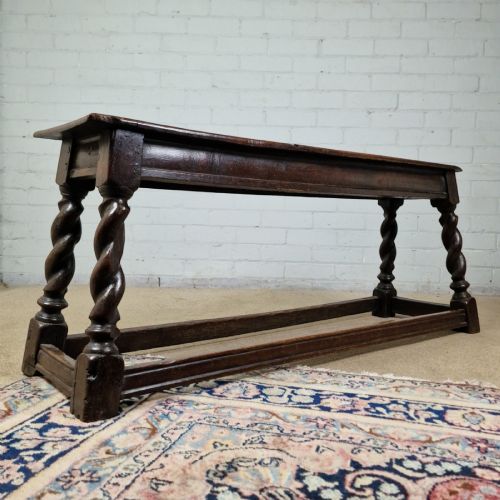
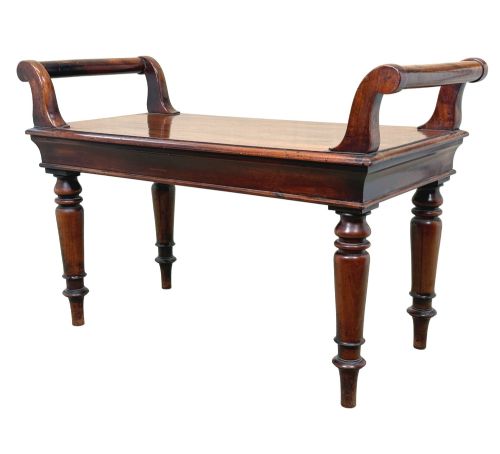

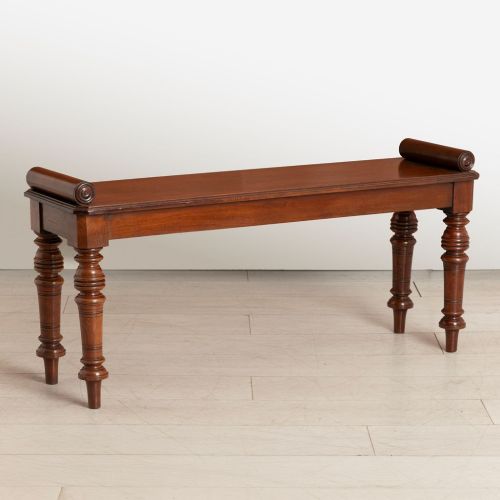
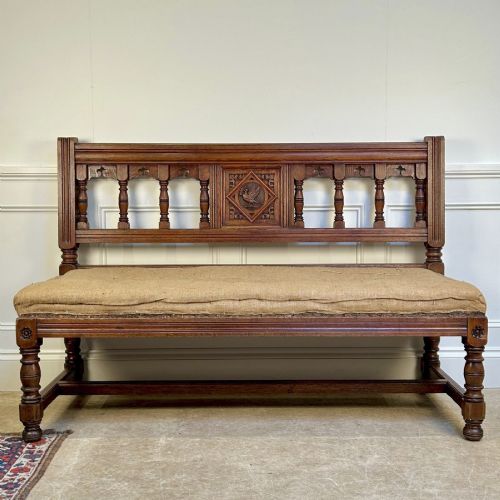
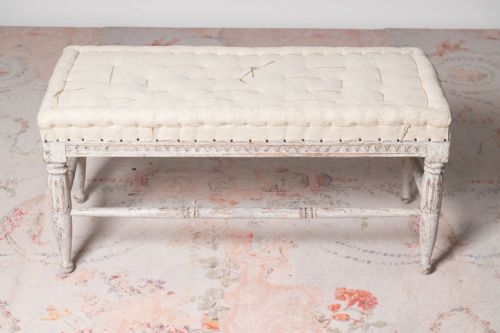
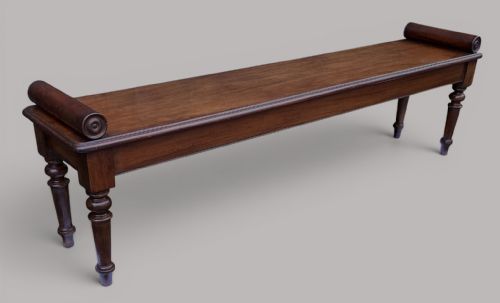

Hallway Window Bench
A hallway window bench brings linear seating and period character to narrow thresholds and sunlit recesses alike.
Hallway Window Bench
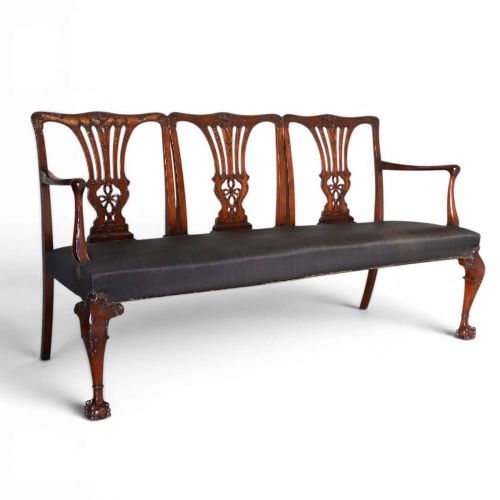
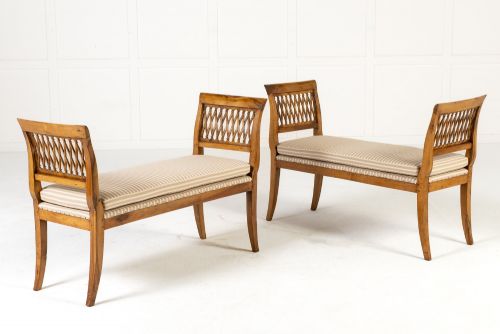
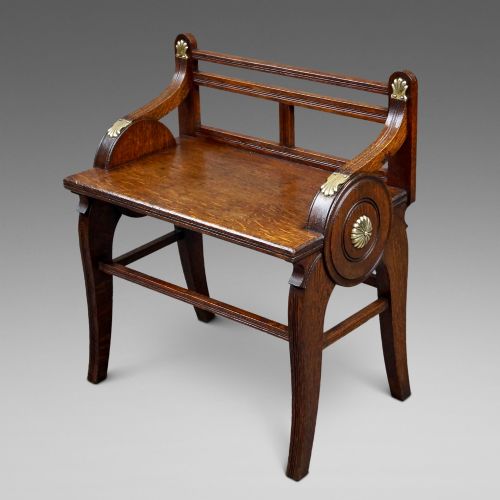
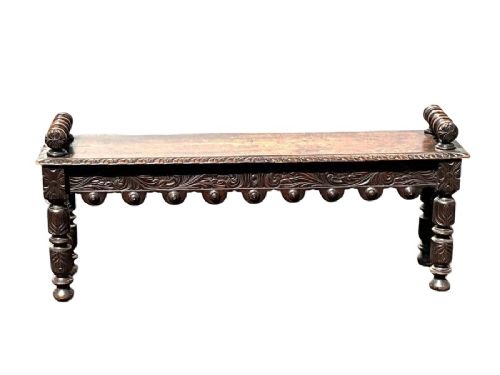
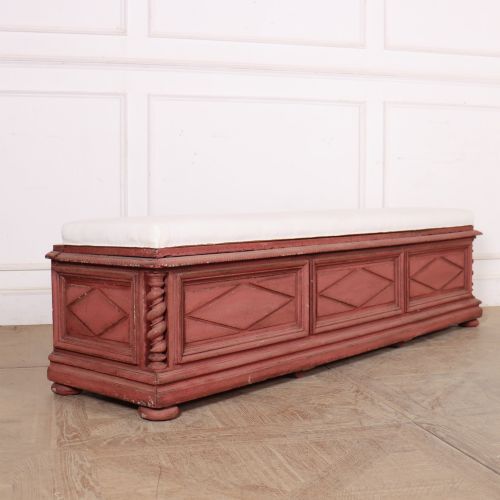
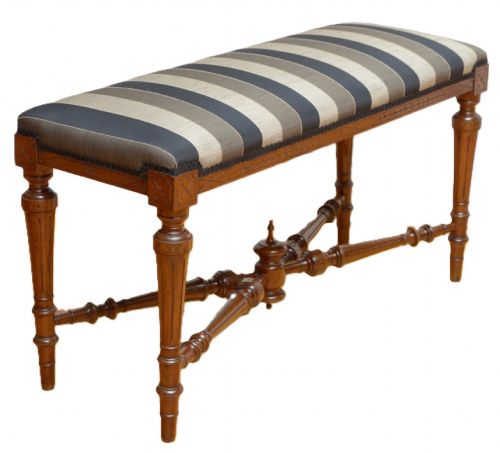
A hallway window bench encompasses long stools, window seats, and hall benches that bridge transition spaces and domestic rooms. These forms appear across the nineteenth century, the Edwardian era, and the Regency period, shaped by diverse regional aesthetics.
The pieces on this page span British, French, Italian, Swedish, and Chinese origins, utilising woods such as mahogany, oak, and walnut. Makers and workshops applied styles ranging from Gothic and Jacobean Revival to Arts and Crafts and Grand Regency.
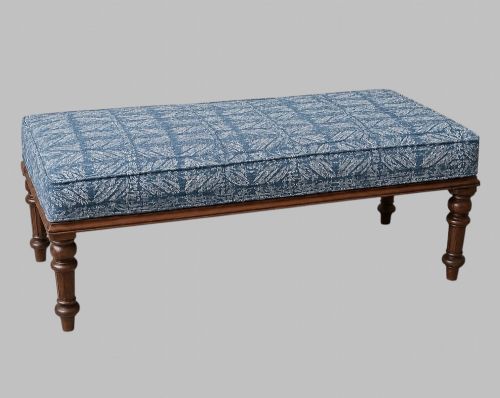
Buyers meet sturdy oak designs alongside slender mahogany frames supported by turned or fluted legs. Upholstered cushions, fabric pads, and woven textiles feature prominently across these functional seating forms.
Materials and Construction
Cabinet makers utilised dense hardwoods including mahogany, oak, and walnut to construct sturdy frames capable of supporting everyday seating. Joinery methods relied on pegged mortise and tenon joints in oak pieces, whilst mahogany and walnut frames often incorporated detailed hand-carving.
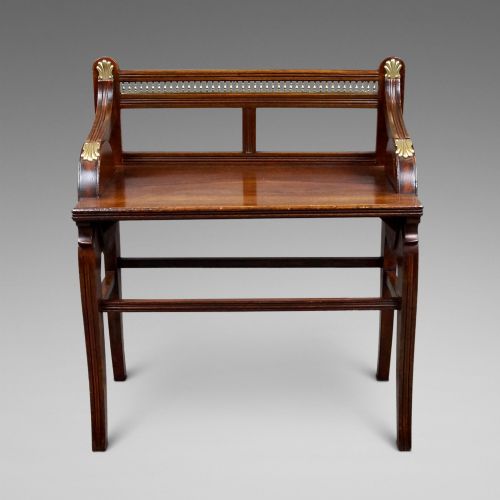
Metal components such as brass mounts appeared on specific workshop pieces, providing structural reinforcement and decorative contrast against dark timbers. Frames were frequently paired with upholstered elements utilising fabric, velvet, linen, and specialised textiles.
Styles range from vernacular English Country forms to elaborate Venetian and French walnut carvings.
Craftsmanship and Proportion
Quality rests in the precision of the timber selection and the integrity of the structural joinery supporting long spans of wood. Fine examples display crisp hand-carved detailing along the rails and legs, whereas simpler pieces rely on plain turned supports.
The harmony of proportions defines the better examples, ensuring that long seats maintain stability without sagging across extended widths. Original upholstery systems and retained maker signatures elevate the historical integrity of specific seating forms.
GIllows·Jas Shoolbred·James Shoolbred & Co.
The Hallway Window Bench Glossary
- Window Seat
- A narrow upholstered bench designed to fit within the recess of a bay or window frame. These pieces often feature armrests at one or both ends.
- Hall Bench
- A rigid wooden or upholstered seat placed in an entrance hall for temporary sitting or boot storage. Many incorporate high panelled backs or brass mounts.
- Duet Stool
- An extended stool designed to seat two people simultaneously, frequently utilised at a piano or beside a drawing room window. These pieces share similar proportions with long window benches.
- Mortise and Tenon
- A traditional woodworking joint where a projecting tenon fits snugly into a corresponding mortise hole to lock timbers together firmly. This method underpins the structural strength of period frames.
- Upholstery Fabric
- Textile coverings applied over webbing, stuffing, and springs to create padded seating surfaces. Listings feature period-appropriate linens, velvets, and printed cottons.
Hallway Window Bench: Frequently Asked Questions
Where should I place a hallway window bench?
These benches fit naturally into narrow entrance spaces, transitional corridors, or beneath ground-floor windows where linear seating is required. Their slender proportions allow them to occupy tight footprints without obstructing movement.
Positioning a bench near an entrance provides a convenient spot for removing footwear. Placing one beneath a window utilises idle architectural space while offering a comfortable view outward.
How do I care for antique wooden bench frames?
Preserving the timber involves keeping wooden frames away from direct heat sources and sudden temperature fluctuations that cause warping. Regular dusting with a dry cloth maintains the surface sheen.
Applying occasional applications of suitable wax nourishes historical hardwoods like mahogany and oak. Avoid chemical polishes that can degrade nineteenth-century polishes and finishes.
What is the difference between a hall bench and a window seat?
Hall benches typically feature solid wooden seats, sometimes incorporating enclosed storage or high backs suited to entranceways. They prioritise durability in high-traffic zones.
Window seats focus on upholstered comfort for prolonged sitting within domestic rooms. They generally feature padded tops supported by exposed mahogany, walnut, or painted frames.
How do I identify a Regency period bench?
Regency seating reflects classical influences from the early nineteenth century, featuring dark timbers like mahogany and restrained classical lines. Look for sabre legs, reeded mouldings, and minimal carved ornamentation.
Proportions during this era emphasise clean architectural symmetry. Brass mounts and restrained scroll arms frequently accent these refined frames.