




Victorian Walnut Bench
A victorian walnut bench brings heavy timber frames and rich upholstery together in a seating form that ranges from compact window seats to long hall settles.
Victorian Walnut Bench
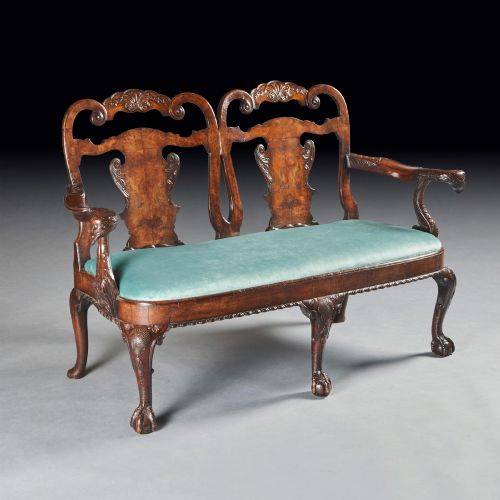
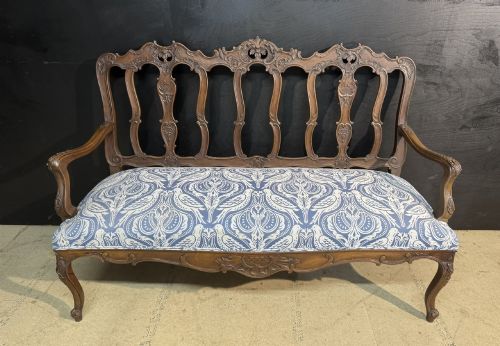
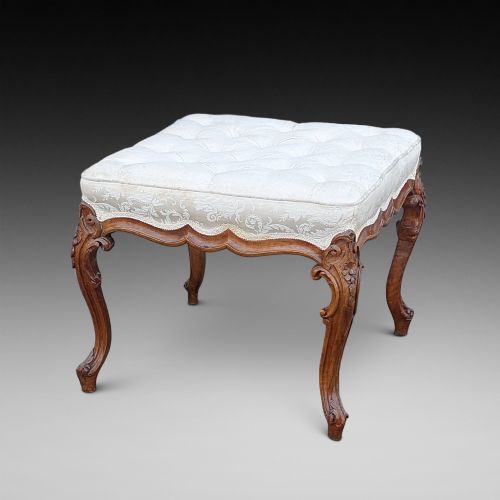
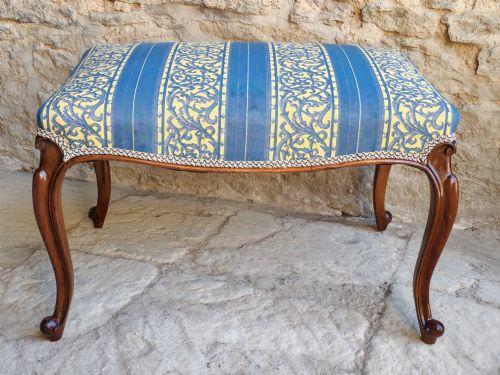
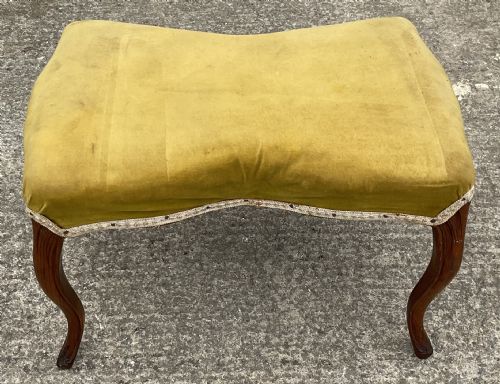
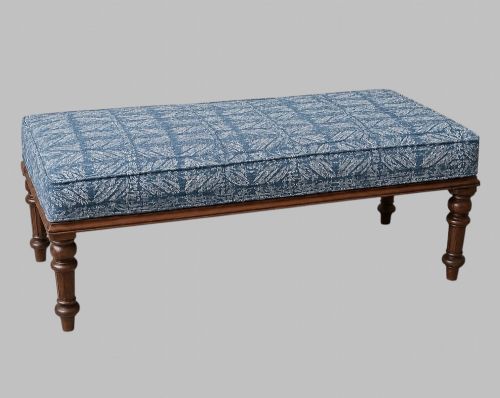
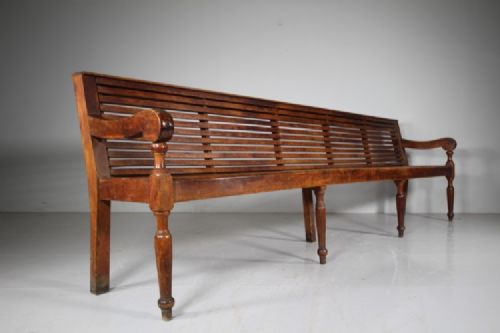
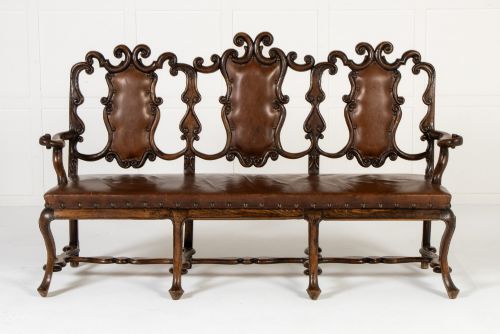
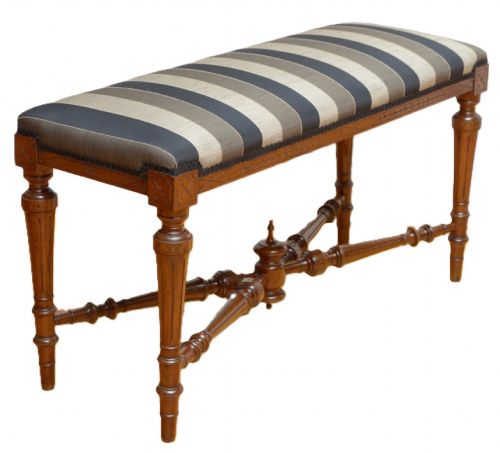
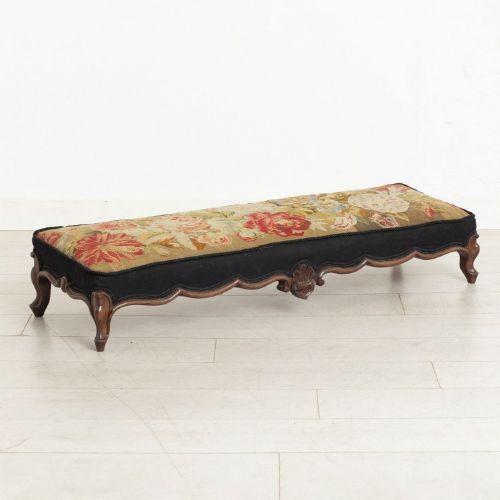
A victorian walnut bench encompasses a wide variety of seating forms, including low footstools, window seats, long hall benches, and upholstered settees. The pieces appearing most frequently take the form of long stools, window seats, and hall benches framed in timber.
The objects stem predominantly from the nineteenth century, bearing stylistic influences ranging from Rococo Revival and Renaissance Revival to Georgian Revival and Baroque Revival. Makers utilised dense walnut timbers to construct frames that supported heavy upholstery, leather, or woven fabric.
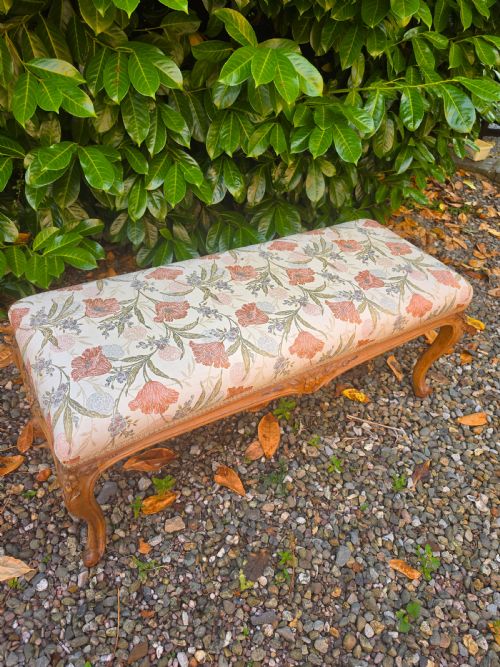
Buyers seeking a victorian walnut bench encounter items designed for specific domestic spaces, such as hallways, drawing rooms, and dressing areas. These forms vary from slender window seats with carved cabriole legs to sturdy hall settles with integrated storage or slatted backs.
How They Were Made
Craftsmen shaped dense walnut timber into solid frames, often incorporating hand-carved details such as cabriole legs, fluted supports, and X-frame structures. The wood was selected for its rich grain and capacity to hold intricate carving without splitting.
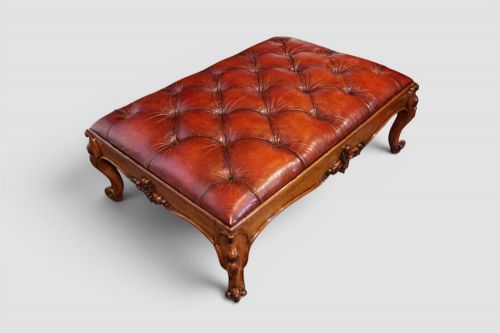
Upholstery techniques varied according to the function of the piece, employing buttoning, springing, and hand-dyeing on materials like red leather, velvet, tapestry, and linen. Brass tacks and textile trims secured the fabric to the walnut base frames.
Structural joints relied on traditional carpentry methods, uniting seat rails and legs securely to bear the weight of daily use in nineteenth-century interiors.
Listings for this phrase feature walnut timbers combined with brass, leather, velvet, and tapestry across the Victorian, Regency, and Edwardian periods.
What Varies in Quality
The depth and crispness of the hand-carving on the walnut frame set finer examples apart from simpler production pieces. Crisp lines on cabriole legs, carved foliage, and figural details indicate superior workshop skill.
The integrity of the timber frame and the quality of the secondary materials, such as heavy hand-dyed English leather or specialist textile covers, dictate the standing of an individual piece. Retaining original fabric or employing period-appropriate recovery materials maintains the integrity of the object.
Howard And Sons·Hampton And Sons
The Victorian Walnut Bench Glossary
- Cabriole leg
- A furniture leg that curves outward and then tapers inward, finishing in a pad or foot. This design derived from animal forms and appeared frequently on mid-nineteenth-century seating.
- Window seat
- A long, narrow bench designed to fit into the recess of a bay or sash window. These pieces usually feature upholstered tops and low arms or backs.
- Hall bench
- A sturdy timber seat placed in an entrance hall or corridor for visitors to use while removing coats and boots. Many examples incorporate high backs, arms, or built-in storage compartments.
- Buttoned upholstery
- A method of securing stuffing by pulling twine through the fabric and padding at regular intervals to create a grid of recessed tufts. This technique provided both structural tension and decorative depth.
- Rococo Revival
- A decorative style popular during the mid-nineteenth century that revived the curved lines, asymmetry, and naturalistic ornamentation of the eighteenth-century movement.
Victorian Walnut Bench: Frequently Asked Questions
Where were these benches placed in the home?
Long hall benches and settles stood in entrance passages where visitors removed outdoor wear. Window seats and low stools occupied drawing rooms and dressing chambers.
Compact footstools and salon benches sat near firesides or served as auxiliary seating in reception rooms.
How do I distinguish a hall bench from a window seat?
Hall benches feature firmer wooden backs, slatted structures, or storage compartments designed for heavy corridor use. Window seats prioritise upholstered cushions and low profiles tailored for placement beneath window ledges.
Both forms utilise walnut frames, but hall benches often display simpler, more utilitarian carving suited to entryways.
What fabrics were used originally?
Nineteenth-century seating utilised heavy textiles including wool velvet, woven tapestry, and durable upholstery fabrics. Buttoned red leather and plain linen also appeared frequently on domestic stools and benches.
Many surviving pieces have undergone professional reupholstery using traditional materials to match their original aesthetic.
How do I identify a revival style?
Revival pieces borrow motifs from earlier eras, such as the curved cabriole legs of the eighteenth century or the heavy turned supports of the seventeenth century. Makers combined these historic forms with nineteenth-century walnut construction methods.
Examining the carving style and frame construction helps date the piece to the Victorian period rather than the earlier century it imitates.