

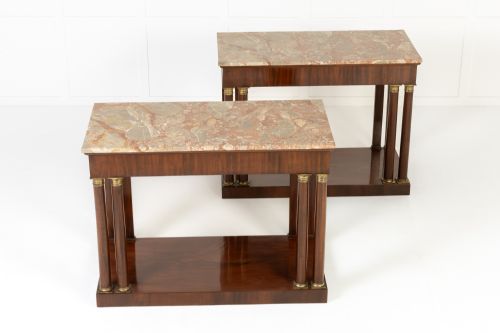


Red Mahogany Hall Table
A red mahogany hall table is a stately entrance piece offering deep timber grain and enduring utility, built to anchor a formal hallway with quiet authority.
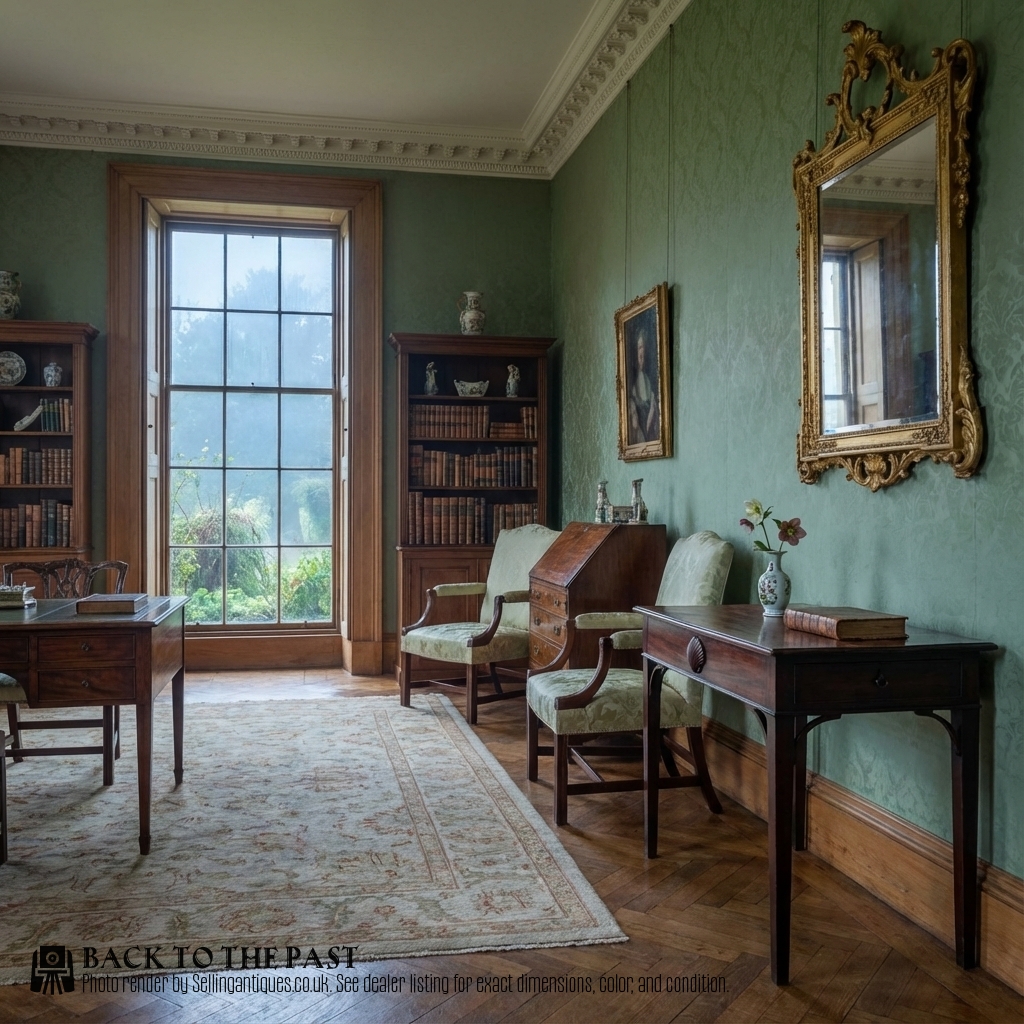
Red Mahogany Hall Table
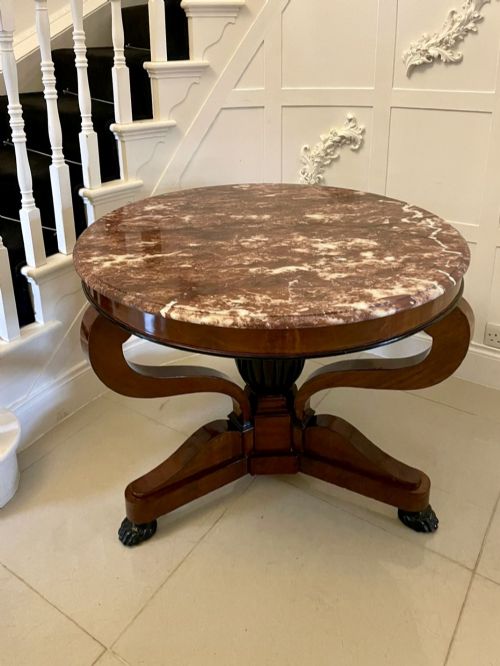
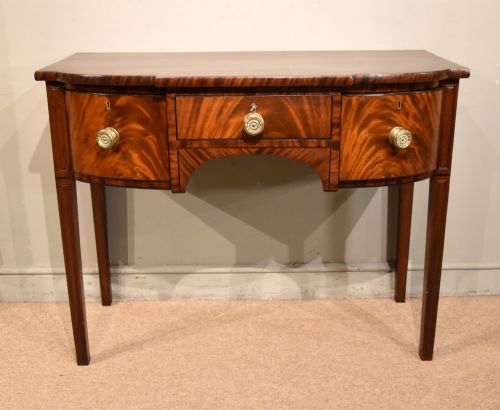
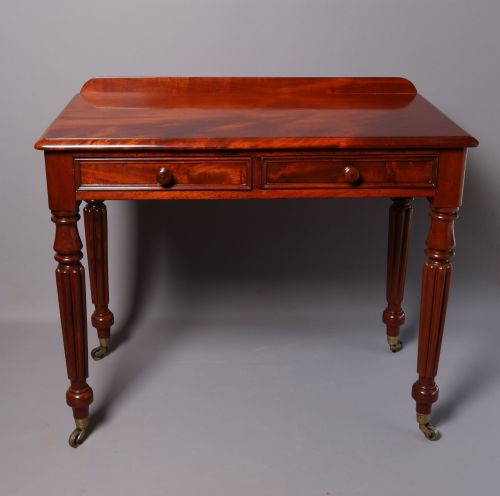
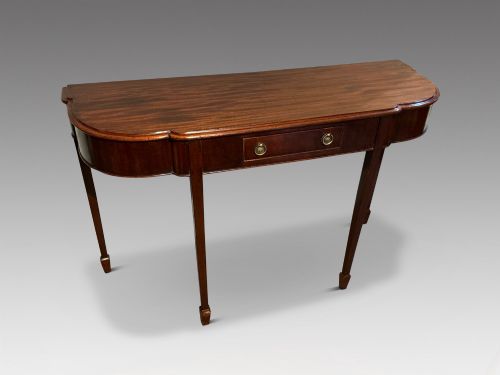
When you search for a red mahogany hall table, you encounter a focused selection of narrow timber furnishings designed specifically for entranceways and corridors. The pieces on this page span several distinct eras, notably the Georgian, Regency, and Victorian periods, alongside Edwardian examples.
Origins stretch across English workshops as well as Irish makers, with occasional continental European influences such as French Restoration and Italian Neoclassical designs. These tables range from plain, functional Georgian examples to highly decorative pieces with marble tops and marquetry inlay.
How they were made
Makers constructed these tables using solid mahogany or applied fine veneers like flame mahogany over secondary timbers to achieve dramatic grain patterns. Workshops frequently utilised supplementary woods such as satinwood and boxwood for decorative stringing and contrasting inlay work.
Metal components played a practical and decorative role, with brass handles and fittings appearing regularly on drawer fronts. More elaborate pieces integrated materials like white marble for table tops and ormolu mounts for architectural emphasis.
The furniture spans multiple design movements, including Georgian, Regency, Victorian, Edwardian, French Restoration, and Italian Neoclassical.
What varies in quality
The distinction between standard and exceptional pieces lies in the selection of the timber and the depth of the grain figure. Tables featuring highly figured flame mahogany or intricate marquetry display a superior level of craftsmanship compared to plain surfaces.
Structural refinement also separates the grades, visible in the handling of serpentine fronts, pie-crust edges, and dovetailed drawer construction. Finer examples maintain crisp carving along the legs and apron, while lesser pieces rely on simpler, heavier joinery.
JAS Shoolbred
The Red Mahogany Hall Table Glossary
- Flame mahogany
- A veneer cut from the fork of the mahogany tree, producing a distinctive, flickering flame-like pattern. This prized figure appears on higher-grade console and hall tables.
- Console table
- A wall-mounted or freestanding table designed to stand against a hallway or parlour wall. These often feature decorative front legs while relying on wall fixings for stability.
- Marquetry
- The art of applying decorative pieces of veneer to a structure to form intricate pictorial or geometric designs. Edwardian tables frequently employ this technique using contrasting timbers like satinwood.
- Lowboy
- A small seventeenth or eighteenth-century dressing or side table with one or more drawers and relatively short legs. They function well as compact hall tables.
- Serpentine
- A furniture front characterised by a concave central section flanked by two convex curves, or the reverse. This flowing contour demands skilled woodworking.
Red Mahogany Hall Table: Frequently Asked Questions
How do I style a hall table?
Place the table flat against an entrance wall to create a functional surface for keys and correspondence. Position a mirror or a piece of artwork directly above to balance the visual weight.
Keep decorative objects minimal so the timber grain remains the primary focus. A small tray or ceramic dish helps manage daily clutter without obscuring the tabletop.
Are these tables suitable for narrow hallways?
Many examples are specifically proportioned as console or side tables with shallow depths designed for confined spaces. Demi-lune and bow-front shapes further reduce the footprint against the wall.
Check the exact depth measurements before purchasing to ensure comfortable clearance for walking past. Narrow Georgian and Regency designs excel in tight entrance corridors.
How do I care for mahogany surfaces?
Dust the timber regularly with a soft, dry cloth to prevent particulate accumulation. Avoid placing the table in direct sunlight or near heat sources to protect the polished finish.
Apply a quality beeswax periodically to nourish the wood and maintain its rich lustre. Lift objects rather than dragging them across the surface to prevent scratches.
What is the difference between a console and a side table?
Console tables traditionally stood against a wall and occasionally required wall brackets for support. Side tables are freestanding four-legged items finished on all visible sides.
In modern usage, the terms overlap considerably when applied to hallway furniture. Both forms provide a surface for display and storage in entrance spaces.