
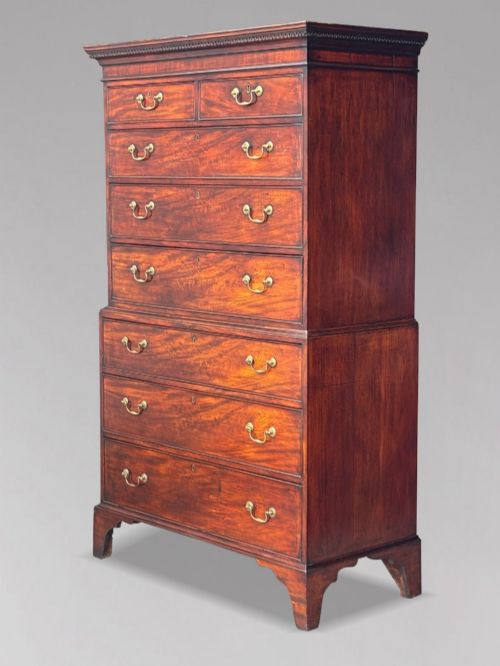
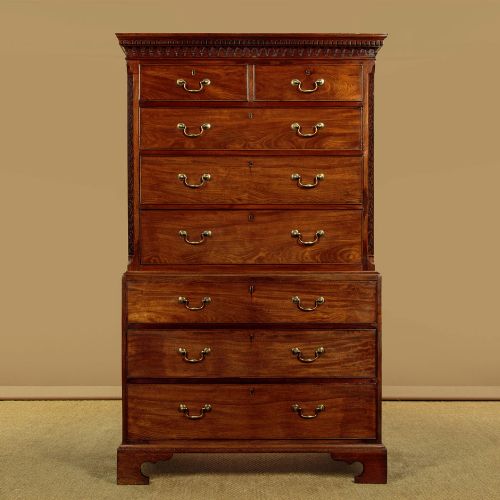
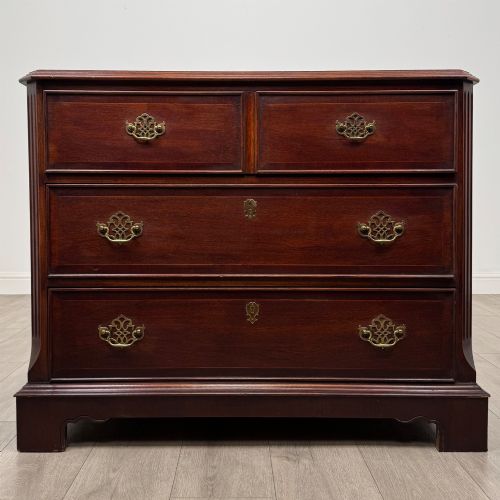
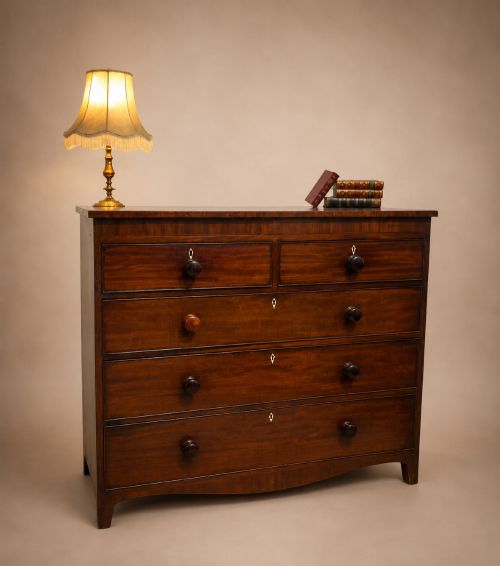

Red Mahogany Chest of Drawers
When you search for a red mahogany chest of drawers, you are looking for substantial storage furniture shaped by centuries of cabinet-making skill.
Red Mahogany Chest of Drawers
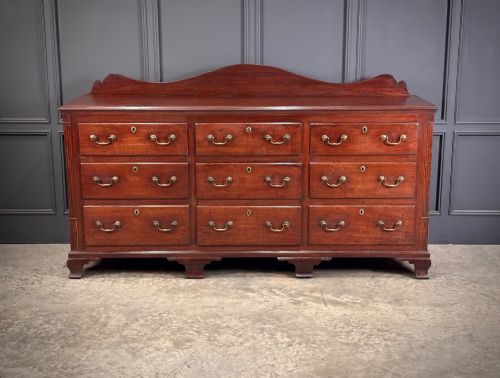
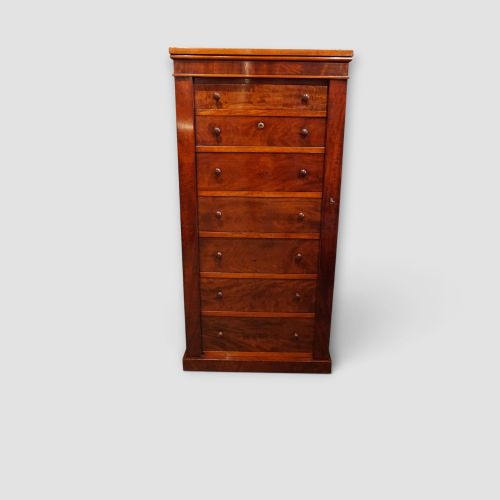
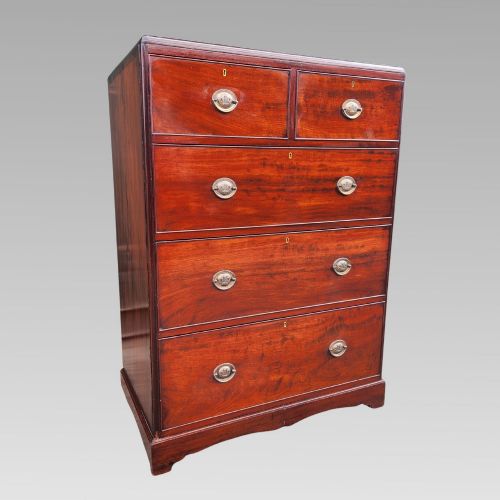
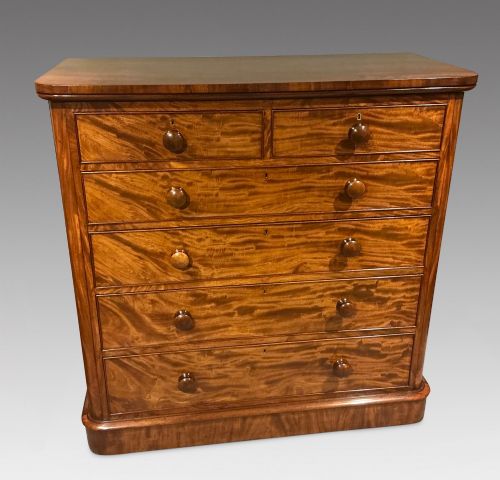
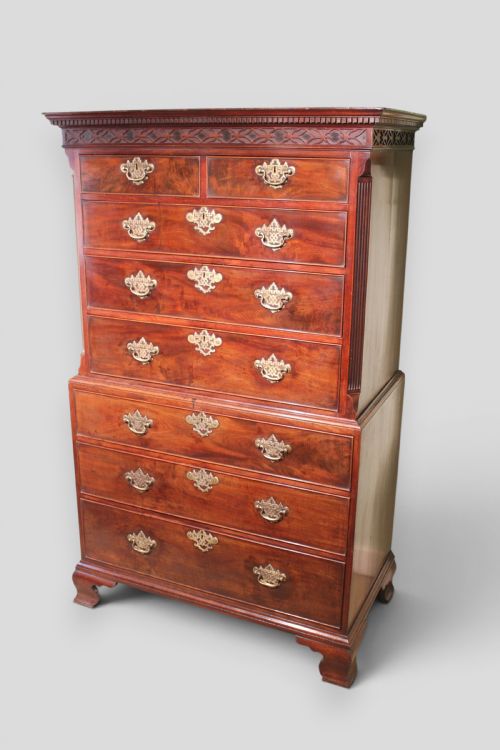
A red mahogany chest of drawers provides deep, divided storage built across several distinct periods of British and continental design. The pieces you encounter span standard domestic formats, tallboys, bow fronts, and larger multi-drawer collector cabinets.
Most examples originate from the Georgian, Victorian, and Edwardian eras, utilising rich timbers that range from straight-grained timber to highly figured veneers. You will find pieces reflecting formal regional styles alongside more restrained nineteenth-century domestic designs.
The phrase encompasses straightforward chamber furniture as well as more complex forms incorporating secretaire drawers, sliding shelves, and specialised locking mechanisms. Each version offers a distinct combination of functional capacity and proportion.
How they were made
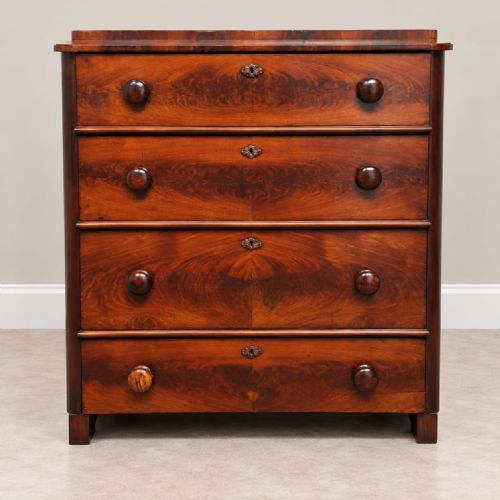
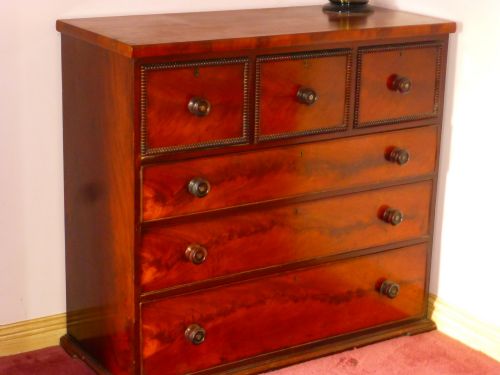
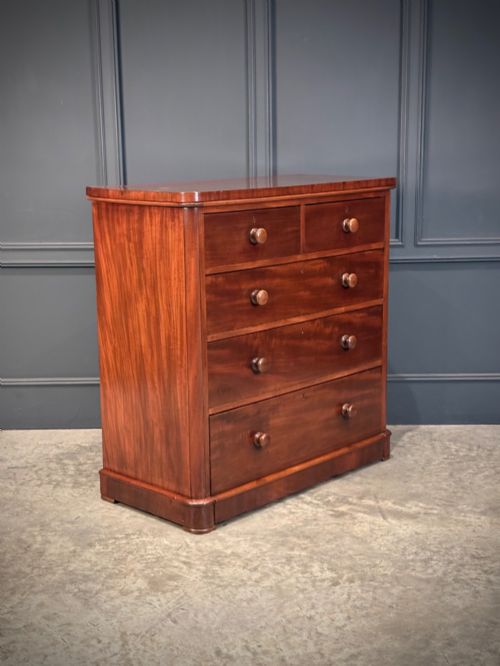
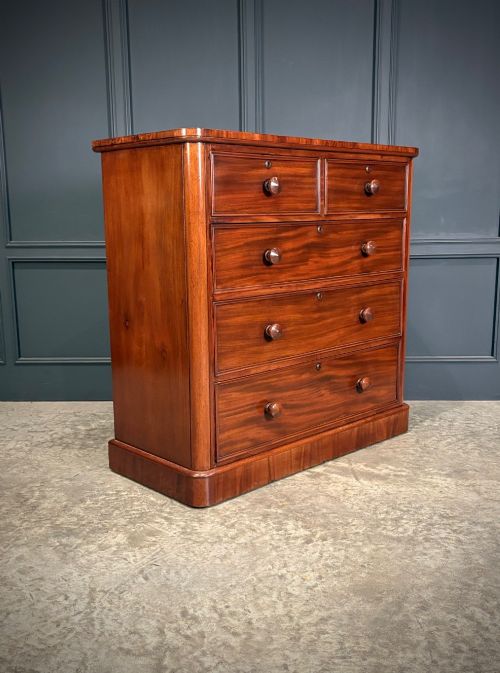
Cabinet makers built these pieces using solid timber carcasses lined internally with secondary woods like pine or oak, applying selected mahogany veneers to external visible surfaces to create rich visual depth. Flame mahogany veneer and figured surfaces were carefully matched across drawer fronts to achieve symmetrical patterns.
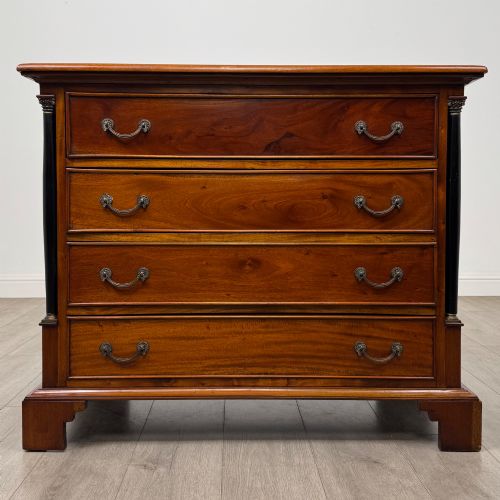
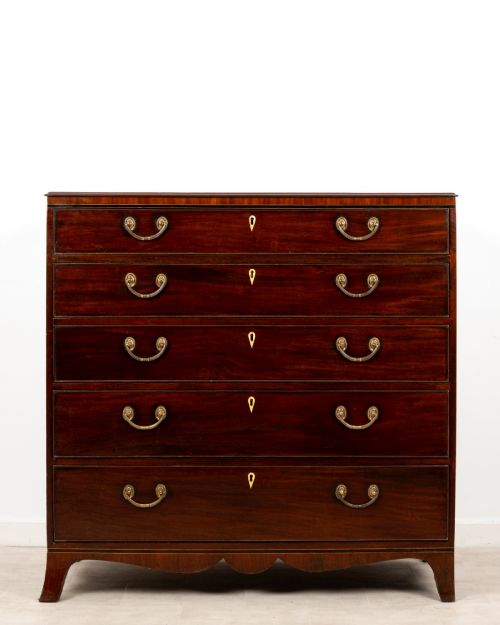
Construction relied on precise joinery supplemented by brass hardware, including decorative backplates, drop handles, and functional working locks secured with original keys. Secondary materials such as bone accents, leather inserts, and ebonised wood details occasionally appeared on specific stylistic iterations.
Drawers were traditionally hand-dovetailed to withstand daily use, sliding smoothly within carcase frames designed to support the heavy weight of dense tropical hardwood.
Some Victorian collectors' cabinets pack up to twenty-four miniature drawers into a single case, offering remarkably specific storage for the endlessly organised.
What varies in quality
The standard of a piece is determined by the selection of timber veneers and the precision of the matching across drawer fronts, where superior examples display continuous, highly figured grain patterns. The thickness of the mahogany used for structural elements and drawer linings also signals higher workshop standards.
Refinement in carving, the crispness of cockbeading around drawer edges, and the retention of original brass hardware distinguish finer productions from ordinary utility pieces. Internal construction details, such as tidy secondary wood framing and well-fitted dust boards, separate workshop output.
The Red Mahogany Chest of Drawers Glossary
- Flame mahogany veneer
- A sliced section of timber exhibiting a flickering, flame-like grain pattern. This decorative veneer was frequently applied to the principal drawer fronts of formal pieces.
- Tallboy
- A tall storage piece comprising one chest stacked upon another, often providing numerous deep compartments. These forms maximise vertical capacity within domestic chambers.
- Bow front
- A convex curved drawer configuration that projects outward in a smooth arc. This curved profile softens the linear geometry of standard rectangular case furniture.
- Secretaire
- A drawer fitted with a drop-front writing flap and internal compartments for stationery. It conceals a compact desk space behind a standard drawer facade.
- Cockbeading
- A narrow half-round moulding applied around the edges of drawer openings. This detail protects the drawer edges and provides a clean visual border.
Red Mahogany Chest of Drawers: Frequently Asked Questions
How do I identify a Georgian chest?
Georgian pieces typically display restrained proportions, elegant bracket feet or ogee feet, and careful timber selection without excessive ornamentation. Their internal drawer construction utilises hand-cut dovetails in native secondary woods.
Look for original brass handles and escutcheons that correspond to the period of manufacture, along with subtle details like oak linings and smooth drawer operation.
What is a flame mahogany veneer?
Flame mahogany veneer is sliced from the point where a branch joins the main trunk, creating a distinctive, undulating grain pattern that resembles flickering fire. Makers prized this figure for its visual movement and depth.
On quality pieces, the veneer is book-matched across the drawer fronts, meaning adjacent sheets mirror each other to form symmetrical patterns.
How were these chests used historically?
These chests served primarily in bedchambers and dressing rooms for storing garments, linens, and personal valuables securely. Specialised variants like bachelor's chests and secretaires also provided integrated writing surfaces.
Larger configurations, such as tallboys and collectors' cabinets, accommodated extensive personal wardrobes or specialised classification items within domestic and estate settings.
Where should I place a mahogany chest?
Position your chest in a room away from direct sunlight and strong heat sources to protect the polished mahogany finish and prevent timber shrinkage. Stable indoor humidity helps preserve the integrity of both solid wood and applied veneers.
Ensure the floor is level so the carcase remains square, allowing the drawers to open and close smoothly without binding against the frame.