
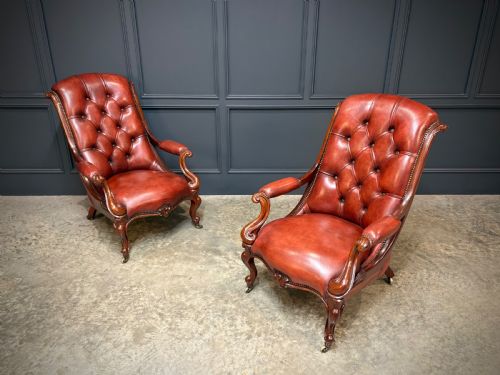


Red Leather Library Chairs
These red leather library chairs bring sturdy timber frames and rich hides together for comfortable study and reading.
Red Leather Library Chairs
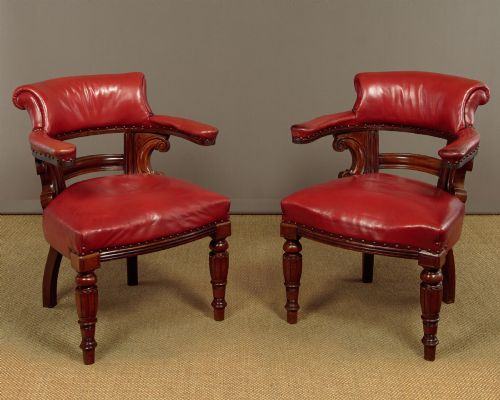
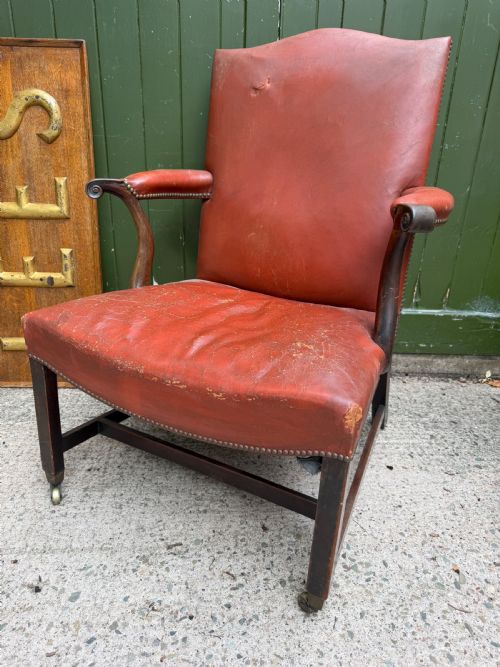
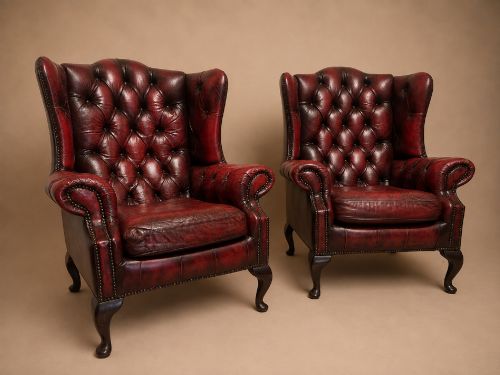
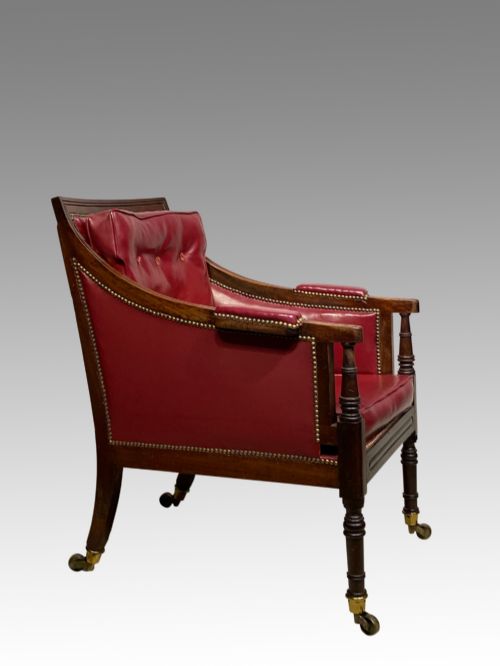
Red leather library chairs encompass diverse seating forms designed for reading, writing, and study, including open armchairs, wingbacks, and desk chairs. You will frequently encounter heavy mahogany or oak frames dating from the Georgian, Victorian, and Edwardian periods.
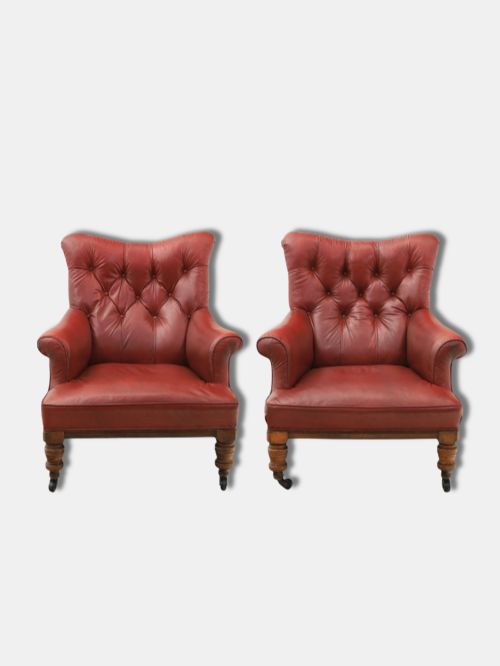
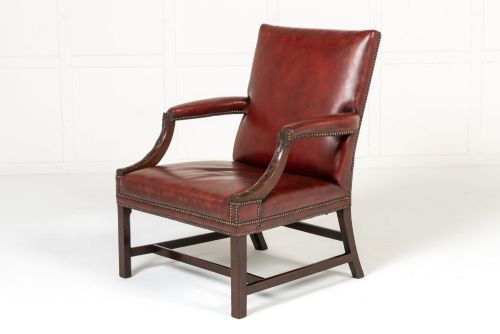
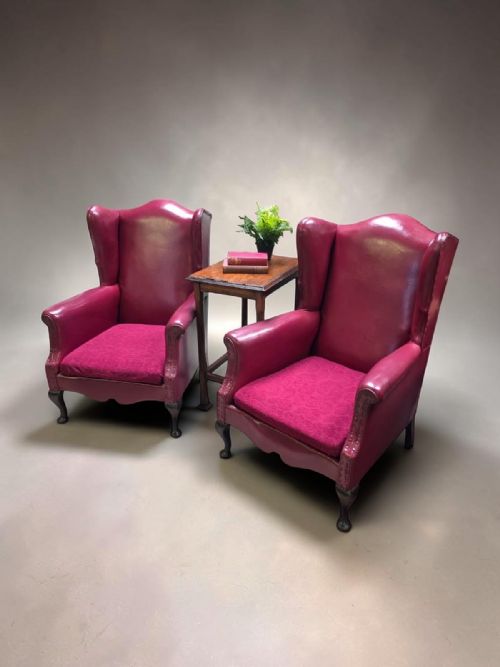
The selection ranges from large Gainsborough armchairs with buttoned red leather to compact Victorian desk chairs and country house club seating. Pieces appear in various red tones, spanning deep oxblood, burgundy, and bright crimson leather or rexine.
Originating largely from English workshops, these items serve traditional studies, libraries, and offices where substantial seating is required. Many survive as pairs or individual reading chairs constructed from hardwood timbers.
Materials and Construction
Makers constructed these frames using solid hardwoods like mahogany, oak, walnut, and rosewood, often featuring carved details or scrolled arms. Joinery relied on traditional pegging and mortise techniques to support the heavy loads placed on library and desk seating.
Upholstery involves stretches of leather or rexine secured with brass tacks, frequently complemented by deep buttoning on the backs and arms. Frames were polished to highlight the natural grain of the underlying timber.
Listings feature mahogany, oak, walnut, and rosewood timbers paired with leather, brass, and rexine across multiple centuries.
Distinctions in Quality
Quality rests upon the proportion and substance of the timber frame, with over-scaled or finely carved pieces representing the higher end of production. The thickness and suppleness of the leather upholstery, along with the retention of original brass tacking, distinguish superior examples.
The integrity of the frame's joinery and the depth of the carving, particularly on Victorian and Georgian models, determine the structural grade. Pieces retaining their early or original patinated red leather command greater consideration among collectors.
The Red Leather Library Chairs Glossary
- Gainsborough chair
- An upholstered armchair with an open-framed mahogany structure, short cabriole or square legs, and padded arms designed for writing or reading desks.
- Wingback
- An armchair featuring protective side panels, or wings, attached to the back and designed to shield the sitter from drafts in large rooms.
- Bergere
- An enclosed upholstered armchair with exposed wooden framing and cane or upholstered sides.
- Rexine
- A leathercloth material composed of a cloth base coated with nitrocellulose, used as an alternative upholstery finish on early twentieth-century seating.
- Cockfighting chair
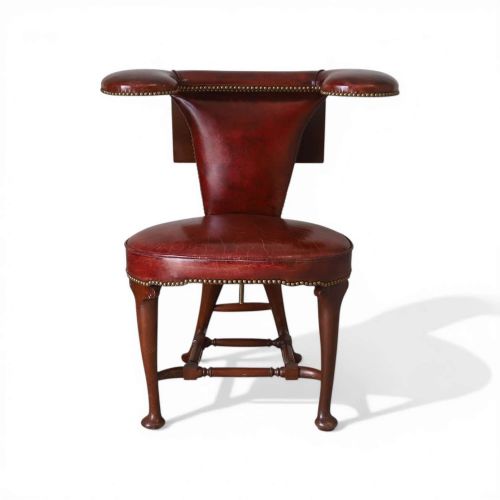
- A low, heavy chair with a horseshoe-shaped backrest originally intended for spectators of sports, featuring a padded writing rest.
Red Leather Library Chairs: Frequently Asked Questions
How do I identify a Georgian library chair?
Georgian examples typically feature solid mahogany frames with restrained carving, straight or cabriole legs, and traditional leather upholstery secured with individual brass nails. They prioritize sturdy proportions and understated functional elegance.
Later Victorian adaptations often introduce heavier buttoning, turned legs, and more robust framing to suit larger domestic interiors and offices.
Were these chairs used only in libraries?
While named for libraries, these armchairs served across domestic spaces including studies, home offices, drawing rooms, and gentleman's rooms. Their substantial wooden frames and durable leather surfaces made them practical for long periods of reading or writing.
Many styles also functioned as desk chairs or reading chairs in country houses and town residences alike.
What is the difference between oxblood and burgundy leather?
Oxblood leather exhibits a dark, purplish-red hue reminiscent of aged wine, which became particularly common on late Victorian and Edwardian club chairs. Burgundy offers a brighter, richer red tone frequently seen on nineteenth-century desk and library seating.
Both shades developed deep patinas over decades of use and polishing.
Can I use a library chair at a modern desk?
Many Victorian and Edwardian desk chairs fit standard modern writing tables, provided the seat height and arm clearance match your desk dimensions. Open armchairs and swivel variants offer comfortable seating for daily work environments.
It is advisable to check the specific height and arm clearance dimensions of individual chairs before pairing them with low modern surfaces.