





Ladies and Gentlemans Chairs
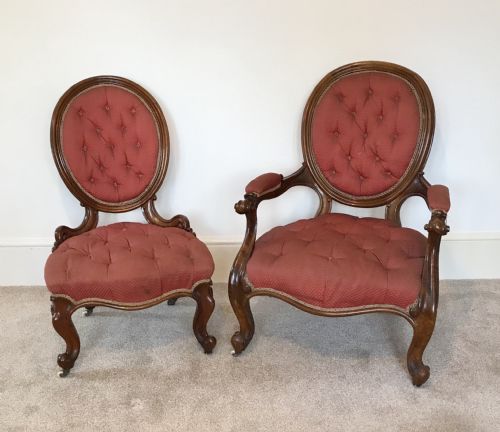
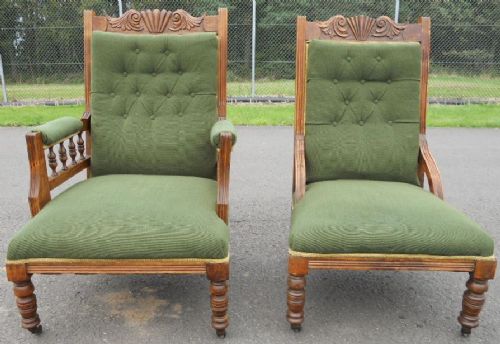
Ladies and gentlemans chairs are matched pairs designed for a parlour or drawing room, offering a lower, narrower seat for a lady and a larger companion seat for a gentleman.
Ladies and Gentlemans Chairs
When you search for ladies and gentlemans chairs, you encounter matched pairs designed to sit together in a Victorian or Edwardian interior. These pieces frequently appear as armchairs, drawing room suites, or fireside chairs.
The evidence shows these sets span from the mid-nineteenth century into the early twentieth century. You will most commonly meet Victorian walnut and mahogany examples, alongside Edwardian variations in walnut and mahogany.
Makers produced these pairs in distinct styles including Victorian Rococo Revival and Early 20th Century designs. They survive today either as paired armchairs or as part of larger drawing room suites.
Materials and construction
Cabinetmakers constructed the frames of ladies and gentlemans chairs from solid hardwoods like walnut, mahogany, oak, and pollard oak. These timbers provided the structural strength required for carved frames and exposed woodwork.
Makers upholstered the seats, backs, and armrests using fabrics such as velvet, leather, and traditional upholstery fabric, often secured with brass tacks. Button back upholstery frequently provided both structural support and decorative depth to the padded sections.
Materials recorded in the archive range from solid mahogany and walnut to decorative pollard oak and brass accents.
Factors that separate examples
The depth and crispness of the carved ornamentation on the wooden frames distinguishes finer pieces from simpler ones. Carved walnut and mahogany frames with intricate floral or scroll motifs indicate higher workmanship.
The integrity of the matched pair determines the standing of the set within the range. Complete sets, such as seven-piece or eight-piece drawing room suites retaining their original upholstery style, hold greater cohesion than mismatched companions.
The Ladies and Gentlemans Chairs Glossary
- Button back
- A method of upholstery where depressions are formed in the padding by stitches or buttons pulled tight into the backing. This technique secures the stuffing and creates a distinctive padded diamond pattern.
- Cameo back
- A chair back shaped in an oval or medallion profile, resembling a cameo portrait. This form appears frequently on mid-nineteenth-century salon and drawing room chairs.
- Pollard oak
- Timber taken from trees that were cut back near the main trunk to encourage dense branch growth, producing a highly figured grain. Cabinetmakers utilised this timber for decorative veneer and solid panels.
- Rococo Revival
- A nineteenth-century design style drawing on eighteenth-century French motifs with asymmetrical scrolls, C-scrolls, and naturalistic carved flowers. This style is prominent in mid-Victorian walnut seating.
Ladies and Gentlemans Chairs: Frequently Asked Questions
Why are they called ladies and gentlemans chairs?
These chairs were manufactured as matching pairs tailored to the physical stature and social conventions of nineteenth-century domestic life. The ladies chair was built lower and without armrests to accommodate wide crinoline skirts.
The gentlemans chair was constructed larger and with supportive arms to provide comfort for the male head of the household. Together, they formed a balanced seating arrangement for a parlour or drawing room.
How do I date a Victorian pair?
Dating relies on observing the timber choice, frame silhouette, and upholstery style recorded in the physical construction. Mid-nineteenth-century pieces often feature walnut with heavy Rococo Revival carving and button back upholstery.
Later Victorian and Edwardian examples shift towards lighter mahogany frames and modified proportions. Comparing the carved details against documented pieces from the same period helps narrow the decade.
Can these chairs be used daily?
These antique chairs function well in modern interiors provided the internal webbing and padding remain secure. Many surviving examples retain sturdy hardwood frames that withstand regular sitting.
Placing them away from direct heat sources protects the polished walnut or mahogany surfaces and preserves the original or restored fabric.
What is a drawing room suite?
A drawing room suite is a coordinated set of seating furniture designed for formal entertaining in the home. The evidence includes seven-piece and eight-piece suites sharing identical carved wooden frames and upholstery fabrics.
These collections typically comprise a pair of ladies and gentlemans chairs alongside matching armchairs and occasional seating.