


Red Leather Accent Chair
These red leather accent chair options bring rich colour and sturdy seating to any room, offering the classic library or reading seat you need.

Red Leather Accent Chair
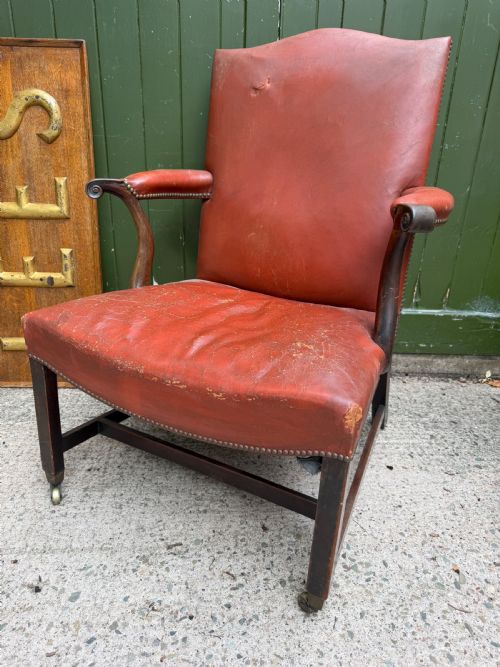
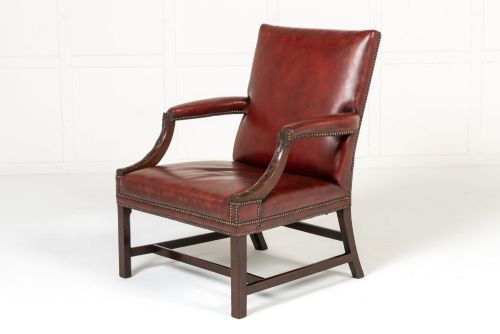
A red leather accent chair draws the eye instantly with its striking tone and traditional silhouette. These pieces span the eighteenth century, the nineteenth century, and into the twentieth century, bringing historic seating into modern spaces. You will frequently encounter generous library armchairs, Gainsborough types, and smaller corner or side chairs designed for study and parlour use.
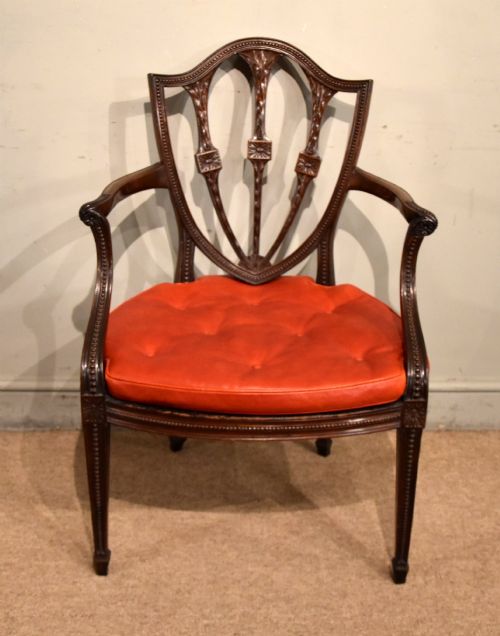
The selection here encompasses several distinct eras and aesthetic movements, including Georgian, Regency, Victorian Gothic, and Queen Anne style. Makers worked in mahogany, oak, walnut, and cane, pairing timber frames with rich red or burgundy leather upholstery. Whether you want a large over-scaled reading chair or a compact corner seat, the variety reflects centuries of British furniture design.
How they were made
Craftsmen built these frames using dense hardwoods like mahogany, oak, and walnut, often employing carved detailing and turned elements such as barley twists. The structural woodwork provides strong support for the upholstered components, utilising traditional joinery methods that endure across generations.
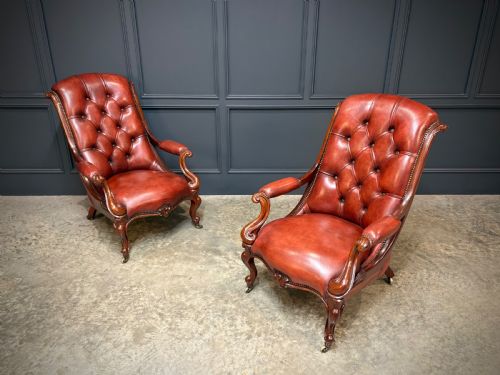
Upholstery forms the central character of these chairs, combining supple leather with deep buttoning and brass detailing where appropriate. The hides are stretched over robust frames to create supportive seats for libraries, studies, and parlours.
Object types range from large Gainsborough armchairs to compact corner chairs and barber's chairs.
What varies in quality
The distinction between standard examples and finer pieces lies in the crispness of the timber carving and the proportion of the frame. Superior items exhibit careful joinery, well-figured mahogany or walnut, and balanced proportions that command a room without feeling clumsy.
Upholstery execution also defines the upper tier, noting how the leather is fitted, buttoned, and nailed to the wooden rail. Better examples maintain taut lines and rich patination on the hide, showing depth of colour that develops naturally over decades.
The Red Leather Accent Chair Glossary
- Bergere
- An enclosed armchair with cane or upholstered sides and a loose seat cushion. These seats bring lightness to a room while retaining substantial wooden frames.
- Barley twist
- A decorative turning carved into wooden furniture legs and stretchers to resemble a twisted rope. This technique adds texture and visual weight to oak and walnut frames.
- Buttoned leather
- An upholstery technique where indentations are pulled tight with tufting buttons across the leather surface. This method secures the padding while creating a classic quilted pattern.
- Corner chair
- A seat designed to fit into the corner of a room, featuring a diagonal orientation and a wrap-around back rail supported by turned columns.
Red Leather Accent Chair: Frequently Asked Questions
Where should I place a red leather accent chair?
These seats suit studies, libraries, and quiet corners where a strong splash of colour anchors the room layout. They pair well with wooden desks, bookshelves, and traditional living spaces.
Because the frames vary from compact corner seats to large library armchairs, measure your floor space carefully to ensure the piece balances with surrounding furniture.
How do I care for antique leather upholstery?
Keep leather furniture away from direct sunlight and heat sources to prevent the hide from drying out over time. Regular dusting and occasional conditioning will maintain the suppleness of the material.
Avoid harsh chemical cleaners, using only damp cloths or specialist leather balms recommended for antique pieces.
How can I tell the period of a wooden frame?
Examine the timber species, joinery construction, and carving style to determine the likely era of manufacture. Eighteenth-century pieces often feature heavy mahogany and restrained carving, while Victorian examples show bolder revival motifs.
Hardware, brass studs, and buttoning techniques also offer clues to the age and workshop origin of the seating.
Are these chairs comfortable for daily sitting?
Library and reading armchairs were originally built for long hours of study, offering supportive backs and padded arms. Their generous proportions make them practical for everyday lounging.
Smaller side and corner chairs provide firmer, more upright seating suited to occasional use or hallway placement.