
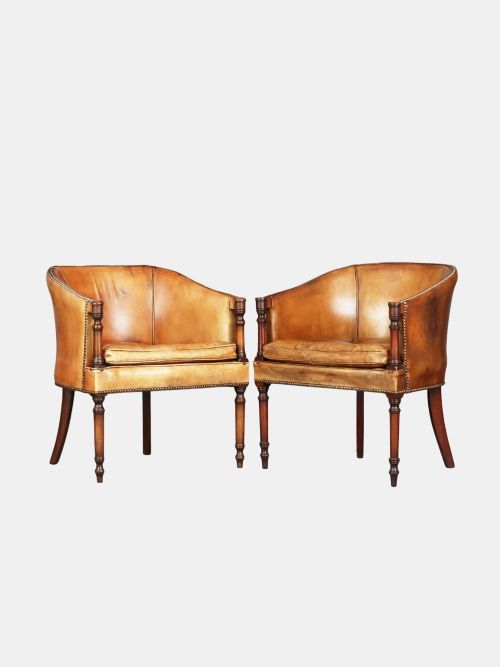


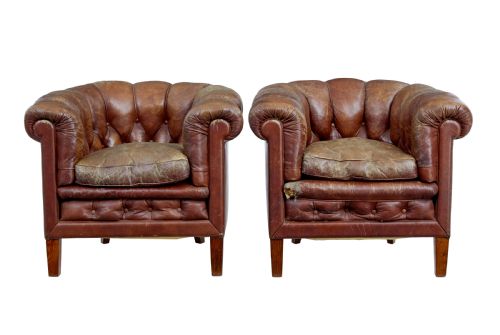


Leather Barrel Back Chair
A leather barrel back chair envelops you in a curved, high-sided embrace, combining deep-seated comfort with a formal silhouette.

Leather Barrel Back Chair
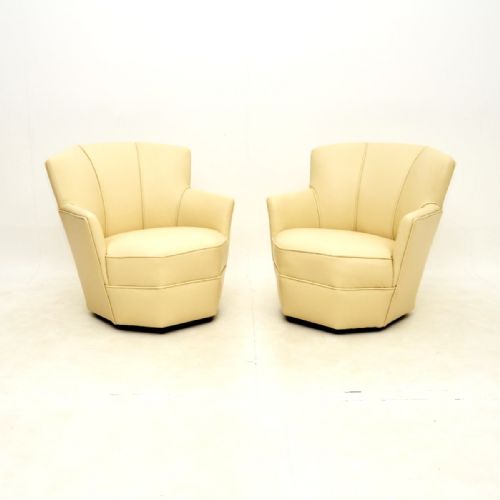
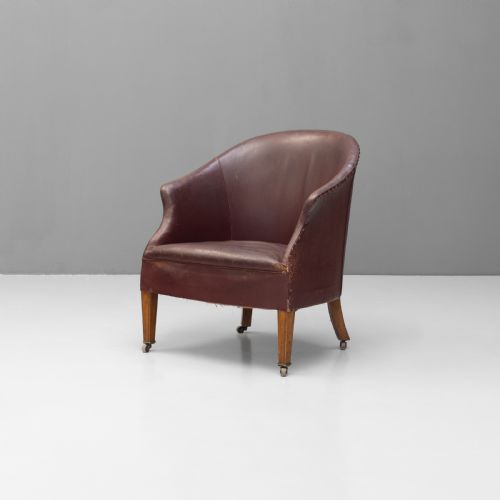
A leather barrel back chair offers a distinctive curved upholstered back that wraps around the sitter to block out draughts. These pieces appear frequently in Victorian and Edwardian iterations, alongside robust 1930s Art Deco club designs.
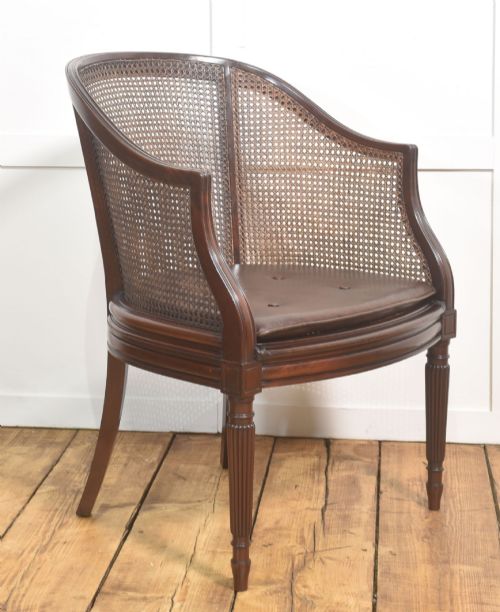
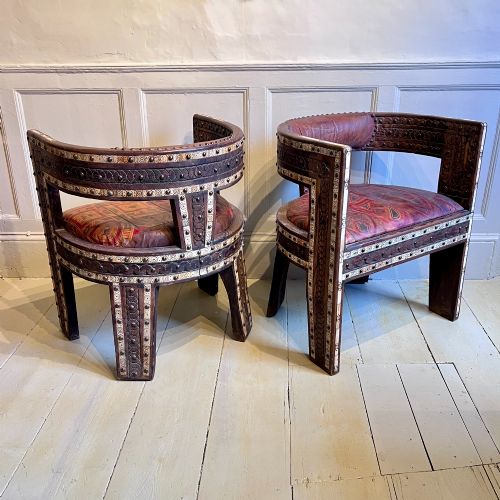
You will encounter everything from compact tub chairs framed in mahogany to grand Victorian and Edwardian wing armchairs upholstered in deep green or tan hide. Many date from the nineteenth century through the early twentieth century, showing influences from Georgian revival to Moorish styles.
The form spans straightforward reading chairs and enclosed porter's chairs designed for hallways. Selecting the right piece involves matching the depth of the barrel curve and the height of the back to your room.
Materials and construction
Makers built the structural frames using hardwoods such as mahogany, alongside general timber and cane panels. Selected pieces incorporate decorative brass mounts, bone detailing, or ormolu embellishments.
Upholstery relies on durable leather hides, occasionally paired with hand-dyed finishes or traditional buttoning. Frames range from simple turnings to substantial panelled woodwork supporting sprung interiors.
Some nineteenth-century porter chairs feature enclosed hoods designed to trap body heat, serving as personal winter shelters in draughty stone entrance halls.
Distinctions in quality
Quality rests in the substantial weight of the hardwood frame and the integrity of the joinery supporting the curved back. Superior examples display carefully fitted leather upholstery that follows the complex contours of the barrel without bunching.
The distinction between standard seating and finer library or porter chairs lies in the depth of the carving, the richness of the leather patina accrued over time, and the balance of proportions within the curved wing structure.
Hary and Lou Epstein
The Leather Barrel Back Chair Glossary
- Barrel back
- A seating form featuring a semicircular upholstered backrest that curves continuously into the arms. This design originates from eighteenth-century seating intended to keep sitters warm.
- Tub chair
- A deep-seated armchair with a rounded back enclosing the sides in a single continuous line. The compact shape suits smaller studies and bedrooms.
- Porter's chair
- A high-backed enclosed armchair originally used in draughty halls to protect the occupant. The hooded top curves inward around the head.
- Ormolu
- Gilded bronze mounts applied to furniture for decorative effect. This technique appears on revival pieces from the nineteenth century.
- Morocco leather
- A fine goatskin leather traditionally tanned with sumac and given a distinctive pebble grain. It provides a durable and supple surface for traditional upholstery.
Leather Barrel Back Chair: Frequently Asked Questions
How do I style a leather club chair?
These substantial armchairs anchor a room easily when paired with simpler wooden furniture or placed beside a fireplace. Their rich leather tones work well against neutral walls and traditional floorboards.
Consider the scale of the curved back relative to your other seating to maintain a balanced room layout.
Are these chairs comfortable for daily use?
The deep seats and supportive curved backs make these armchairs well-suited for reading and relaxation. The enclosed shape offers a secure and cozy seating experience.
Vintage leather softens gracefully with use while maintaining structural support through its sprung interior.
How can I tell a Victorian chair from an Edwardian one?
Victorian models often feature heavier mahogany frames, darker leather tones, and sometimes buttoned upholstery with a more robust presence. Edwardian pieces tend to display lighter timber frames and simpler lines.
Comparing the woodwork and the weight of the frame helps distinguish between mid-nineteenth-century and early twentieth-century origins.