



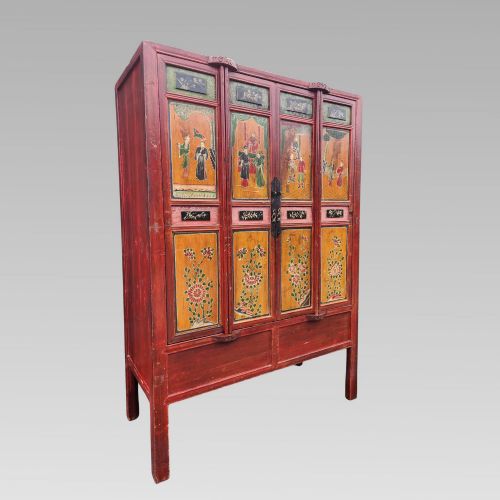


Red Lacquered Cabinet
When you search for a red lacquered cabinet, you enter a world of vibrant surfaces, intricate Chinoiserie scenes and enduring storage furniture built across continents.
Red Lacquered Cabinet
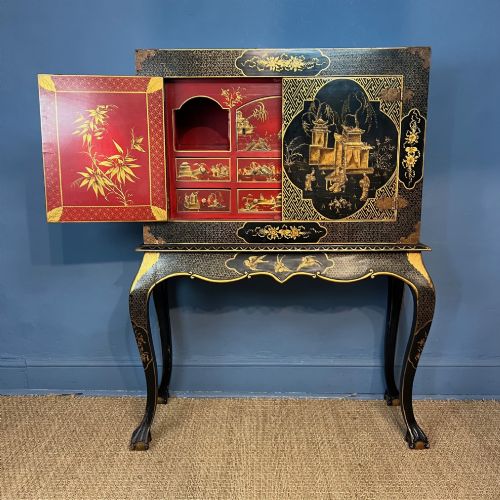
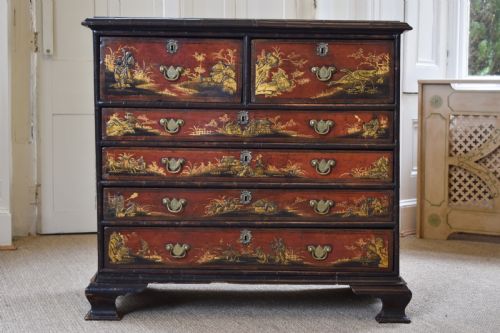
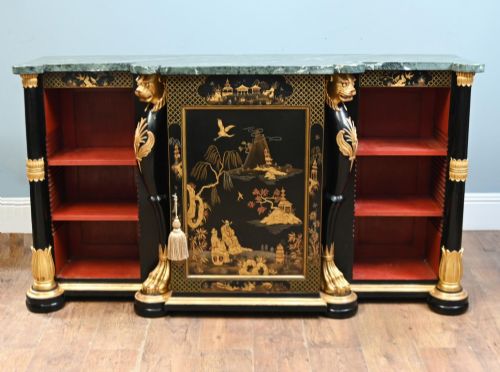
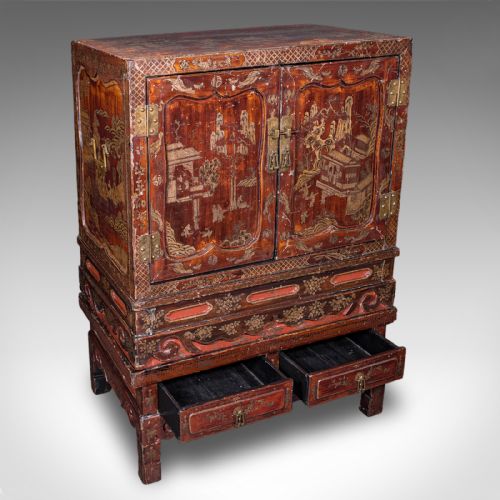
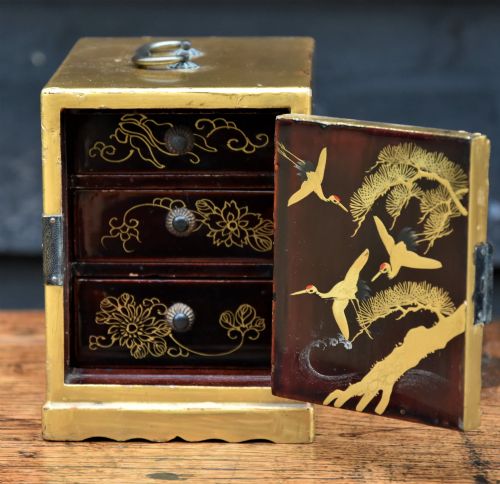
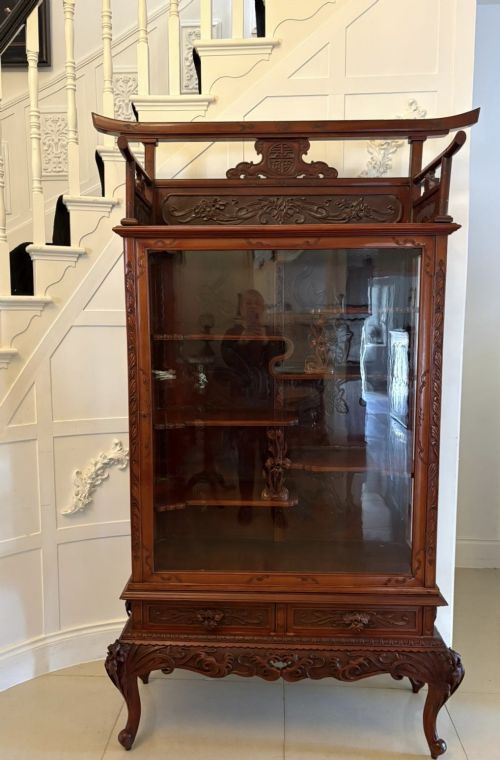
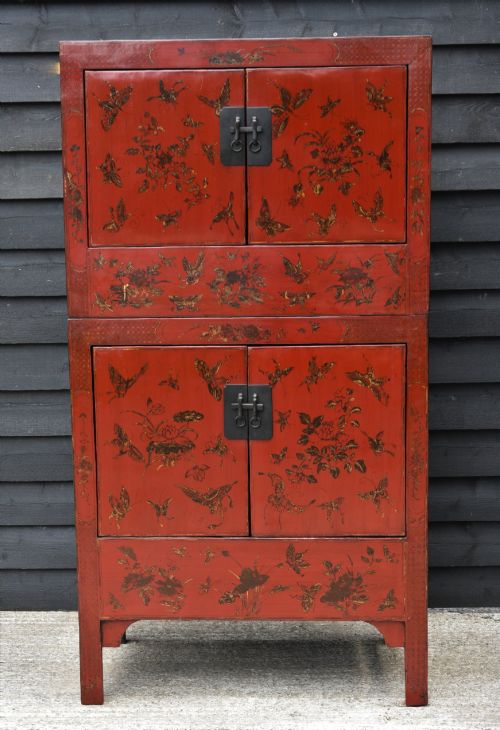
A red lacquered cabinet brings a striking visual weight to a room, functioning primarily as storage with a decorative purpose. Buyers searching this phrase will find a wide array of forms, ranging from towering marriage cupboards and side cabinets to smaller apothecary chests and display pieces.
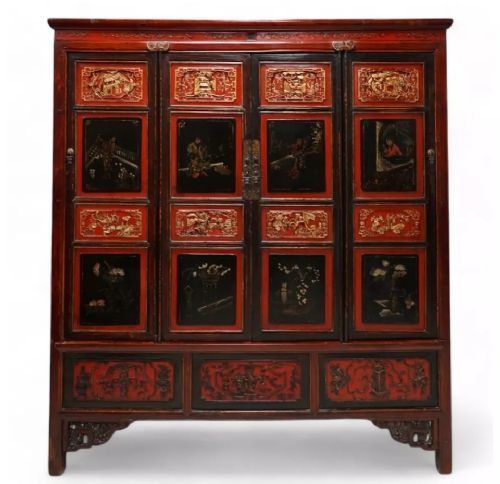
The most common examples encountered here are Chinese pieces from the nineteenth century, including large wedding cabinets in elm or hardwood alongside Japanese Meiji period tansu chests. Alongside these Asian imports, European interpretations in the Chinoiserie and Queen Anne styles appear regularly across the nineteenth and early twentieth centuries.
These items served various domestic roles, from holding linens and robes in traditional households to displaying curiosities in Victorian parlours or serving as cocktail cabinets in later decades. Their robust construction in wood, finished with layers of lacquer, ensures they survive as both functional furniture and distinct focal points.
Materials and Construction Techniques
Construction relies upon solid timbers such as elm, pine, hardwood, and kiri wood, providing a stable frame for the finishing layers. Artisans applied successive coats of natural lacquer to create a deep, durable surface that could withstand daily use while accepting intricate carving and gilding.
Decoration often involved painting detailed Chinoiserie motifs directly onto the red ground, sometimes complemented by applied brass hardware, iron hinges, or carved wooden panels. Certain pieces integrate gilt work and inlaid elements to accentuate the pictorial scenes depicted across the doors and panels.
Red Lacquered Cabinet Retail Price Guide 2026
Typical asking prices for red lacquered cabinet among the pieces listed under this phrase on Sellingantiques today, from the lower quarter to the upper quarter. They describe what is for sale here now, not the wider market.
Listings feature eighteenth-century pieces alongside nineteenth-century Chinese wedding cabinets and early twentieth-century Chinoiserie bureau bookcases.
Distinctions in Craftsmanship
Quality in these cabinets rests upon the depth and stability of the lacquer finish, where superior examples exhibit smooth, even surfaces without excessive cracking or flaking. The fineness of the hand-painted or carved Chinoiserie details also dictates the tier of the piece, with skilled pictorial depth setting apart workshop productions from simpler output.
Structural integrity of the underlying woodwork, including the snugness of door alignment and the retention of original brass or iron hardware, marks the difference between standard storage and finer cabinet-making. Pieces retaining their early or original patination and uncompromised decorative schemes command greater appreciation from collectors.
Hille and Co
The Red Lacquered Cabinet Glossary
- Chinoiserie
- European decorative style reflecting Chinese artistic influences, popular in furniture and lacquerwork. It frequently employs motifs of figures, pavilions, and landscapes.
- Lacquer
- A durable resin finish applied in multiple layers to wood surfaces. It provides a glossy, protective coating that accepts pigments, carving, and gilding.
- Tansu
- Traditional Japanese mobile storage chests constructed from wood with iron or brass mountings. They were utilised for various domestic storage needs.
- Marriage Cabinet
- Large Chinese storage furniture traditionally given to newlywed couples for storing garments and valuables. They are often finished in vibrant red lacquer with symbolic brass hardware.
- Bureau Bookcase
- A dual-purpose piece combining a sloping desk flap for writing with upper shelving or enclosed cabinet space. These frequently feature decorated lacquer finishes.
Red Lacquered Cabinet: Frequently Asked Questions
What were red lacquered cabinets used for originally?
These cabinets served primarily for storing household goods, garments, and valuables in traditional domestic settings. Larger marriage cupboards held textiles and dowry items, while smaller apothecary or table variants organised medicines and documents.
Over time, their decorative surfaces also allowed them to function as display pieces in formal rooms, particularly as European taste embraced Asian export goods and local Chinoiserie interpretations for entertaining and storage.
How do I distinguish Chinese pieces from European Chinoiserie?
Distinguishing the origin involves examining the underlying timber, construction methods, and the specific style of the painted or carved motifs. Chinese pieces often utilise native woods like elm and follow traditional mortise and tenon framing typical of Qing dynasty workshops.
European interpretations, such as those from the Queen Anne or Edwardian periods, typically employ native European hardwoods beneath the lacquer and adhere to Western furniture proportions and moulding profiles.
How should I care for a lacquered wooden cabinet?
Preserving lacquer requires maintaining a stable indoor environment away from direct sunlight and extreme humidity fluctuations, which can cause the wooden substrate to expand and the finish to craze. Dusting should be done gently with a soft, dry cloth without chemical polishes.
Avoiding abrasive cleaners protects the delicate painted scenes, gilding, and metal mountings from unnecessary wear over the years.
What periods do these cabinets typically date from?
The selection spans predominantly from the eighteenth through to the early twentieth century. Nineteenth-century examples are especially common, encompassing Qing dynasty pieces from China and Meiji period items from Japan.
Later Victorian and Edwardian revivals also feature prominently, showcasing the enduring Western appetite for Eastern-inspired decorative arts and lacquer finishes.