



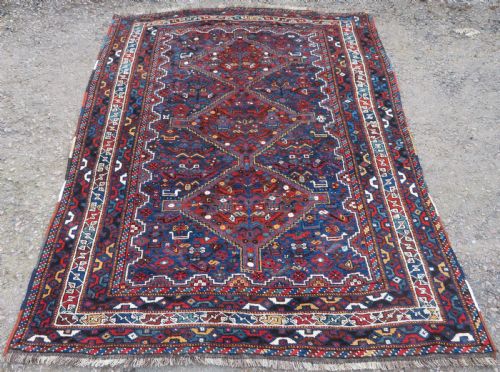


Red Khamseh Rug
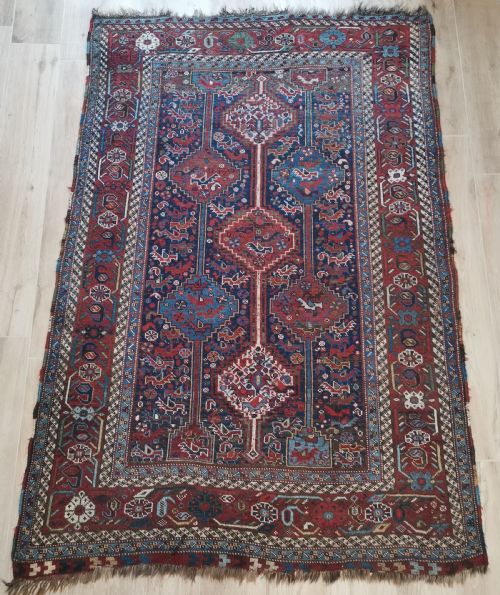
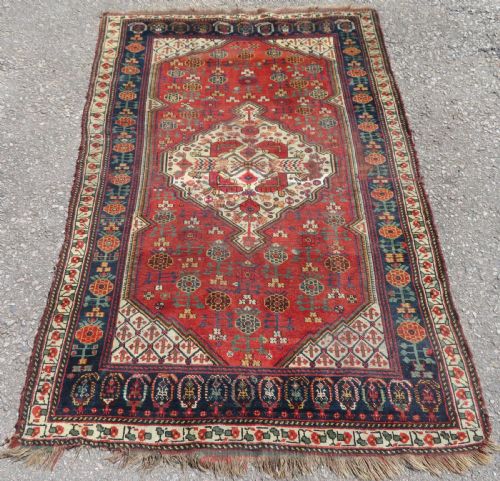
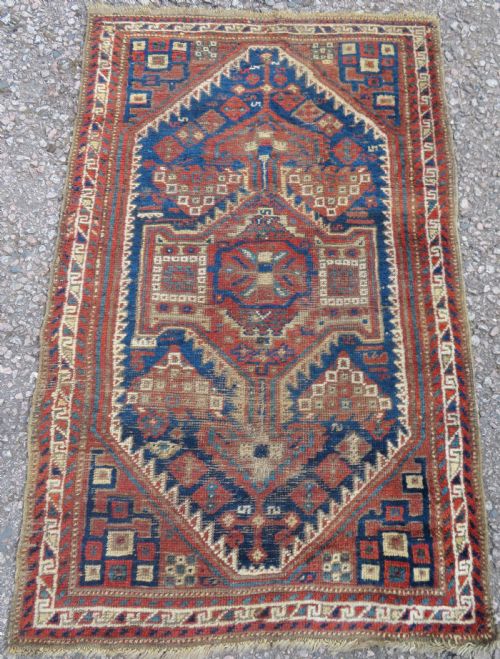
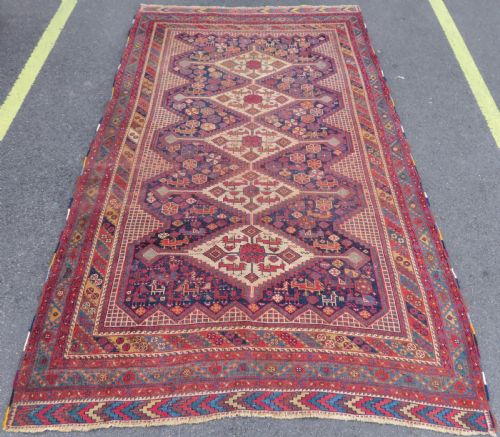
When you search for a red khamseh rug, you seek a tribal piece from south-west Persia woven by nomadic confederations.
Red Khamseh Rug
A red khamseh rug represents the weaving traditions of the Khamseh confederacy in the Fars province of Persia. Buyers searching this phrase encounter tribal carpets, smaller area rugs, and occasional saddlebags produced by sub-tribes such as the Baharlu, Arab-Jabbareh, and Basseri.
The objects span the late nineteenth century and early twentieth century, reflecting South Persian nomadic and village life. These pieces frequently display distinctive motifs including pomegranate designs, chicken patterns, tree of life symbols, and tribal figures.
Materials and Construction
Weavers constructed these carpets using hand-spun wool for the pile, combined with cotton foundations for structural stability. The utilisation of natural dyes yields the deep red grounds and contrasting tones characteristic of the region.
As hand-woven tribal objects, the density of the knotting and the handling of the wool vary organically across different looms. Artisans integrated wool and cotton materials sourced locally within south-west Persia.
Listings span production dates from the 1870s through the 1920s, utilising hand-spun wool and natural dyes.
Assessing Quality and Execution
Quality in a red khamseh rug depends upon the precision of the knotting and the depth of the natural dyes. Finer examples display crisper execution of geometric and pictorial motifs, such as birds and animal figures.
The condition of the hand-spun wool pile and the structural integrity of the cotton foundation determine the longevity of the piece. Greater clarity in the tribal design elements distinguishes superior weaving within the confederacy.
The Red Khamseh Rug Glossary
- Khamseh Confederacy
- A coalition of five nomadic tribes in south-west Persia, including Arab, Basseri, and Baharlu groups. Their weavers produced distinctive tribal rugs often featuring rich red fields.
- Kelleh
- A long, narrow format of carpet traditionally suited to specific room dimensions in Persian domestic spaces.
- Saddlebag
- A utilitarian container woven in pairs by nomads for transport on animals, frequently collected today as small rug face pieces.
- Morghi
- A Persian design term referring to chicken or bird motifs woven into tribal carpets.
- Hand-Spun Wool
- Yarn processed manually by individuals using a drop spindle or wheel, resulting in irregular thickness and varied absorption of natural dyes.
Red Khamseh Rug: Frequently Asked Questions
What is a khamseh rug?
A khamseh rug is a tribal textile woven by the nomadic confederacies of south-west Persia. These pieces are recognised by their dark red backgrounds and distinctive local motifs.
Weavers from sub-tribes such as the Arab-Jabbareh and Baharlu created these items during the nineteenth and early twentieth centuries using hand-spun wool.
How do I identify a tribal rug?
Tribal rugs are identified by geometric patterns, local animal or plant motifs, and irregular, asymmetrical designs. They reflect the cultural heritage of nomadic weavers rather than urban workshops.
Examinations of the materials, such as hand-spun wool and natural dyes, help confirm the origins in regions like the Fars province of Persia.
What are morghi chicken carpets?
Morghi chicken carpets are specific tribal rugs featuring repeating rows of stylized birds or chickens across the field. These playful motifs distinguish certain nineteenth-century productions.
Collectors prize these pictorial elements for their charming and unconventional departure from standard geometric medallion layouts.
How should I care for an antique rug?
Antique wool rugs require gentle maintenance, including regular vacuuming without a beater bar and professional cleaning when necessary. Keeping the textile away from direct sunlight preserves the natural dyes.
Using an appropriate underlay protects the cotton foundation and prevents slipping on hard floors.