
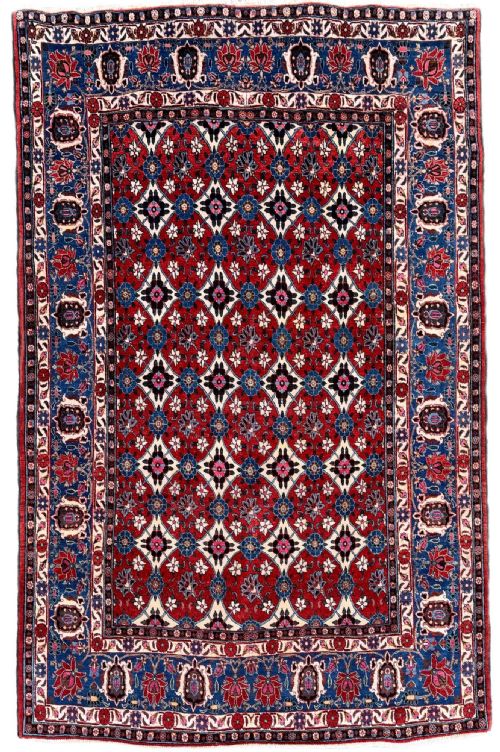
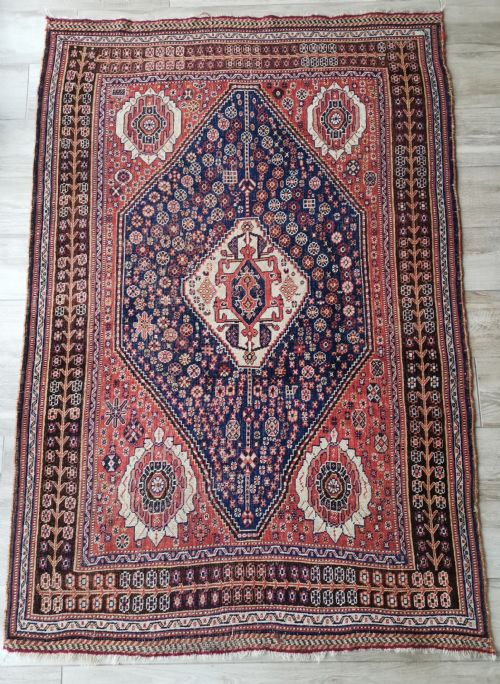


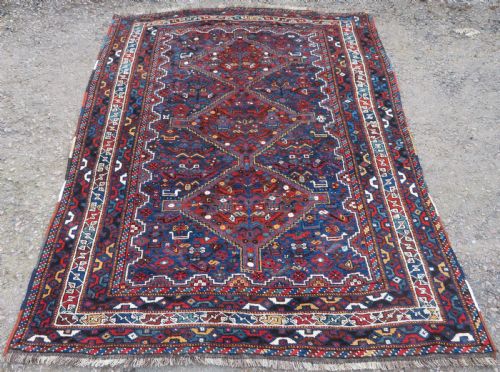


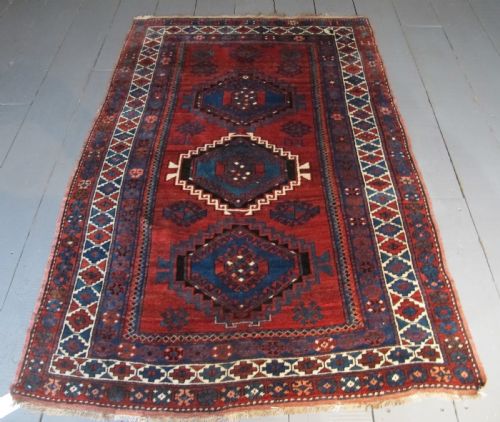
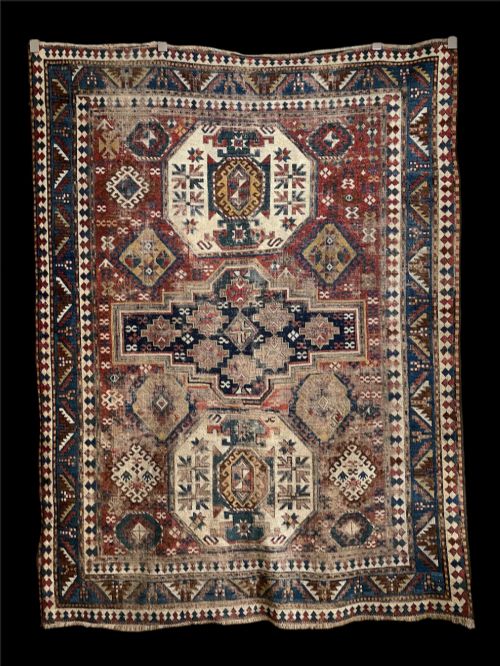


Red Indigo Area Rug
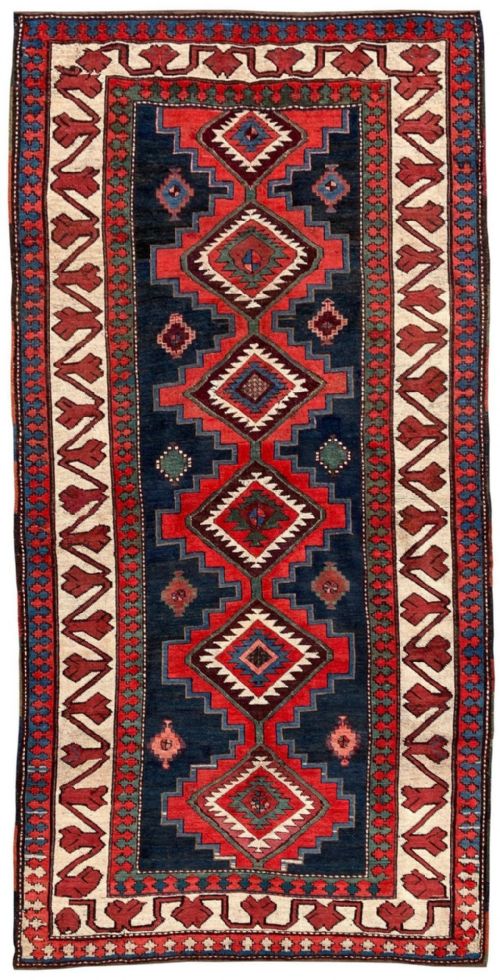
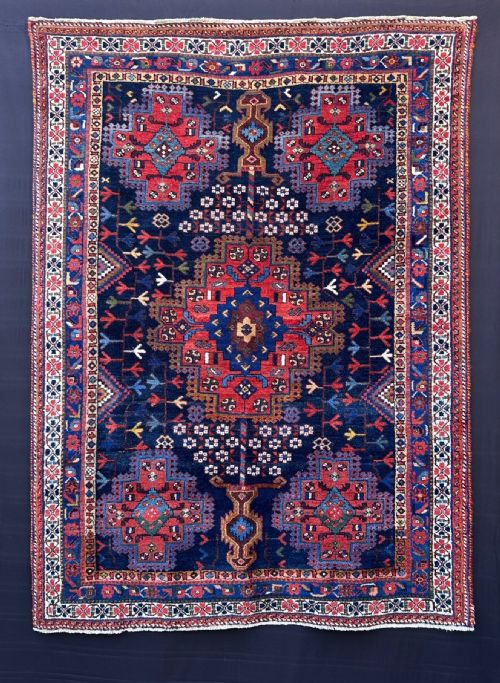
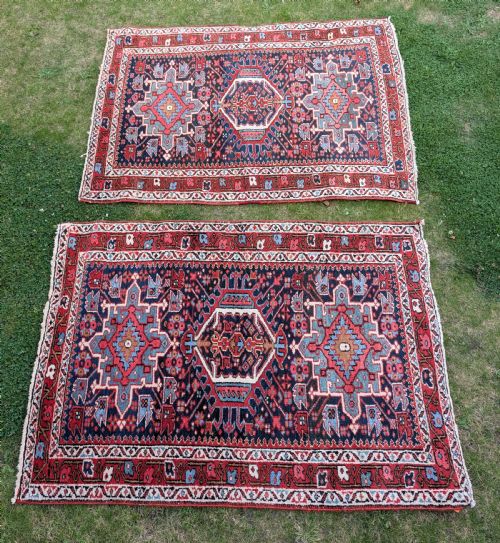
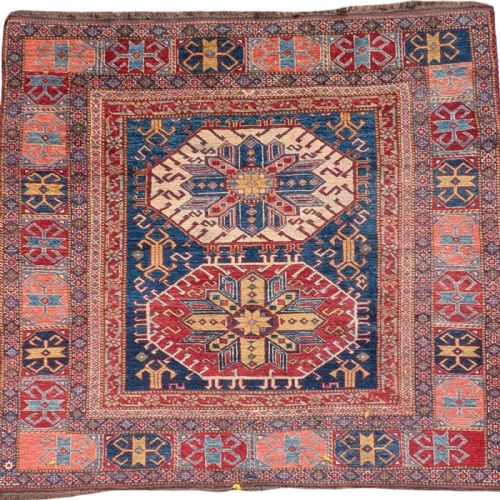
These red indigo area rug examples bring together Persian tribal, Caucasian, and Baluch weaving traditions from the nineteenth and early twentieth centuries.
Red Indigo Area Rug
A red indigo area rug encompasses hand-knotted tribal carpets and village floor coverings originating from Persia, the Caucasus, and Afghanistan. Buyers seeking this category encounter pieces carrying distinctive motifs such as Lezghi stars, rams horn mihrabs, and box medallions.
The selections span distinct regional weaving traditions including Kazak, Afshar, Qashqai, Baluch, and Karaja. Most specimens on this page emerge from production periods stretching between the late nineteenth century and the 1930s.
How they were made
Weavers constructed these textiles using natural dyes applied to wool, hand-spun wool, cotton foundation threads, and occasional goat hair components. The utilisation of organic colouring agents yielded deep red and blue indigo tones that develop rich patinas over decades of use.
Nomadic and village workshops employed traditional upright looms to knot these rugs and carpets by hand. The structural integrity relies on tight packing of the foundation warps and wefts to secure the dense wool pile.
Listings feature pieces dated from the 1870s through the 1930s, utilising wool, cotton, and natural dyes.
What varies in quality
Quality rests upon the fineness of the knot density and the precision executed in rendering traditional tribal geometry. Superior examples display clear saturation of natural dyes and balanced composition across the field and borders.
The handling of regional iconography, such as specific star configurations or medallion layouts, distinguishes standard village production from master-woven collector pieces. The integrity of the foundational weave and pile retention dictate the overall structural durability.
The Red Indigo Area Rug Glossary
- Kazak
- A designated style of rug originating from the Caucasus region, known for bold geometric medallions and saturated primary colours. These pieces often incorporate rectilinear animal and star motifs.
- Mihrab
- The arched niche design found primarily on prayer rugs, symbolising a doorway or prayer direction. Weavers frequently ornament this architectural feature with rams horn or floral symbols.
- Kelim
- A flat-woven carpet or rug produced without a pile by tightly interweaving warp and weft strands. These textiles serve as floor coverings or hanging partitions.
- Medallion
- A central ornamental design motif placed in the middle of the rug field. Tribal weavers often surround this focal point with repeating geometric borders and secondary motifs.
Red Indigo Area Rug: Frequently Asked Questions
What is a red indigo area rug?
A red indigo area rug is a hand-knotted antique textile originating from tribal and village communities in Persia, the Caucasus, and Afghanistan. These floor coverings utilise natural plant-based dyes to create deep crimson and blue indigo colour palettes.
Such rugs incorporate traditional geometric patterns, star symbols, and central medallions passed down through generations of regional weavers. The category includes diverse regional forms ranging from small prayer mats to large salon carpets.
How do I identify a tribal rug?
Identifying a tribal rug involves examining the geometric irregularity of the motifs, the use of hand-spun wool, and the presence of organic natural dyes. Village and nomadic weavers worked from memory rather than precise scale drawings, resulting in charming asymmetries.
Structural traits such as wool foundation threads and specific regional border guards further connect a piece to groups like the Qashqai, Baluch, or Afshar. These characteristics differentiate nomadic weaving from standardised city workshop production.
Where were these rugs made?
These antique rugs were produced across the Caucasus mountains, Western Afghanistan, and various provinces of Persia including Kerman and Fars. Nomadic confederations and settled village communities each maintained distinct weaving districts.
Local access to specific grazing lands and plant dye sources directly influenced the colour depth and wool quality unique to each geographic origin. Workshops in towns like Bidjar and Karaja developed particularly robust foundation structures.
How should I care for an antique rug?
Caring for an antique rug requires regular gentle vacuuming without rotating brush heads to protect the fragile wool pile and foundation. Keeping the textile away from direct sunlight prevents the natural indigo and red dyes from fading unevenly.
Professional specialist cleaning is necessary to address deep-set dust or spills without damaging the historical wool fibres. Proper rug underlays should be utilised to reduce friction against hard flooring.