



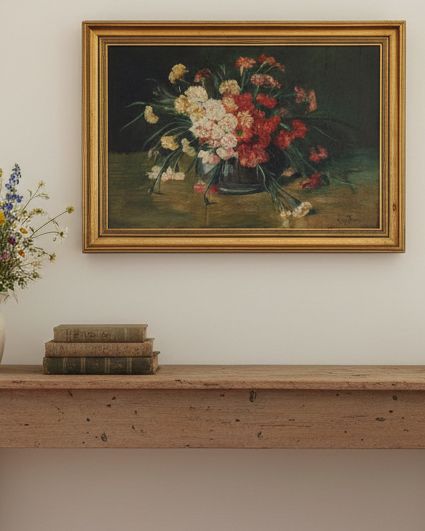
Red Framed Oil Painting
When you search for a red framed oil painting, you are looking for historical canvases and panels defined by pigment and timber.
Red Framed Oil Painting
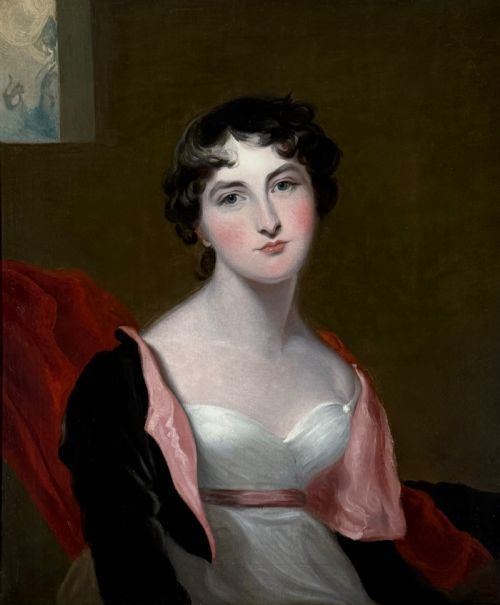
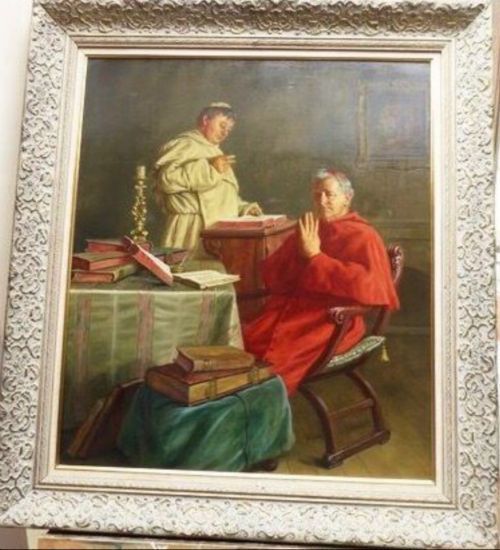
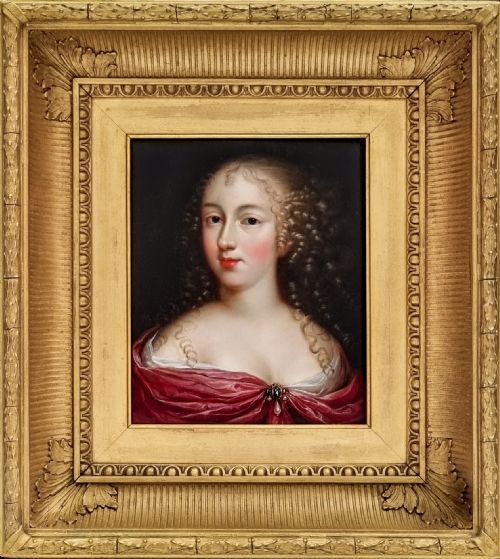
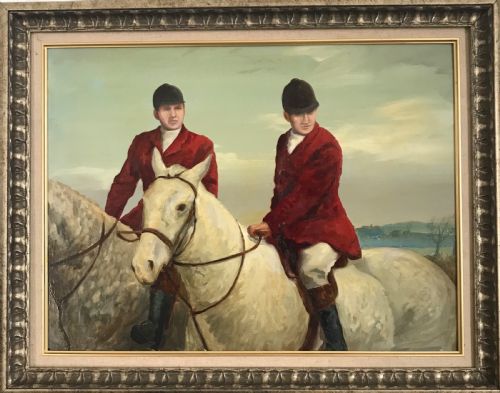
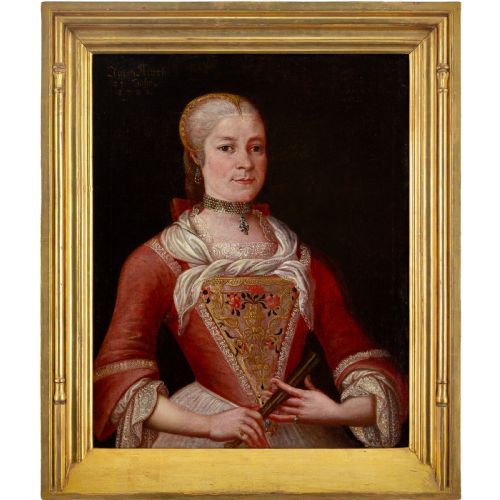
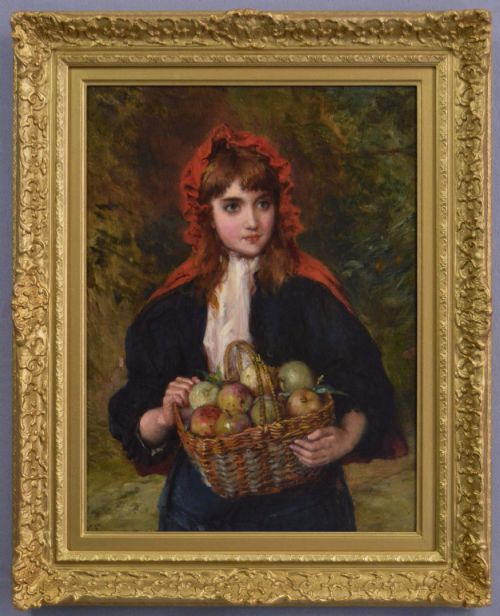
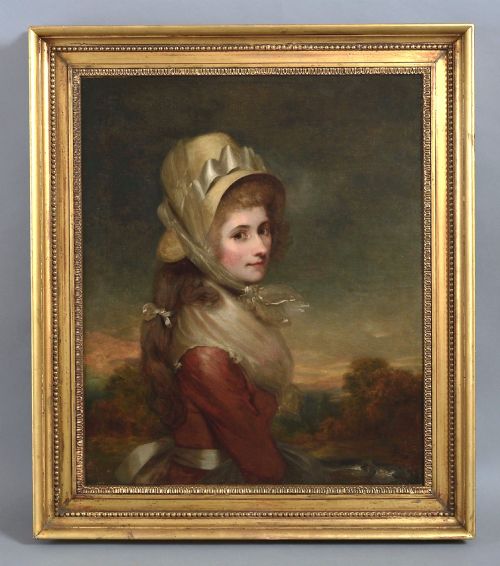
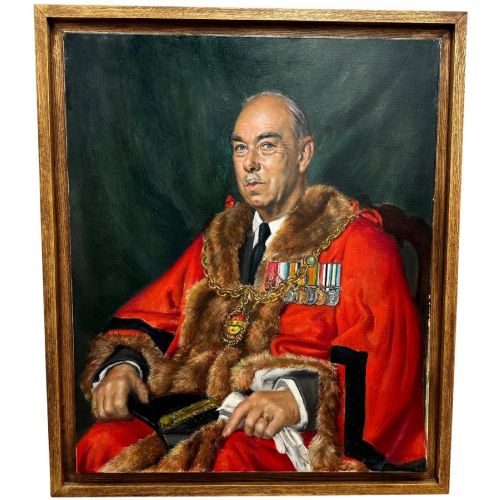
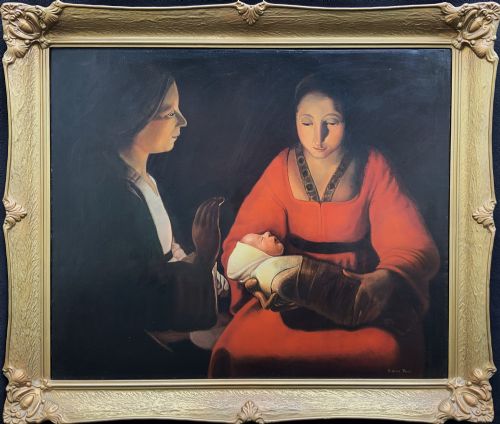
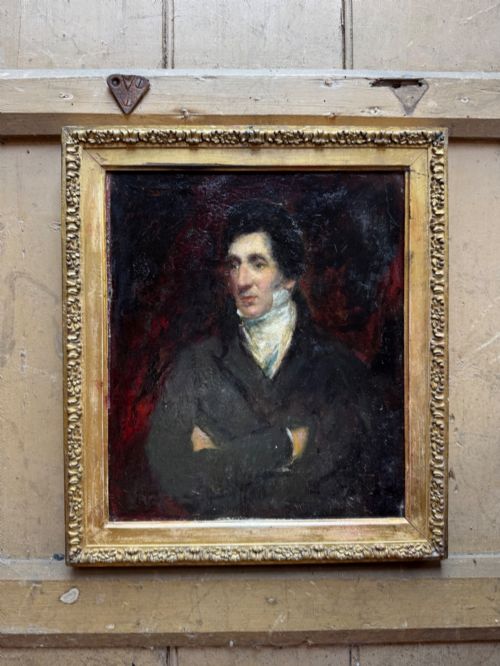
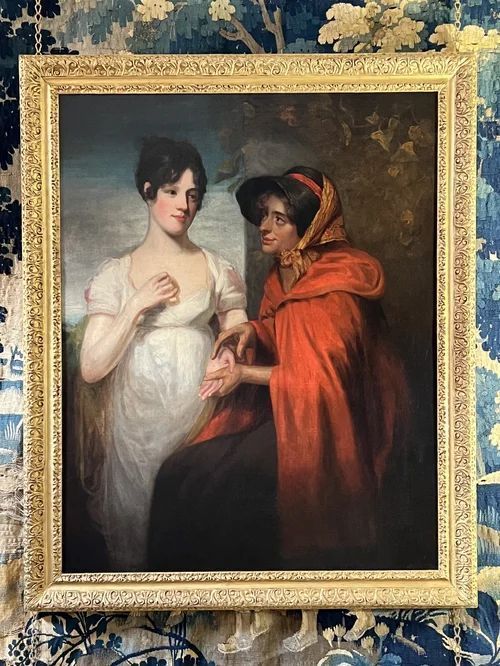
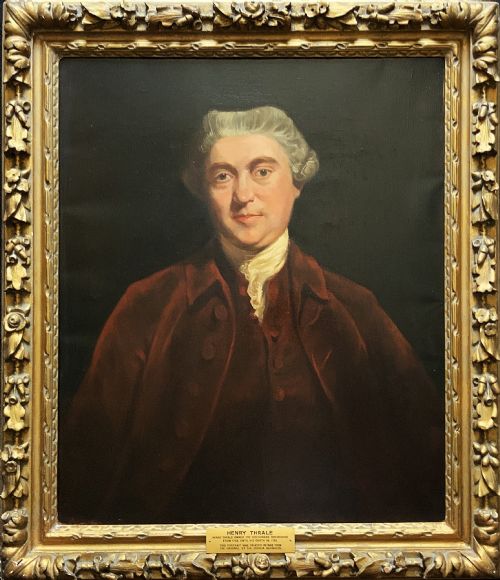
A red framed oil painting brings together fine art and striking surrounds, spanning portraiture, genre scenes, and still life from the seventeenth century onwards. The pieces recorded here range from early depictions of military officers in scarlet jackets and noble ladies with red satin sleeves to twentieth-century floral compositions and landscapes.
The dominant aesthetic unites oil paint on canvas or wood with substantial framing. Buyers meet works executed across Georgian, Victorian, Baroque, and Modern British movements, alongside continental European and British schools.
Portraits of sitters wearing red coats or holding red accessories frequently share space with floral still lifes featuring red berries and roses. These works capture centuries of painterly technique housed in timber and gilt enclosures.
What varies in quality
The standard of a red framed oil painting depends upon the fidelity of the brushwork and the anatomical accuracy achieved by the artist. Masterful handling of light upon textiles, such as silk uniforms or velvet gowns, elevates a piece above standard decorative workshop output.
The integrity and originality of the surrounding woodwork also dictates value. Period frames displaying hand-carved gesso, original gilding, and structural joinery that matches the age of the canvas command greater appreciation than later replacements.
Several military portraits capture officers proudly wearing bright red coats into battle, proving that historical commanders took their dress codes very seriously indeed.
Jean-Baptiste Van Loo·Sir Martin Archer Shee·Bernard Hailstone·John Opie·Stickland Lowry·Sir Joshua Reynolds·Charles-Antoine Coypel·John Wootton·Thomas Hudson·Sir Walter Raleigh·Allan Ramsey·F. Corpuz·Bernardino Luini·Lucy Pratt·Emma Fordyce MacRae·Ian Parker·William Oliver·Vladimir Aldoshin·Sir Peter Lely·Robert Cleminson·Renato Moretti·Michael Dahl·Fred Lawson·Frederick J. Sang·William Josiah Redworth
The Red Framed Oil Painting Glossary
- Oil on canvas
- A painting technique where pigmented oil paint is applied to a woven fabric support stretched across a wooden stretcher.
- Giltwood
- Timber that has been carved and coated with a thin layer of gold leaf or metallic powder.
- Genre painting
- A pictorial representation depicting scenes from everyday life rather than heroic or religious subjects.
- Provenance
- The documented history and lineage of ownership attached to a work of art.
- Rococo
- An ornate artistic style prevalent in the eighteenth century characterised by asymmetry, scrollwork, and lighter pastel palettes.
Red Framed Oil Painting: Frequently Asked Questions
What is an oil painting on canvas?
An oil painting on canvas consists of slow-drying pigments suspended in a drying oil, typically linseed, applied to stretched woven fabric. This medium allows artists to blend tones smoothly and build rich textures.
Historically, artists primed the canvas with a size and gesso ground to prevent the oil from rotting the fabric fibres. This creates a stable surface that preserves the vibrancy of the pigments across centuries.
How should I care for my framed painting?
Protect your framed artwork by keeping it away from direct sunlight, damp environments, and sudden temperature fluctuations. Such conditions can cause the canvas to slacken and the wooden frame to warp.
Dust the frame and canvas gently using a dry, soft brush rather than cleaning cloths or liquids. Moisture can damage both the painted surface and the delicate gilding on the timber.
How do I identify a period frame?
Period frames are identified by their construction methods, such as corner mitres joined with pegs, hand-carved wooden ornaments, and layered gesso preparation. The materials and wear should match the estimated age of the painting it encloses.
Examination of the reverse often reveals historical joinery, carpenter marks, and the patina of aged pine or oak. Remnants of older gilding layers can also indicate genuine antiquity.
What subjects are common in these paintings?
Common subjects include formal portraiture of nobility and military officers, pastoral landscapes, and botanical still lifes. Artists often incorporated red garments, drapery, or flora to create striking visual focal points.
Narrative scenes drawn from biblical or classical mythology also appear frequently within these historical categories. These compositions reflect the decorative tastes and cultural interests of their respective periods.