


Red Cut Clear Glass
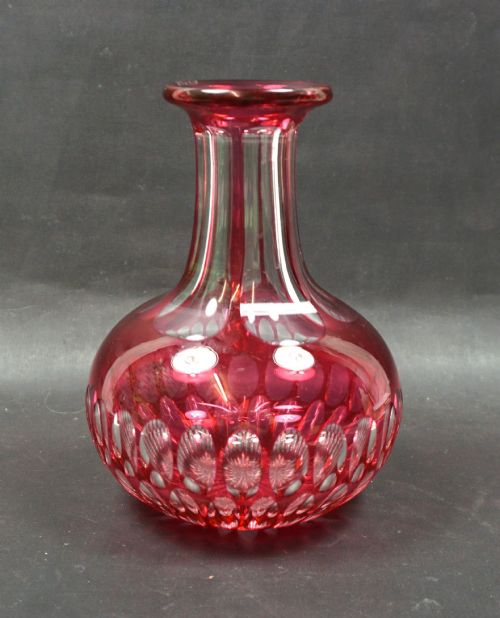
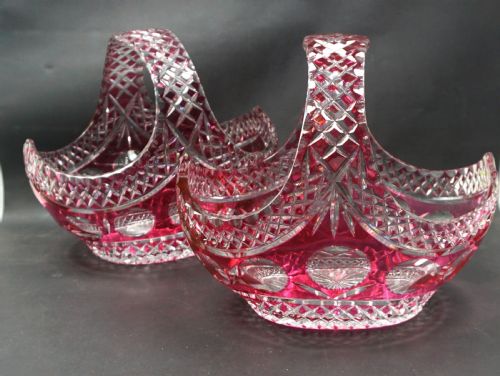
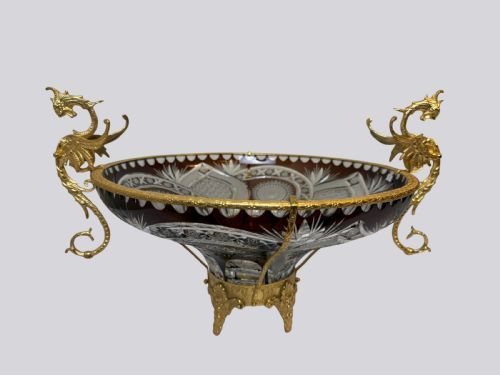
These pieces of red cut clear glass combine rich colour with sharp facet cutting, making them a striking addition to any room.
Red Cut Clear Glass
When you search for red cut clear glass, you encounter a selection of vessels and decorative items defined by their distinctive overlaid hues and faceted surfaces. The pieces span from the mid-nineteenth century through to the Art Deco period, showing the enduring appeal of contrasting clear and ruby or cranberry glass.
Vessels on this page range from table glassware such as tumblers, champagne coupes and carafes to ornamental items like centrepiece bowls, baskets and vases. Many examples originate from Bohemian workshops and Belgian makers, alongside English pieces from the Victorian era.
Perfume bottles and scent flasks also appear frequently, often enhanced with silver or enamel mounts. These smaller items provide an accessible entry point into collecting coloured and cut glassware.
Materials and methods
The objects are produced using layered techniques where a thin skin of ruby or cranberry glass is cased over a clear lead crystal base. Artisans then cut deeply through the coloured exterior layer to reveal the clear crystal beneath, creating bold patterns of panels and flutes.
Engraving and gilding frequently supplement the facet cutting, particularly on Bohemian goblets, tumblers and Victorian vases. Enamel decoration and silver fittings occasionally complete the pieces, adding texture and contrast to the smooth glass.
Listings feature items from the 1850s to the 1930s, utilising materials such as ruby glass, cranberry glass, lead crystal, silver and enamel.
What sets finer examples apart
Quality in these items rests upon the precision of the cutting and the clarity of the underlying crystal. Superior pieces display crisp, sharp edges along the facets without minor surface ripples or cloudiness in the material.
The depth of the coloured overlay and the harmony of the engraved motifs further distinguish the finer pieces. Well-proportioned forms and balanced weight indicate careful execution by skilled glasshouses.
Val St. Lambert·Karl Palda·Charles Graffart
The Red Cut Clear Glass Glossary
- Cased glass
- Glass formed of two or more distinct layers of different colours, often clear crystal underneath and ruby or cranberry glass on the outside. This layered construction allows artisans to cut away the top colour to reveal the contrasting layer beneath.
- Overlay
- A technique where a complete outer layer of coloured glass is fused over a body of clear glass before cutting and engraving. The resulting contrast defines much of the nineteenth-century Bohemian production.
- Lead crystal
- A heavy glass made with lead oxide which increases brilliance, clarity and weight. It provides the ideal medium for deep facet cutting.
- Champagne coupe
- A shallow, broad-bowled stemmed glass designed for sparkling wines. Victorian examples in this category are often heavily engraved.
- Faceting
- The process of grinding flat planes into the surface of glass to catch and reflect light. Sharp facet lines indicate precise workmanship.
Red Cut Clear Glass: Frequently Asked Questions
How do I clean antique red cut glass?
Wash these pieces gently by hand using lukewarm water and mild soap. Avoid soaking items with silver mounts or enamel decoration to protect the delicate surface details.
Dry them immediately with a soft lint-free cloth to prevent water spots on the clear crystal and cut facets.
Are these pieces safe for daily use?
While decorative items like vases and scent bottles are best kept for display, glassware such as wine glasses, tumblers and carafes can be used carefully on special occasions.
Hand washing is essential, and sudden temperature changes should be avoided to protect the historic glass.
How can I tell Victorian from Art Deco pieces?
Victorian items often feature ornate engraving, such as floral motifs and convolvulus, combined with heavy faceted profiles. They tend to have a rich, romantic aesthetic.
Art Deco pieces, dating toward the 1930s, favour geometric lines, streamlined forms and minimalist mounts, sometimes paired with enamel work.
What is cranberry glass?
Cranberry glass is a pinkish-red transparent glass coloured by the addition of gold chloride to the molten batch. It became particularly popular during the Victorian era for scent bottles and tableware.
In many listings, it appears layered over clear crystal and cut away to form striking patterns.