
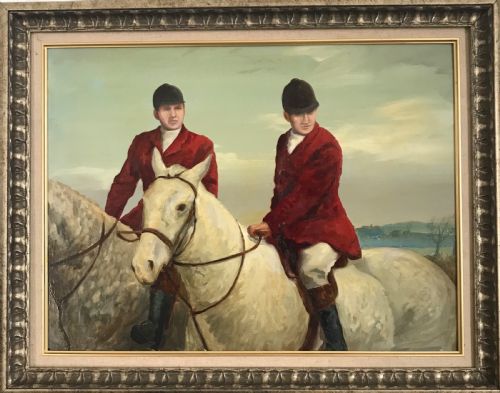


Red Coat Hunt Painting
A red coat hunt painting captures the traditional pageantry of British field sports, prized by collectors for its rich narrative and equestrian detail.

Red Coat Hunt Painting
A red coat hunt painting portrays the classic equestrian pursuit with huntsmen in scarlet coats, hounds, and countryside landscapes. When you search for this phrase, you find works spanning the Victorian period through to the mid-twentieth century.
The pieces on this page range from detailed Victorian oils depicting iconic hunts like the Quorn and the Berkeley to early twentieth-century watercolours by celebrated sporting artists. Forms include framed oil paintings on canvas and delicate works on paper.
Subjects vary from bustling meet scenes and full cry action to quieter interior hunting narratives and detailed portraits of grey and bay hunters. These artworks offer a distinct window into traditional British sporting art.
How They Were Made
Artists primarily utilised oil paint on canvas or watercolour on paper, often housed within traditional giltwood frames. The application of oil allows for deep, luminous reds in the coats and intricate textures in the horses' coats and the hounds.
Watercolour works employ fine washes and precise brushwork to capture the expansive countryside landscape and atmospheric hunting weather. Paper and canvas are standard supports across both Victorian and twentieth-century examples.
Hounds frequently steal the show by looking directly at the viewer with an expression of mild skepticism.
What Varies in Quality
Quality rests upon the artist's ability to render the anatomy of horses and hounds with anatomical correctness and kinetic energy. Master practitioners achieve a convincing sense of movement and depth within the landscape.
The handling of light and the psychological presence of both human and animal subjects distinguish accomplished works from routine topographical records. Signature and attribution to established sporting painters elevate the standing of a piece.
John Arthur Lomax·Basil Nightingale·Charles Faulkner·Charles Clifford Turner·John Sanderson Wells·Thomas Ivester Lloyd·Charles Johnson Payne Snaffles·Heywood Hardy·George Goodwin Kilburne·Geoffrey Mortimer·Wilfred Bailey·John Theodore Kenney·Philip H Rideout
The Red Coat Hunt Painting Glossary
- Full cry
- The stage of the hunt when the hounds are actively pursuing the scent in unison. This moment provides artists with dynamic compositional movement.
- The meet
- The initial gathering of riders, hounds, and followers before the hunt commences. Paintings of this subject focus on portraiture and social interaction.
- Giltwood
- Carved wood treated with gold leaf or gilt finish, commonly used for framing traditional paintings. These frames enhance the visual weight of the artwork.
- Sporting art
- A genre of art dedicated to depicting field sports, equestrian subjects, and wildlife. It forms a cornerstone of British traditional painting traditions.
Red Coat Hunt Painting: Frequently Asked Questions
What is a red coat hunt painting?
A red coat hunt painting is a work of art depicting traditional British equestrian hunting scenes, prominently featuring riders in scarlet coats.
These artworks record the social and sporting history of the countryside, focusing on hounds, horses, and riders in action.
How do I date a hunt painting?
Dating relies on stylistic clues, artist signatures, clothing fashions, and framing materials. Victorian works often show heavier brushwork and elaborate gilt frames.
Twentieth-century pieces can lean towards looser watercolours or mid-century portraiture styles while retaining the core equestrian subject matter.
Where should I hang a hunt painting?
These traditional artworks suit libraries, studies, or living rooms with classic decor, pairing well with dark wood furniture and equestrian accessories.
Keep them away from direct sunlight to protect delicate watercolours and oil pigments from fading over time.
What subjects appear in these paintings?
Common subjects include the morning meet, hounds in full cry, the hunt supper, and individual portraits of notable huntsmen with their horses.
Artists also depicted specific named hunts, such as the Quorn or the Berkeley, adding historical context to the scene.