



Red Chinoiserie Side Table
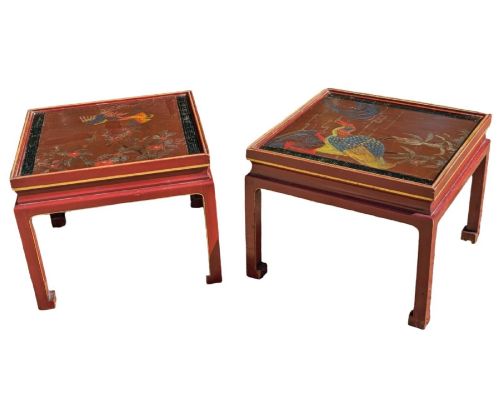
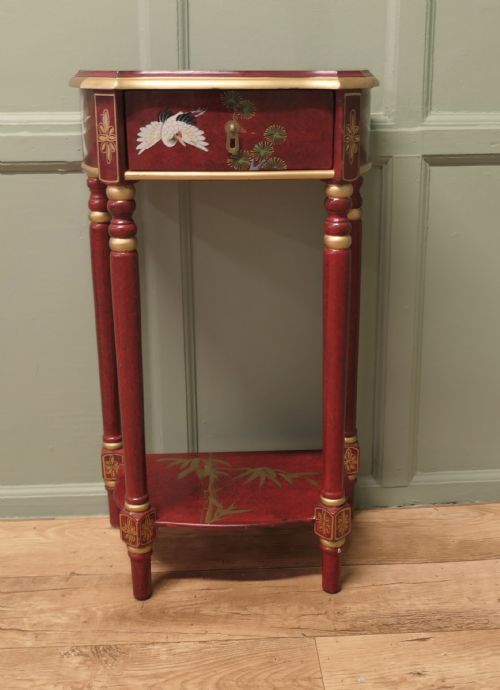
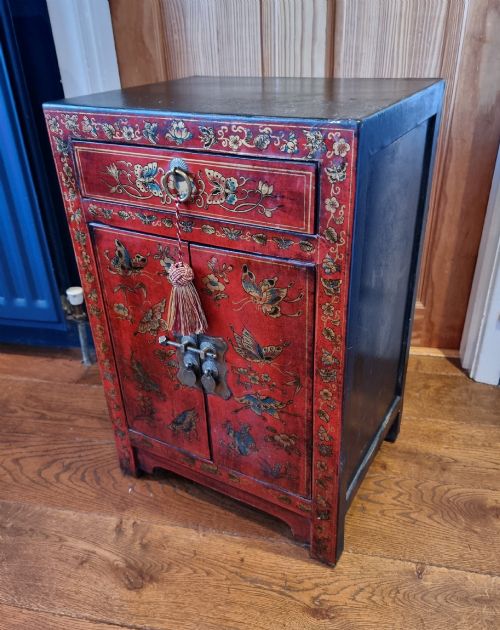
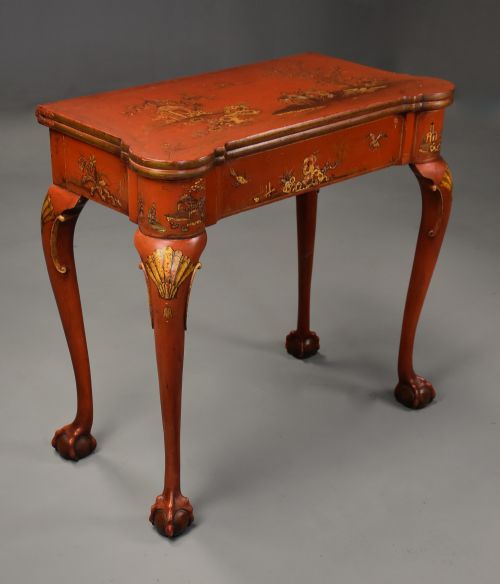
These red chinoiserie side tables bring striking painted lacquer and oriental motifs directly into a room.
Red Chinoiserie Side Table
A red chinoiserie side table combines low or occasional table forms with decorative schemes inspired by Chinese design, executed in red lacquer, paint, or wood. The selection here spans the nineteenth century up to nineteen thirty, taking shapes such as nests of tables, games tables, bedside cabinets, and two-tier occasional tables.
Most examples lean towards English and French interpretations of oriental aesthetics, frequently drawing on Queen Anne, Regency, and eighteenth-century revival styles. Buyers encounter pieces finished with red lacquer or painted wood surfaces, often incorporating gilt highlights alongside black decoration.
The practical function remains versatile, serving variously as bedside lamp cabinets, demi-lune tables, lowboys, or card tables. These items offer a distinct focal point through their vibrant colour and narrative painted scenes.
Materials and construction
Construction relies upon traditional timber frameworks, utilising softwood, wood, and occasionally bamboo to build the underlying table structures. Lacquer and paint form the primary decorative skin, applied in layers to create smooth, resilient surfaces capable of supporting intricate oriental motifs.
Gilt and brass elements frequently appear alongside the red paint and lacquer, providing metallic contrast to the painted scenes and structural details. Artisans built these tables using standard cabinet-making techniques suited to occasional furniture, card tables, and nested sets.
Red Chinoiserie Side Table Retail Price Guide 2026
Typical asking prices for red chinoiserie side table among the pieces listed under this phrase on Sellingantiques today, from the lower quarter to the upper quarter. They describe what is for sale here now, not the wider market.
Some tables double as card games surfaces, ready for an impromptu nineteenth-century wager.
Assessing quality and execution
Quality rests heavily on the depth and execution of the lacquer or painted decoration, where finer pieces display intricate, well-preserved oriental motifs and harmonious gilt work. The subtlety of the brushwork and the preservation of the original red and black colour schemes distinguish superior examples from simpler decorative items.
Structural integrity across multi-tiered designs, nests, and folding games tables also dictates value, as does the fidelity to historical styles like Regency or Queen Anne. Pieces retaining their original surfaces without heavy later repainting command stronger interest from collectors.
The Red Chinoiserie Side Table Glossary
- Chinoiserie
- European artistic style reflecting Chinese and East Asian artistic influences, prominent in decorative arts and furniture. It relies on whimsical motifs, landscapes, and figures painted or lacquered onto wooden surfaces.
- Lacquer
- A durable resin or varnish applied in multiple coats to wood surfaces, producing a hard, smooth finish. Historically built up and polished, it forms the characteristic glossy ground for chinoiserie decoration.
- Demi-lune
- A half-moon or semicircular table shape designed to stand flat against a wall. These pieces function well as side tables or console tables in tighter spaces.
- Nest of tables
- A set of graduated tables designed to fit neatly beneath one another when not in use. They offer flexible surface space for occasional use.
- Lowboy
- A small table with one or more drawers, standing on relatively tall legs. Originally used as a dressing or side table, it provides compact storage and surface area.
Red Chinoiserie Side Table: Frequently Asked Questions
How do I clean a lacquered table?
Dust gently with a soft, dry cloth to protect the delicate painted surface.
Avoid chemical polishes and keep the piece away from direct sunlight and moisture.
Are these tables sturdy enough for daily use?
Occasional tables and nests suit light daily tasks like holding a lamp or book.
Heavier items or constant rough treatment can damage the historic lacquer and joints.
How can I tell the period of a table?
Examine the underlying timber construction, joinery methods, and the wear patterns on the lacquer.
Stylistic cues such as Regency curves or Queen Anne legs also offer strong chronological hints.
Where should I place a red chinoiserie table?
Position the piece as an accent in a hallway, beside a bed, or next to a sofa.
The vibrant red colour and oriental motifs stand out best against neutral backgrounds.