




Red Ceramic Decorative Platter
A red ceramic decorative platter brings rich colour and pattern into a room, spanning periods from the seventeenth century through to the twentieth.
Red Ceramic Decorative Platter
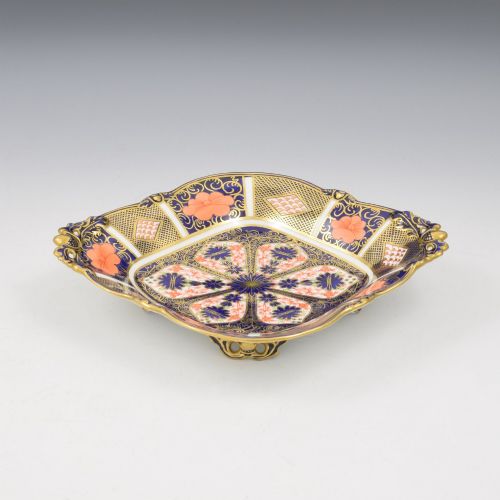
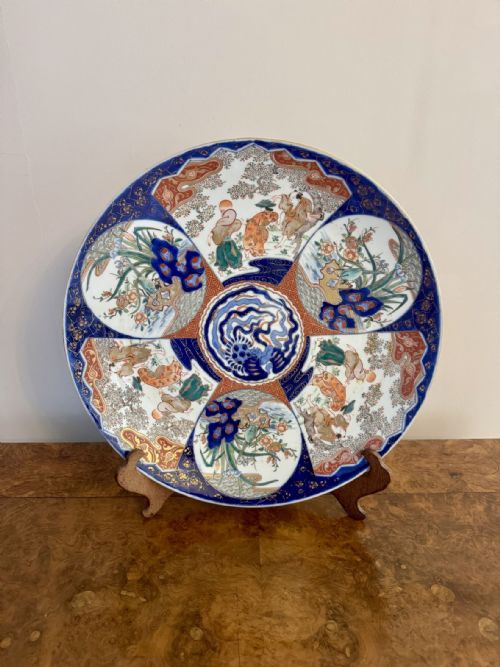
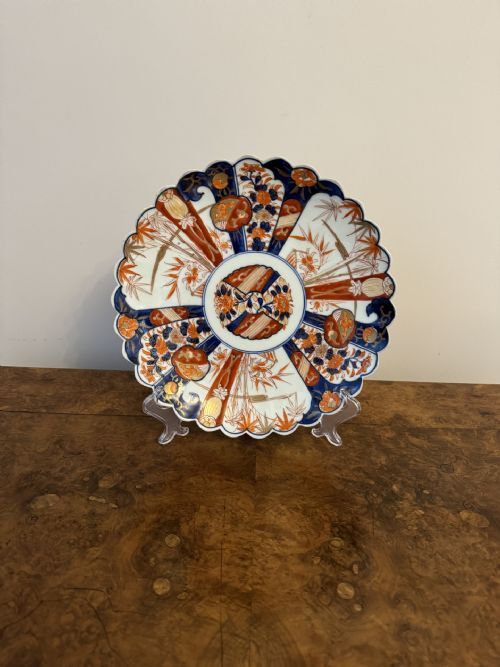
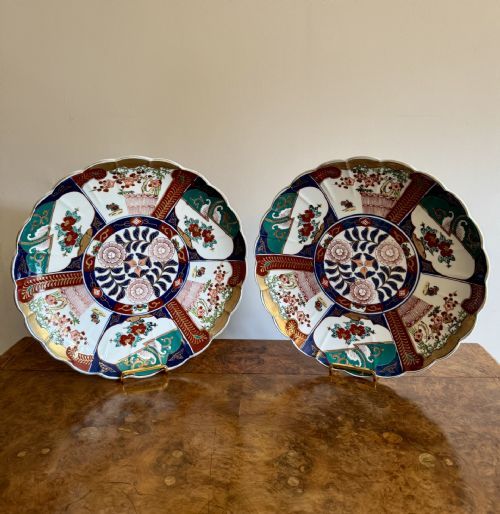
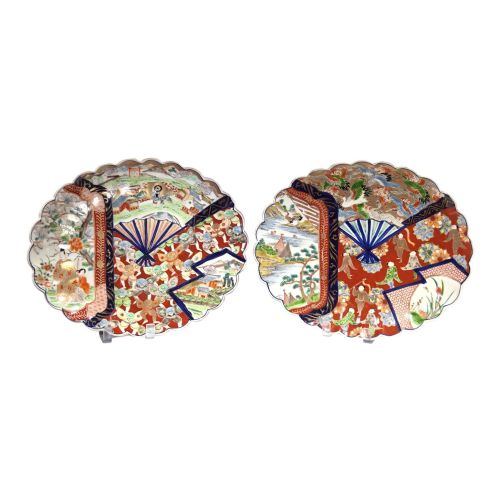
A red ceramic decorative platter encompasses large chargers, serving dishes, and plates designed primarily for display rather than dining. The selection draws heavily upon Japanese Imari porcelain alongside English and European earthenware and porcelain.
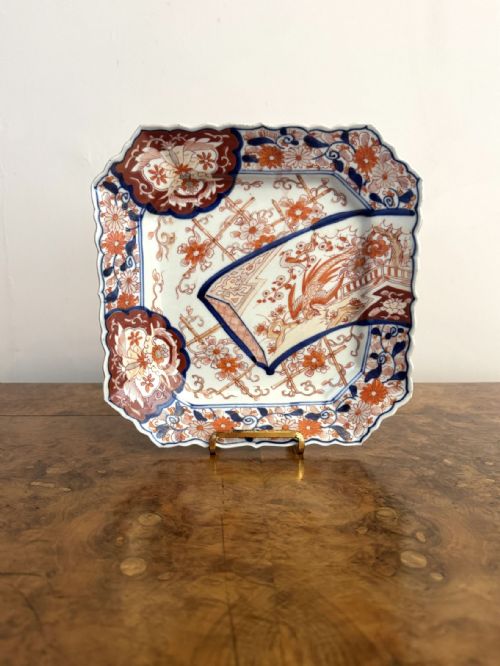
Most examples found here date from the nineteenth and early twentieth centuries, featuring robust forms intended to be hung on walls or set upon furniture. Buyers encounter traditional shapes ranging from round chargers to square and scalloped plates.
Origins span Japanese Meiji and Edo periods, Chinese export kilns, and European factories such as Vienna and Mintons. These pieces often display intricate hand-painted motifs depicting birds, floral arrangements, or figurative scenes.
How they were made
These items rely on high-fired porcelain and ceramic bodies coated in glaze, providing a durable foundation for detailed pigment application. Cobalt underglaze and iron-red enamel provide the primary palette, often heightened with gold leaf or gilt details.
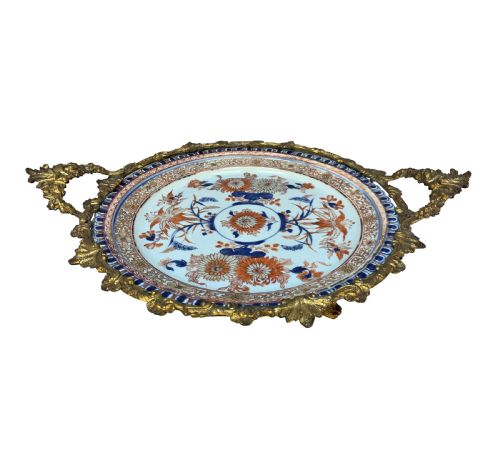
Decoration is executed by hand, combining cobalt blue outlines with rich red iron-oxide pigments and enamels. Certain specialised pieces incorporate cinnabar lacquer or ormolu mounts to frame the ceramic body.
Object forms include chargers, platters, trays, and scalloped plates originating from Japanese, Chinese, and European kilns.
What varies in quality
Quality rests in the crispness of the hand-painted brushwork and the depth of the iron-red and cobalt colours. Finer examples show precise control over multi-layered enamels and gold gilt without blurring.
The sophistication of the moulded or shaped edge - whether square, scalloped, or pierced - differentiates standard production from exceptional pieces. Heavier, well-balanced chargers with rich surface detail command greater appreciation among collectors.
The Red Ceramic Decorative Platter Glossary
- Imari
- A style of Japanese porcelain featuring a distinctive palette of cobalt blue and iron-red, typically accented with gold. The name originates from the port town of Imari from which these wares were shipped.
- Charger
- A large decorative plate or platter used primarily for display on a table, sideboard, or wall. These items exceed standard dining plate dimensions.
- Ormolu
- Gilded bronze mounts applied to furniture and porcelain to frame or elevate the object. This technique adds architectural weight to ceramic plates.
- Totai
- A Japanese technique involving applied decoration such as cloisonné wires or lacquer over a ceramic core. This creates a textured surface distinct from standard glazed porcelain.
- Enamel
- Opaque glass-like pigments fused to the fired ceramic surface during a secondary low-temperature firing. Enamels provide the vibrant red and gold tones seen in many decorative platters.
Red Ceramic Decorative Platter: Frequently Asked Questions
How do I hang a heavy ceramic charger?
Heavy chargers require sturdy wall fixings and adjustable brass spring hangers that grip the rim securely without placing undue stress on the ceramic body. Professional picture framing specialists can also create custom acrylic or metal cradles to support the base.
Ensure the wall plug matches the weight of the piece and anchor the fixing directly into brick or studwork rather than plasterboard alone.
Are these platters safe for food use?
Antique decorative platters and chargers are generally unsuited for serving food due to age-related wear, porous glazes, and potential lead or metal content in historic enamel pigments. They are designed for display and decorative appreciation.
Displaying them on stands or mounting them securely on walls preserves their painted surfaces from accidental scratching or staining.
How do I clean antique porcelain safely?
Dust the surface regularly with a soft, dry brush or microfibre cloth to prevent particulate build-up within textured glazes and gilt areas. Avoid harsh chemical cleaners, abrasive sponges, and submersing pieces with metallic mounts or lacquer.
If washing is strictly necessary, use lukewarm water with a mild soap, rinse thoroughly, and dry immediately with a lint-free cloth.
What is the difference between Imari and Arita wares?
Arita is the historical Japanese town and production centre where the porcelain clay was mined and fired. Imari is simply the port from which those same Arita-fired ceramics were exported to the West.
Collectors often use the terms interchangeably, though Arita specifically acknowledges the manufacturing origin while Imari denotes the decorative aesthetic.