
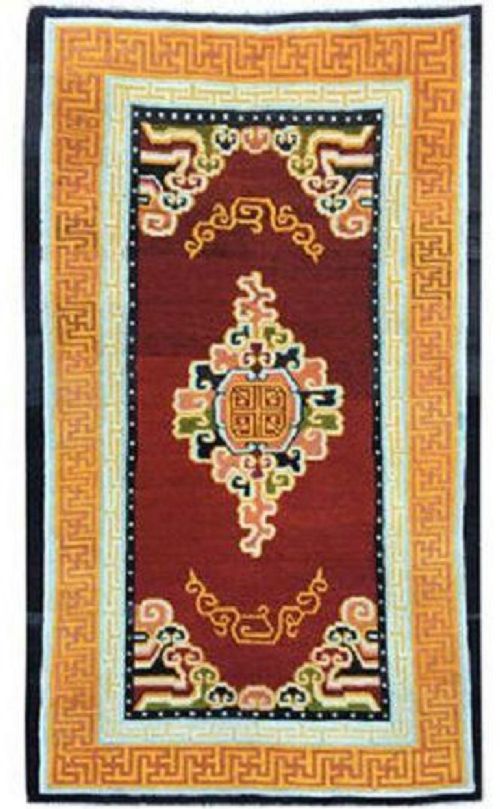
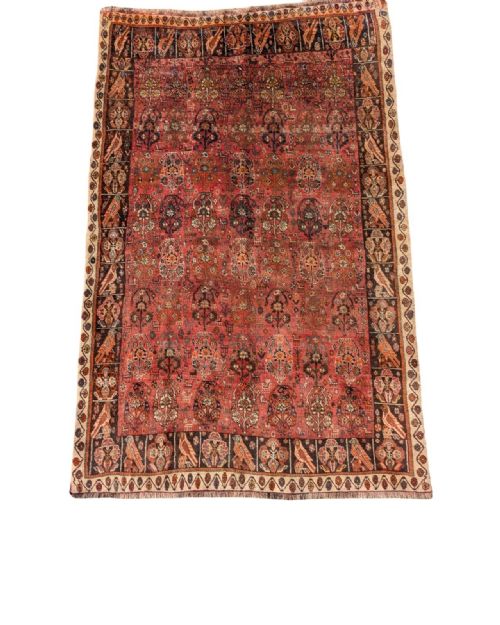
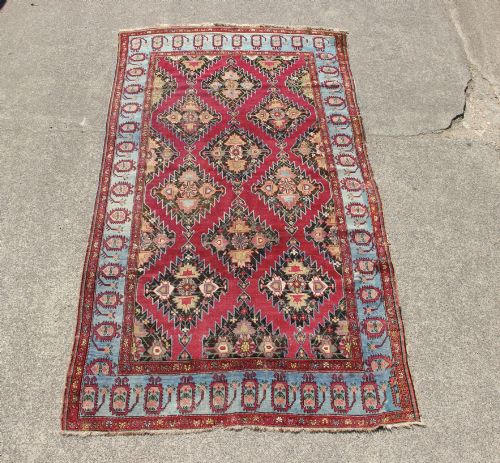


Red Border Runner
A red border runner is a long, linear textile typically defined by its prominent framing edge, offering functional floor coverage in traditional styles.
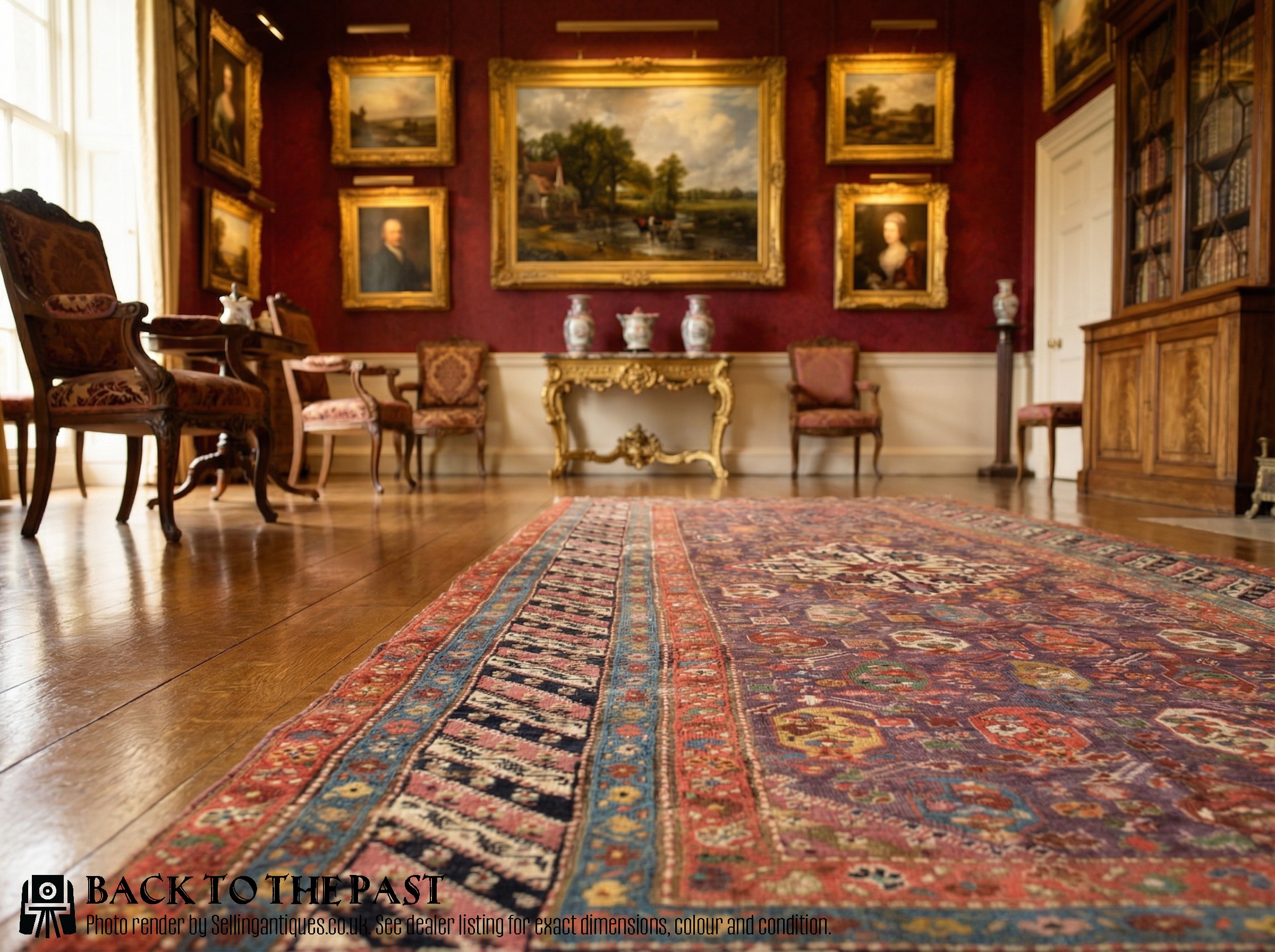
Red Border Runner
When searching for a red border runner, you encounter long format floor coverings and textiles originating from tribal and regional traditions across Persia, the Caucasus, Turkey, Afghanistan, and Tibet. These pieces span from the mid-nineteenth century through the early twentieth century, taking forms such as runner rugs, carpet runners, and long kelim formats.
The inventory on this page consists of broader rug and carpet categories, including long formats like the Zanjan kelleh and Kurdish kelleh, alongside specific runner dimensions and fragments. You find traditional tribal and village weaves displaying prominent borders framing fields of geometric, floral, or lattice patterns.
Materials and construction
The pieces rely on natural textiles recorded in the listings, predominantly wool and hand-spun wool, occasionally incorporating angora wool, cotton, silk, and metallic thread. Weavers knotted or flat-wove these materials on traditional looms, integrating sturdy cotton or wool foundations to withstand foot traffic.
Dyes and structural details vary by region, from the heavy pile of Kurdish and Bijar weaving to the flat surfaces of embroidered Ottoman fragments and European tapestry panels. Artisans employed local wool types, creating varied pile densities and handle across Persian, Caucasian, and Anatolian workshops.
Object types recorded include runner rugs, kelleh long rugs, area rugs, carpet runners, and embroidered fragments.
What separates the best from the rest
Quality in these long formats rests on the precision of the weave and the clarity of the border design, whether featuring a crab pattern, a dragon motif, or intricate lattice work. Finer knots, handled with denser wool or hand-spun yarn, produce a crisper definition in the structural framing.
The integrity of the surviving textile dictates its standing among collectors, particularly in nineteenth-century examples where pile preservation and structural framing remain intact. Superior pieces demonstrate balanced proportions along the length and deliberate execution in the secondary motifs.
The Red Border Runner Glossary
- Kelleh
- A long, narrow carpet format traditionally used in Persian domestic spaces. It provides extended dimensions bridging the proportion between a standard rug and a full carpet.
- Khorossan
- A region in north-east Persia noted for producing sophisticated carpets and rugs. Weavings from this area often utilise refined materials and detailed floral designs.
- Harshang
- A classical Persian large-scale floral and crab pattern design. This motif frequently appears within the border systems of antique kelim and long rugs.
- Mina Khani
- A repeating botanical lattice pattern arranged in an orderly grid across the field. The design incorporates geometric flowers linked by delicate vines.
- Terekeme Kazak
- A specific tribal attribution from the Caucasus region. These pieces typically display bold geometric structures and distinct regional colour palettes.
Red Border Runner: Frequently Asked Questions
Where should a long runner go?
These linear textiles suit narrow spaces such as hallways, corridors, and galleries where length is required. They provide functional floor covering while displaying traditional border patterns.
Placement depends on the dimensions of the specific piece, ensuring the length fits the architectural flow of the room without crowding doorways or skirting boards.
How do I identify a Kurdish runner?
Kurdish long rugs and kelleh formats often feature robust construction with distinctive tribal motifs in the field and borders. They reflect the weaving traditions of Kurdish groups across Persia and Anatolia.
Look for sturdy wool foundations, geometric or dragon border designs, and materials characteristic of nineteenth and early twentieth-century village production.
What is a kelleh format?
A kelleh is a specific long rug proportion traditionally utilised in Middle Eastern interiors. It offers an extended rectangular shape distinct from square carpets or short area rugs.
This format accommodates specific room layouts, providing linear pattern continuity down the central field and along the outer border.
How are these antique runners dated?
Dating relies on stylistic indicators, structural materials, and historical attribution methods observed in nineteenth and early twentieth-century examples. Evidence includes the use of hand-spun wool and regional weaving signatures.
Comparison with documented pieces from periods such as the eighteen-fifties through the nineteen-thirties helps establish the approximate age of each textile.
What is a mina khani design?
The mina khani pattern is a traditional lattice motif featuring repeating floral heads connected by vines across the field. It appears in classical Persian and Baluch rug production.
This symmetrical layout creates an ordered field design that complements the surrounding geometric or floral borders.