



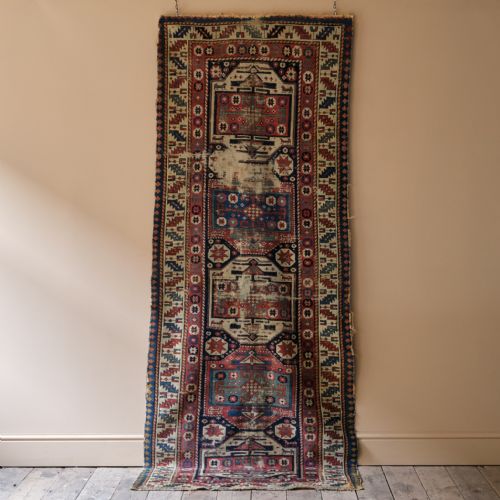


Caucasian Corridor Runner
A caucasian corridor runner brings linear geometry and saturated dyes from nineteenth-century village workshops straight into modern hallways.
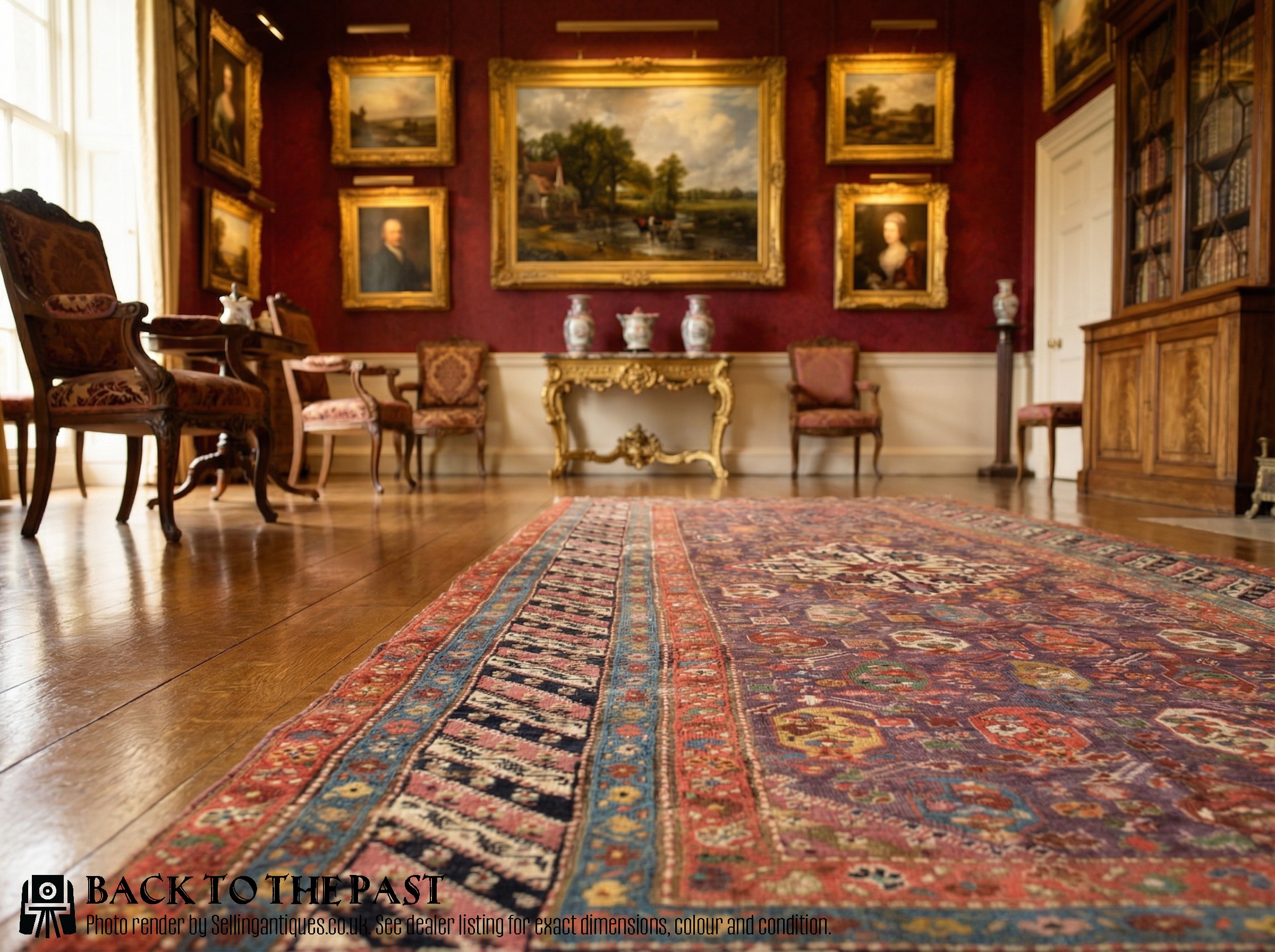
Caucasian Corridor Runner
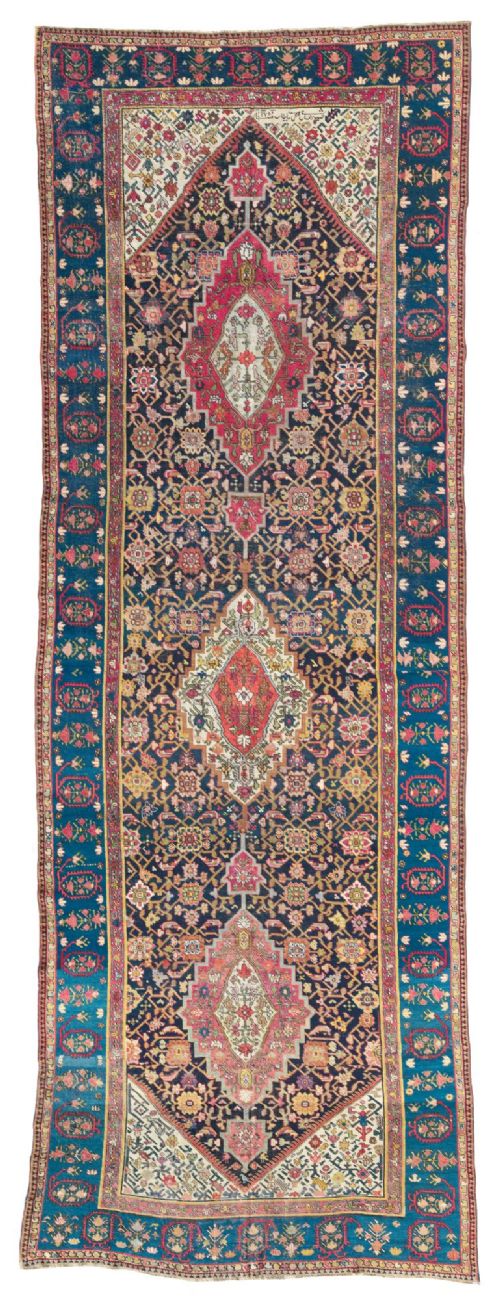
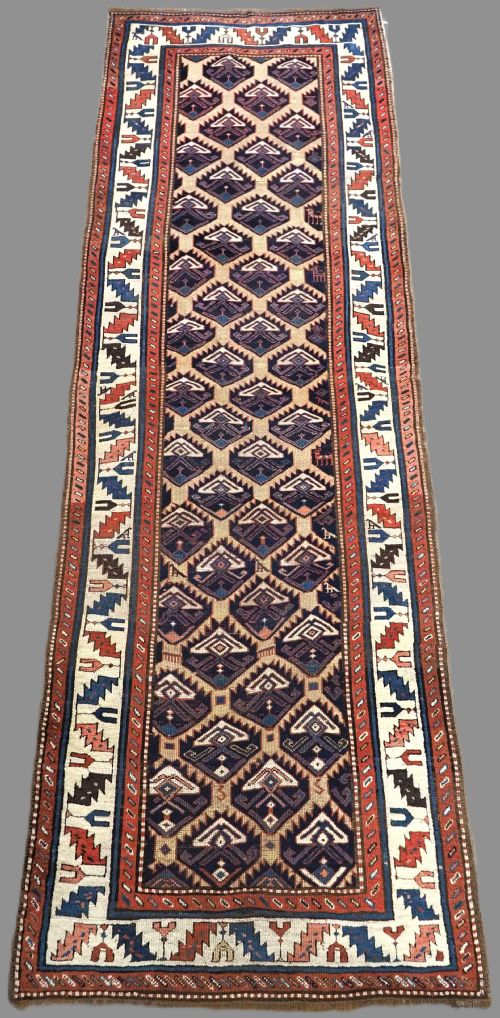
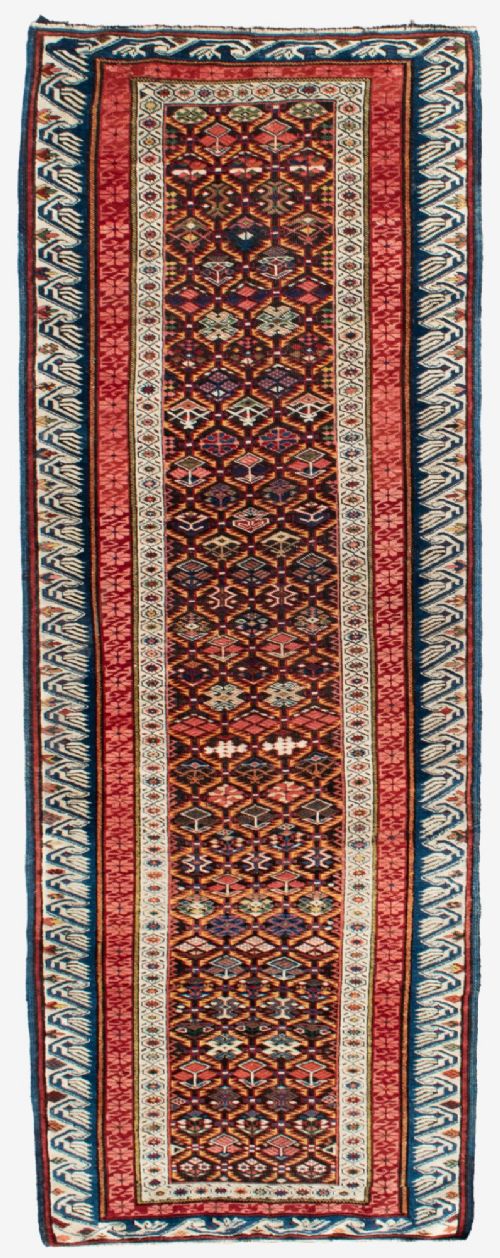
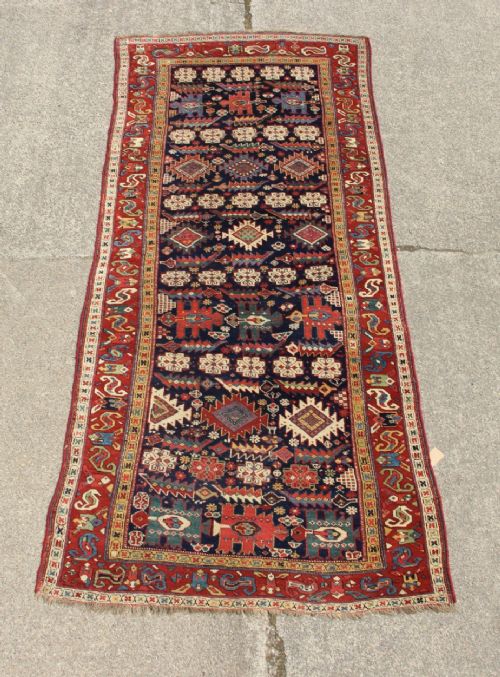
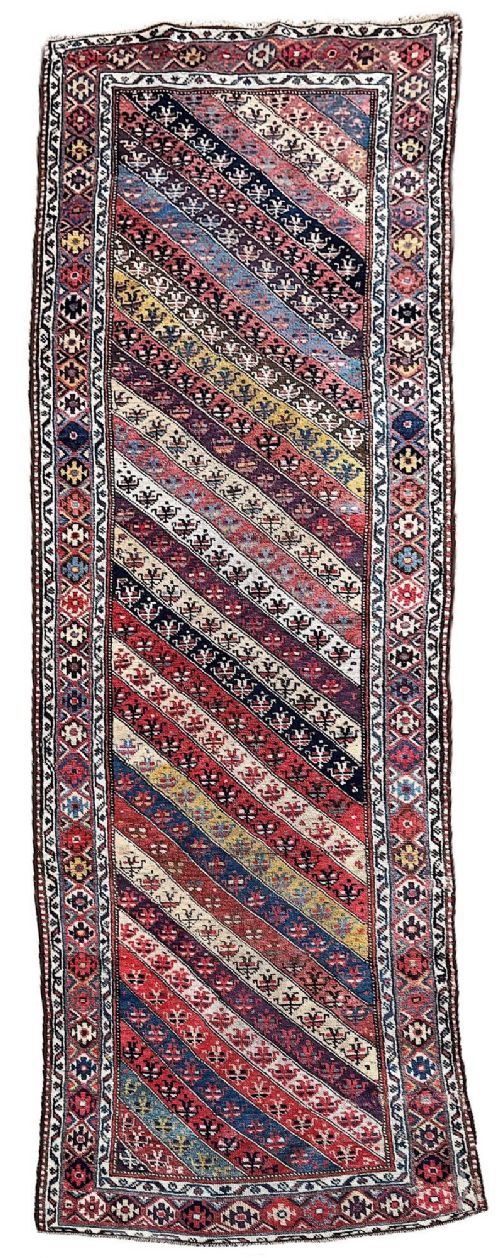
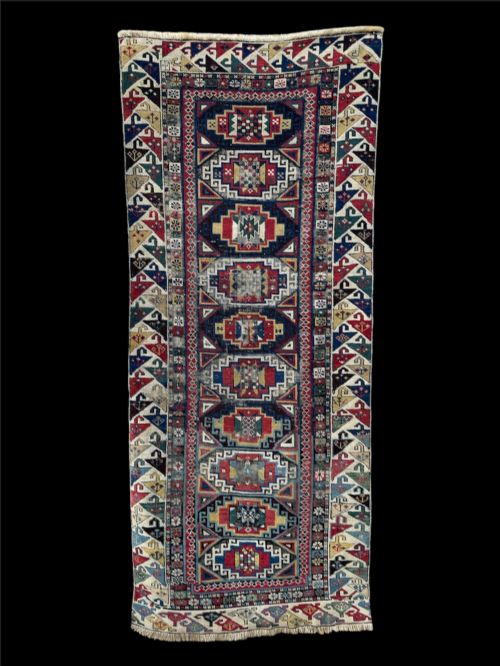
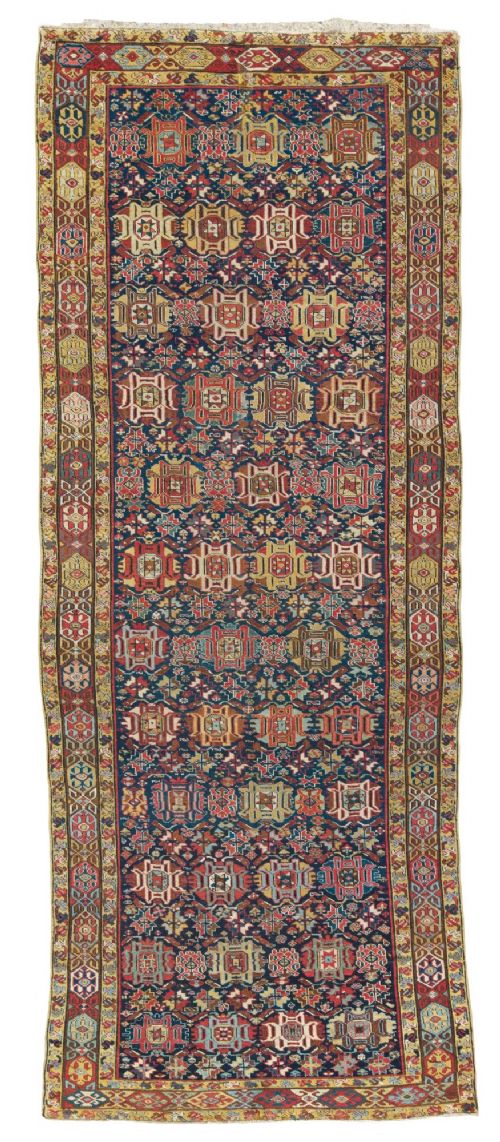
A caucasian corridor runner is an elongated floor covering woven in the Caucasus region, frequently designed to span extended hallways and narrow spaces. These textiles emerge in styles such as Shirvan, Gendje, Kazak, Talish, and Kuba, spanning periods from the mid-nineteenth century up to the early twentieth century.
Most examples encountered here utilise traditional village and tribal weaving methods, manifesting in formats like runner rugs, long rugs, and narrow corridor carpets. The forms typically display geometric medallions, lattice patterns, or repeating boteh motifs arranged along a central linear axis.
Materials and construction
The pieces rely primarily on hand-spun wool for the pile, providing resilience and a soft lustre that deepens with age. Foundation threads commonly incorporate cotton or wool, supporting dense knotting that secures the geometric designs.
Weavers utilised natural dyestuffs to achieve rich colour palettes, incorporating camel hair in its natural undyed shade for specific field details or borders. The construction method ensures a sturdy textile capable of enduring heavy foot traffic.
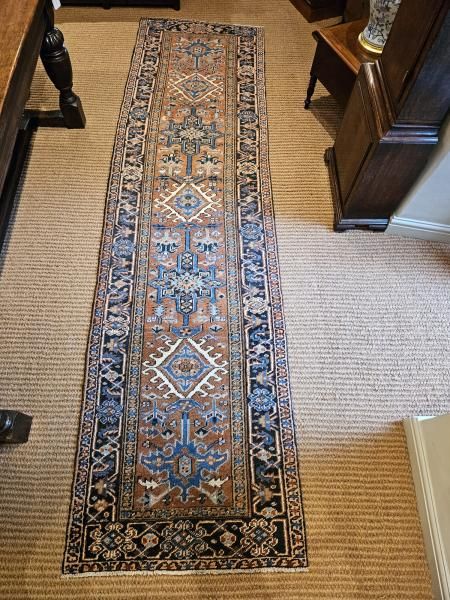
A crooked Kazak runner proves that village weavers preferred character over rigid geometry.
Quality and execution
Quality rests upon the crispness of the geometric drawing and the saturation of the natural dyes. Tightly compressed knots and precise execution of complex lattice or medallion designs distinguish superior examples from simpler village work.
The integrity of the foundation and the preservation of original selvedges and ends influence the overall structural merit. Even when minor asymmetries appear, expert handling of proportion and palette maintains visual balance across the runner.
The Caucasian Corridor Runner Glossary
- Boteh
- A swirling almond-shaped or paisley motif representing a floral spray or cypress tree. This ancient symbol appears frequently in Gendje and Persian tribal weaving.
- Kelleh
- A large format rectangular carpet, generally longer than it is wide but proportioned more broadly than a standard corridor runner. These pieces often serve as central room carpets.
- Kazak
- A style of rug originating from the southwestern Caucasus, characterised by bold geometric designs and primary colour palettes. Weavers in this region favoured large polygons and tribal motifs.
- Selvedge
- The bound or reinforced edge running parallel to the length of the rug, protecting the structure from fraying. Original selvedges indicate careful preservation.
Caucasian Corridor Runner: Frequently Asked Questions
Where should I place a caucasian corridor runner?
These narrow floor coverings suit long hallways, staircases, and gallery spaces where linear formats provide a structured pathway. Their elongated proportions draw the eye down a passage while protecting high-traffic wooden floors.
Ensure you measure the corridor width and length carefully, leaving a balanced margin of exposed floor around the perimeter of the rug. Placing a quality underlay beneath the textile prevents slipping and cushions the wool pile against wear.
How do I clean an antique wool runner?
Gentle regular vacuuming without a rotating beater bar removes surface dust and grit from the wool pile. Professional specialist cleaning remains essential for deep washing to protect natural dyes.
Avoid chemical spot treatments or excessive moisture, which can damage the wool fibres and foundation threads. Promptly blot liquid spills with a clean white cloth rather than rubbing the affected area.
How do I identify a Shirvan runner?
Shirvan runners typically exhibit finely detailed geometric patterns, crisply drawn stars, or hooked polygons executed in balanced, bright colourways. The weave tends to be finer and lower in profile compared to heavy nomadic Kazak carpets.
Examine the back of the textile to observe the knotting density and structural regularity. Regional characteristics often include narrow guard stripes flanking a primary border.
Why do some runners appear slightly crooked?
Hand-knotted village rugs often display slight irregularities in width or straightness due to tension changes during the manual weaving process on vertical looms. These minor asymmetries confirm the authentic handmade origins of nineteenth-century pieces.
Such deviations do not detract from the structural integrity of the wool pile. Instead, they reflect the individual hand of the village weaver working without automated precision.